
Little London Rome: A Hidden Gem in the Flaminio District
When people think of Rome, they imagine ancient ruins, grand piazzas, or Renaissance churches. However, the city hides another surprise. In the Flaminio district, you’ll find a pastel-colored street called Little London Rome (Piccola Londra in Italian).
A Touch of Britain in the Eternal City
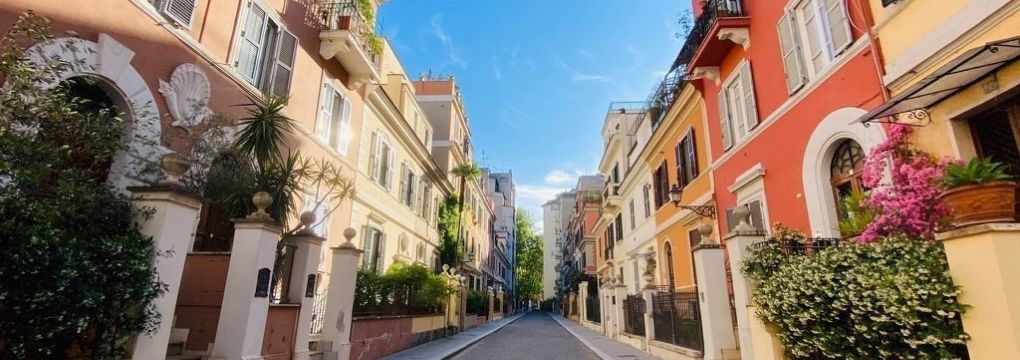
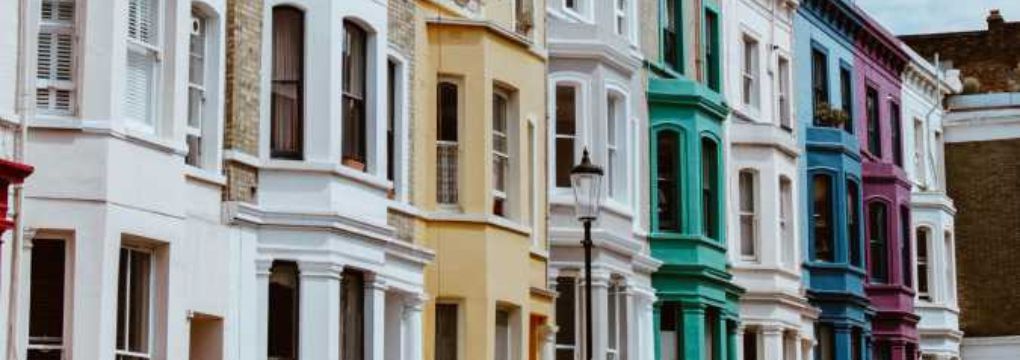
This charming pedestrian lane, officially named Via Bernardo Celentano, feels like a slice of old England. Small pastel villas line the street with wooden doors, tiny front gardens, and stone steps. Together, these details create an unmistakably British look.
Iron gates close off both ends, protecting the street from traffic. As a result, the lane stays calm and quiet. Because of its unique style, Little London Rome has become popular for Instagram photos, commercials, music videos, and even films.
The Origins of Little London Rome
The street was not built only for beauty. In fact, it dates back to 1910, when Rome expanded beyond its ancient walls. At that time, the city’s mayor Ernesto Nathan pushed for modernization.
Nathan, an Anglo-Italian reformer, wanted Rome to match other European capitals. Therefore, he introduced a new urban plan. It included three housing models: tall apartment blocks for dense areas, two-story villas with gardens for middle-class families, and luxurious homes surrounded by parks. Little London Rome reflected this vision of a modern, people-friendly city.
Designed with Style and Purpose
Quadrio Ferruccio Pirani, an engineer and architect, brought the plan to life. He became known for innovative housing projects that served working- and middle-class Romans. Unlike speculative builders of the past, he aimed for both quality and beauty.
In Flaminio, Pirani enjoyed unusual freedom to experiment. He designed 26 Liberty-style villas with an “Anglo-Italian” flair on Via Bernardo Celentano. Decorative friezes, small balconies, and fine details gave the homes a romantic character. Senior civil servants originally lived in these houses. Today, taller apartment blocks surround them. Yet they still remind visitors of Rome’s early 20th-century transformation.
Flaminio Beyond Little London
Exploring Little London Rome is just the beginning. The Flaminio district itself also offers architectural and cultural treasures.
- For example, in 1912 the Palazzo delle Ancore appeared to host the Ministry of the Navy. Later, work on the Ponte Flaminio began in 1938, with majestic arches and travertine eagles designed by Armando Brasini. Construction ended only in 1951.
- In the 1960s, Flaminio became Rome’s sports hub. For the Olympic Games, Pier Luigi Nervi designed the Stadio Flaminio and, with Annibale Vitellozzi, the Palazzetto dello Sport. The Olympic Village also rose nearby, thanks to architects Vittorio Cafiero, Adalberto Libera, and Luigi Moretti.
More recently, two landmarks reshaped Flaminio’s identity. In 2002, Renzo Piano’s Auditorium Parco della Musica Ennio Morricone opened its doors. In 2010, Zaha Hadid’s MAXXI – National Museum of 21st Century Arts welcomed the public. Both sites remain popular cultural destinations today.
Visiting Little London Rome
If you want to see something unusual in Rome, Little London is a perfect choice. The street is short but full of charm. It is ideal for photos, quiet walks, and anyone who loves hidden gems.
In addition, you can combine your visit with nearby attractions. For example, spend the morning at MAXXI, have lunch in Flaminio, and end the day with a concert at the Auditorium. In this way, you’ll enjoy a mix of history, modern design, and culture.

Comment (0)