
Alphonse Mucha: A Triumph of Beauty and Seduction at Palazzo Bonaparte
If you love elegant posters, flowing lines, and dreamy women framed by flowers and curves, chances are you’ve already met Alphonse Mucha – even if you didn’t know his name.
This new exhibition at Palazzo Bonaparte in Rome, opening from 8 October, is the perfect chance to step into his world and experience the magic of the Belle Époque up close.
A Journey into the Belle Époque
The show is a real dive into the late 19th and early 20th centuries, a time known as the Belle Époque – an age of optimism, style, and innovation.
At the heart of it all is Art Nouveau, the artistic movement that shaped the period between 1871 and 1914 with its curved lines, floral patterns, and love of beauty in everyday objects.
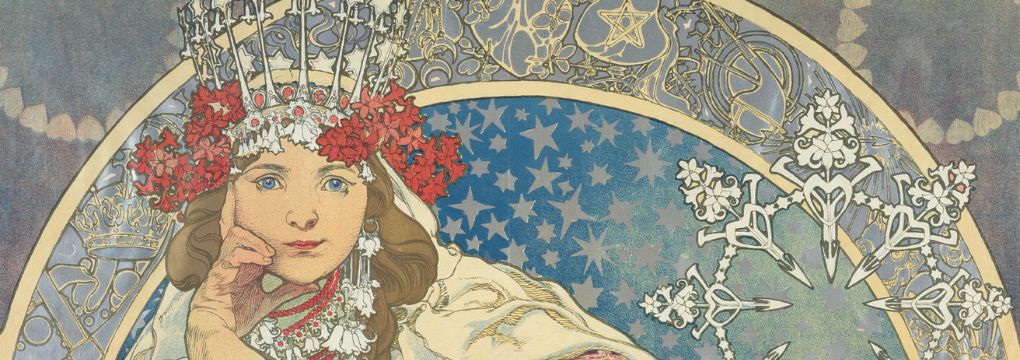
Alphonse Mucha (1860–1939) was one of the stars of Art Nouveau. His style is instantly recognizable: graceful women, long flowing hair, decorative halos, flowers, and elegant patterns. His work helped create a visual language that still influences design, fashion, and architecture today.
A Style That Defined an Era
Walking through the rooms, you’ll notice how sinuous lines and floral motifs are everywhere in Mucha’s work.
These elements dominate his posters and decorative pieces, turning simple advertising into real works of art.
His images aren’t just pretty – they show a constant search for beauty and harmony, a kind of elegance that never goes out of style. It’s easy to see why his art still feels fresh and modern.
Who Was Alphonse Mucha?
A quick look at his life helps explain his success.
1860 – Mucha is born in Ivancice, in Moravia (today in the Czech Republic), in a modest middle-class family.
1885 – He enters the Academy of Fine Arts in Munich, after showing artistic talent from a very young age.
Before turning 30, he moves to Paris and studies at the Académie Julian.
In Paris, Mucha lives in Montmartre, a lively neighborhood full of artists. He meets many of them, including Paul Gauguin. At the same time, he explores photography and creates illustrations for newspapers and magazines.
Over 150 Works: Posters, Paintings, and More
The exhibition brings together over 150 masterpieces by Mucha, offering the most complete and wide-ranging show ever devoted to him. You’ll find:
His iconic advertising posters and theatre posters
Decorative panels filled with flowers and arabesques
Prints, drawings, and works that show how his style evolved over the years
But the show doesn’t stop with Mucha. It also looks at how other artists across different eras have explored female beauty and seduction.
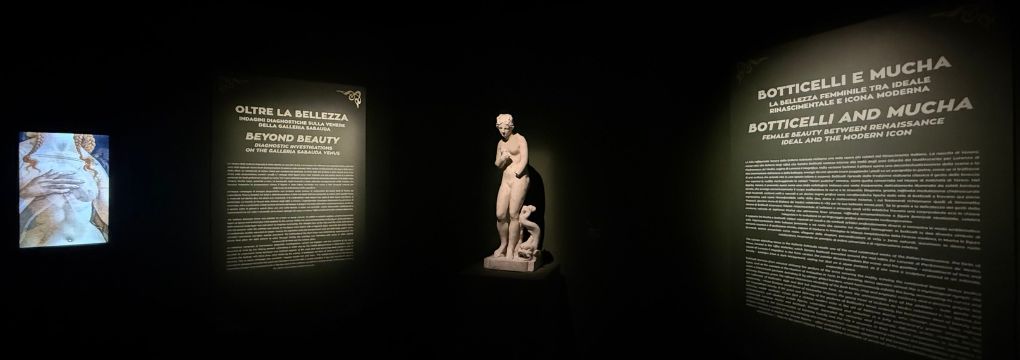
Botticelli’s Venus as Guest of Honour
One of the most exciting surprises of the exhibition is a very special guest:
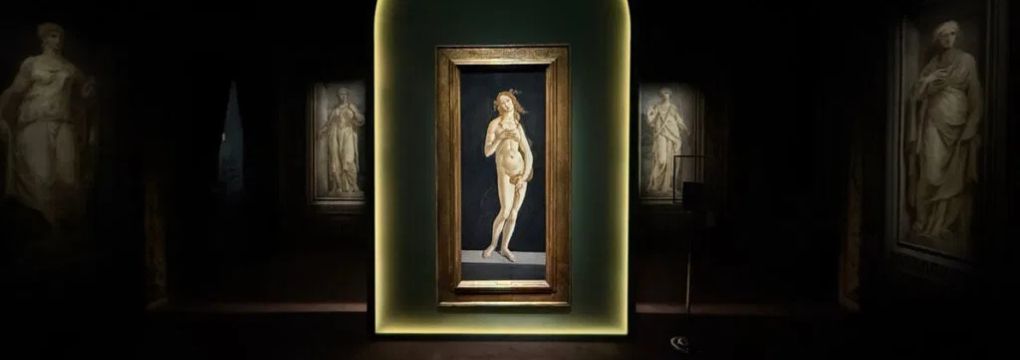
Sandro Botticelli’s Venus, arriving from the Royal Museums of Turin.
This painting is a worldwide symbol of timeless beauty, and here it’s shown in dialogue with Mucha’s women and other works dedicated to the feminine ideal. Alongside Botticelli, you’ll also see:
Paintings by Giovanni Boldini and Cesare Saccaggi
Ancient statues
Renaissance artworks
Art Nouveau furniture and objects
Together, they create a rich and elegant journey through different ideas of beauty across time.
The Breakthrough: Sarah Bernhardt and the Posters
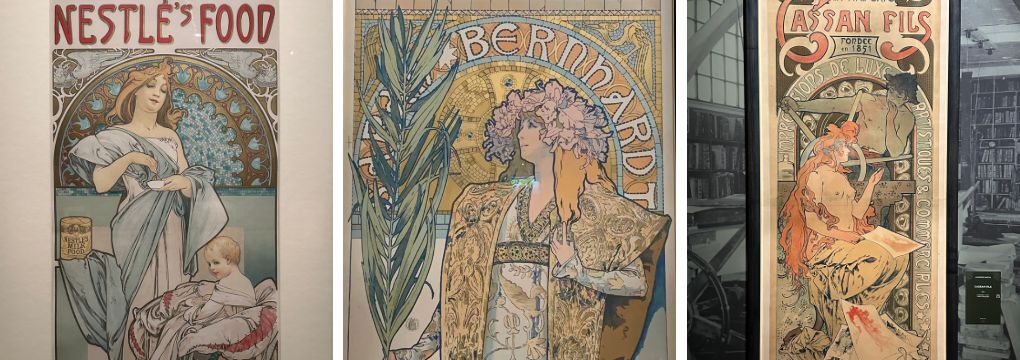
Everything changes in 1894, when he designs his first theatre poster for the play Gismonda by Victorien Sardou, starring the great actress Sarah Bernhardt. The poster is a sensation. Its elegance and originality impress Sarah Bernhardt so much that she signs a six-year contract with Mucha (from 1895 to 1901). During this period, Mucha designs: Theatre posters, sets, costumes and jewellery.
He even works as an artistic consultant. This collaboration launches him to fame and opens doors to major commercial work. Soon, big brands start using his posters for their advertising, including: Nestlé, Moët & Chandon, JOB (famous cigarette papers), Ruinart, Perfecta, Waverley
Mucha transforms advertising into art, and the streets of Paris become an open-air gallery.
The Slav Epic: A Life’s Work
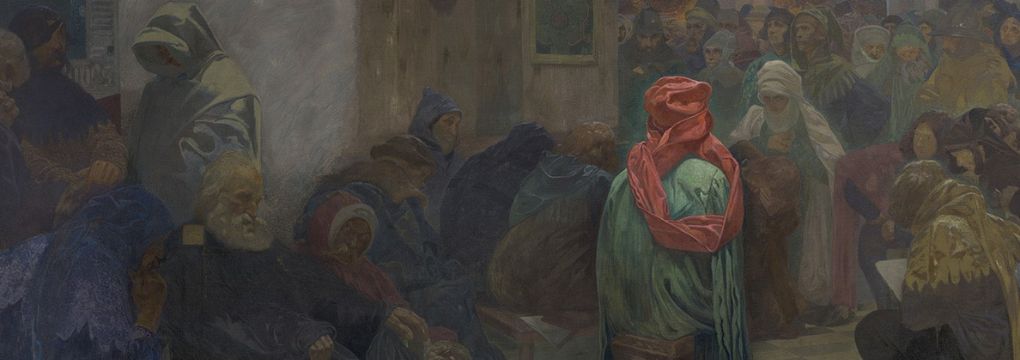
In 1910, Mucha takes a new direction. He decides to dedicate the rest of his life to a huge project: twenty large canvases telling a symbolic epic of the Slavic people, from ancient history to modern times.
This series is called The Slav Epic.
In September 1928, he officially donates this monumental work to the city of Prague.
However, Mucha continues refining and working on the cycle right up to his death in 1939, in Prague.
It is his grand statement of identity, history, and culture—very different in tone from his posters, but just as ambitious.
Who Is Behind the Exhibition and Why You Shouldn’t Miss It
The exhibition is organized with important institutional support:
Under the patronage of: The Embassy of the Czech Republic; The Lazio Region; The Municipality of Rome – Department of Culture; The Czech Centre at the Embassy of the Czech Republic; Produced and organized by Arthemisia, in collaboration with the Mucha Foundation and the Royal Museums of Turin.
Curated by Elizabeth Brooke and Annamaria Bava, with scientific direction by Francesca Villanti.
Main partner: Fondazione Terzo Pilastro – Internazionale with Poema.
You don’t need to be an art expert to appreciate it. It’s perfect for anyone who:
Loves beautiful images and elegant design
Is curious about the Belle Époque and Art Nouveau
Wants to discover the story of one of the great artists who shaped the way we still imagine beauty today
At Palazzo Bonaparte, Mucha’s women, flowers, curves, and colours come together in a celebration of beauty, seduction, and style that still speaks to us, more than a century later.
If you’re in Rome during the exhibition, this is definitely an experience to add to your list.
Information
When: 8 October 2025 – 8 March 2026
Where: Palazzo Bonaparte, Rome
Tickets & Contacts:
Online ticket purchase available via the official ticketing portal
Further details on the exhibition on the websites of Arthemisia and Palazzo Bonaparte
Regular Opening Hours
Monday to Thursday: 9:00 – 19:30
Friday, Saturday and Sunday: 9:00 – 21:00
Ticket office and last admission: 1 hour before closing.
Special Holiday Openings
Saturday 1 November: 9:00 – 21:00
Monday 8 December: 9:00 – 21:00
Wednesday 24 -December: 9:00 – 18:00
Thursday 25 December: 12:00 – 21:00
Friday 26 December: 9:00 – 21:00
Wednesday 31 December: 9:00 – 18:00
Thursday 1 January: 12:00 – 21:00
2–6 January: 9:00 – 21:00
6–8 March: 9:00 – 23:00
On all special opening days, the ticket office and entrance close 1 hour before the indicated closing time.


Comment (0)