The best time to visit Rome is from mid-April to early June and from mid-September to October, when average highs are 19–27°C (66–80°F). For fewer crowds, choose November, January or February, and pack for rain. July and August are hot: on most days the temperature reaches 30°C (86°F) or more.
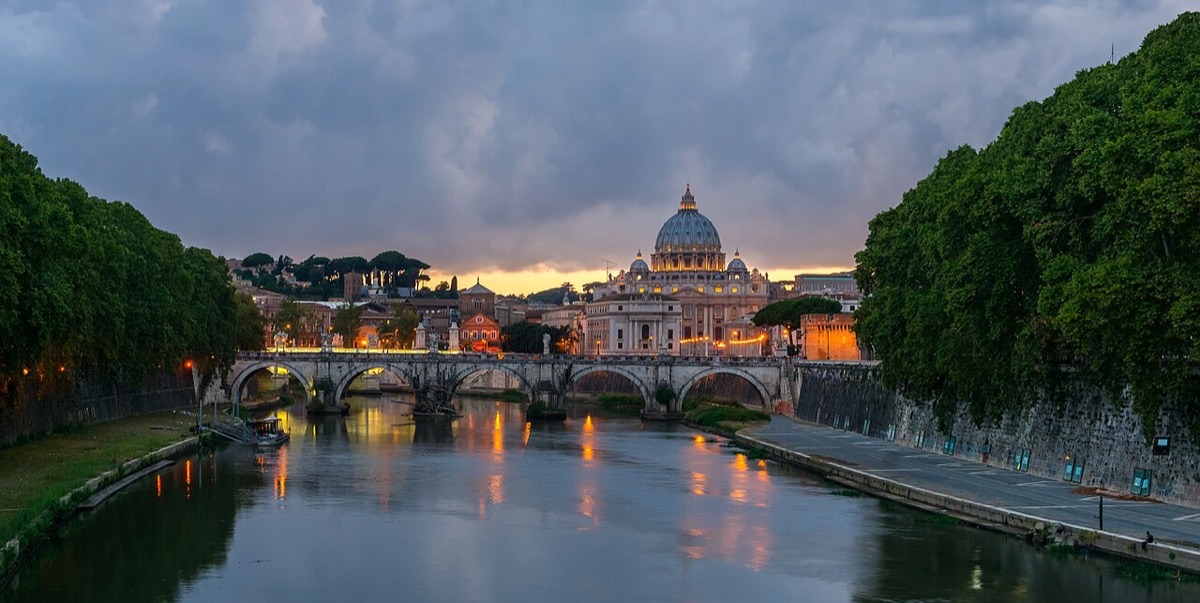
Rome is a year-round city, but each season changes your trip: the weather, the queues, the opening hours and what is happening in the streets. This guide, from a local tour operator working in Rome since 2012, brings together the official climate averages, the holidays and events of the next twelve months, and what we see on the ground.
There is no bad month for Rome, but some months suit some trips better:
If you can choose only one month, we suggest May or October.
The table shows the official 30-year averages (1991–2020) for the Rome Ciampino weather station, southeast of the center, published by the World Meteorological Organization. A “rainy day” has at least 1 mm of rain. The crowd levels are our estimate based on 14 years of tours, not official data.
| Month | Average high | Average low | Rainy days | Crowds |
|---|---|---|---|---|
| January | 12°C / 54°F | 3°C / 38°F | 7 | Low after 6 January |
| February | 13°C / 55°F | 3°C / 38°F | 7 | Low |
| March | 16°C / 60°F | 6°C / 43°F | 7 | Medium, busy at Easter |
| April | 19°C / 66°F | 9°C / 48°F | 7 | High |
| May | 23°C / 74°F | 13°C / 55°F | 6 | High |
| June | 28°C / 83°F | 17°C / 62°F | 3 | High |
| July | 31°C / 88°F | 19°C / 67°F | 2 | High |
| August | 32°C / 89°F | 20°C / 68°F | 2 | High |
| September | 27°C / 80°F | 16°C / 61°F | 6 | High |
| October | 22°C / 72°F | 12°C / 54°F | 7 | High, easing late in the month |
| November | 17°C / 62°F | 8°C / 47°F | 9 | Low |
| December | 13°C / 55°F | 5°C / 40°F | 9 | Low until 8 December, then busy |
What the averages do not show:
The quietest weeks are in November (after the 1 November holiday), early December (before 8 December) and mid-January to February. The Colosseum and the Vatican Museums are never empty, but in these weeks it is easier to find tickets at short notice.
The busiest periods are Easter week (in 2027, the days up to Easter Sunday, 28 March), late April to June, September and October, and the Christmas holidays from 8 December to 6 January.
In any season, start early: the Vatican Museums open at 8:00 and the Colosseum at 8:30, and the first time slots are usually the calmest. Book ahead, because official Colosseum tickets go on sale 30 days before your visit and the best slots sell out in spring and autumn.
Spring is mild and green. Average highs rise from 16°C (60°F) in March to 23°C (74°F) in May, with 6–7 rainy days a month, and evenings can still be cool.
Dates to know in spring 2027:
Summer is sunny and dry, with about two rainy days a month in July and August, but average highs reach 31–32°C (88–89°F). June is the most pleasant summer month, with long evenings: the sun sets at around 20:45.
How to enjoy Rome in the heat:
On 2 June, Republic Day, a military parade runs along Via dei Fori Imperiali in the morning, the Frecce Tricolori fly over the city and state museums are free. Around 15 August (Ferragosto), many Romans are away on holiday, and some family-run shops and restaurants close for a summer break.
September still feels like summer, with average highs of 27°C (80°F). October is mild, at about 22°C (72°F), and for many visitors it is the best month of the year. Rain becomes more frequent from September, often with thunderstorms, and November is the wettest month: about 108 mm over 9 rainy days.
Since 2026, 4 October (St Francis of Assisi, patron saint of Italy) is again a national public holiday; in 2027 it falls on a Monday. At the end of October the clocks go back one hour, the evenings get dark early and the Colosseum switches to winter hours.
Winter in Rome is mild but damp. Average highs are 12–13°C (54–55°F) and lows 3–5°C (38–40°F), with 7–9 rainy days a month, and snow is very rare. The days are short: in December the sun sets at around 16:40, and the Colosseum closes at 16:30.
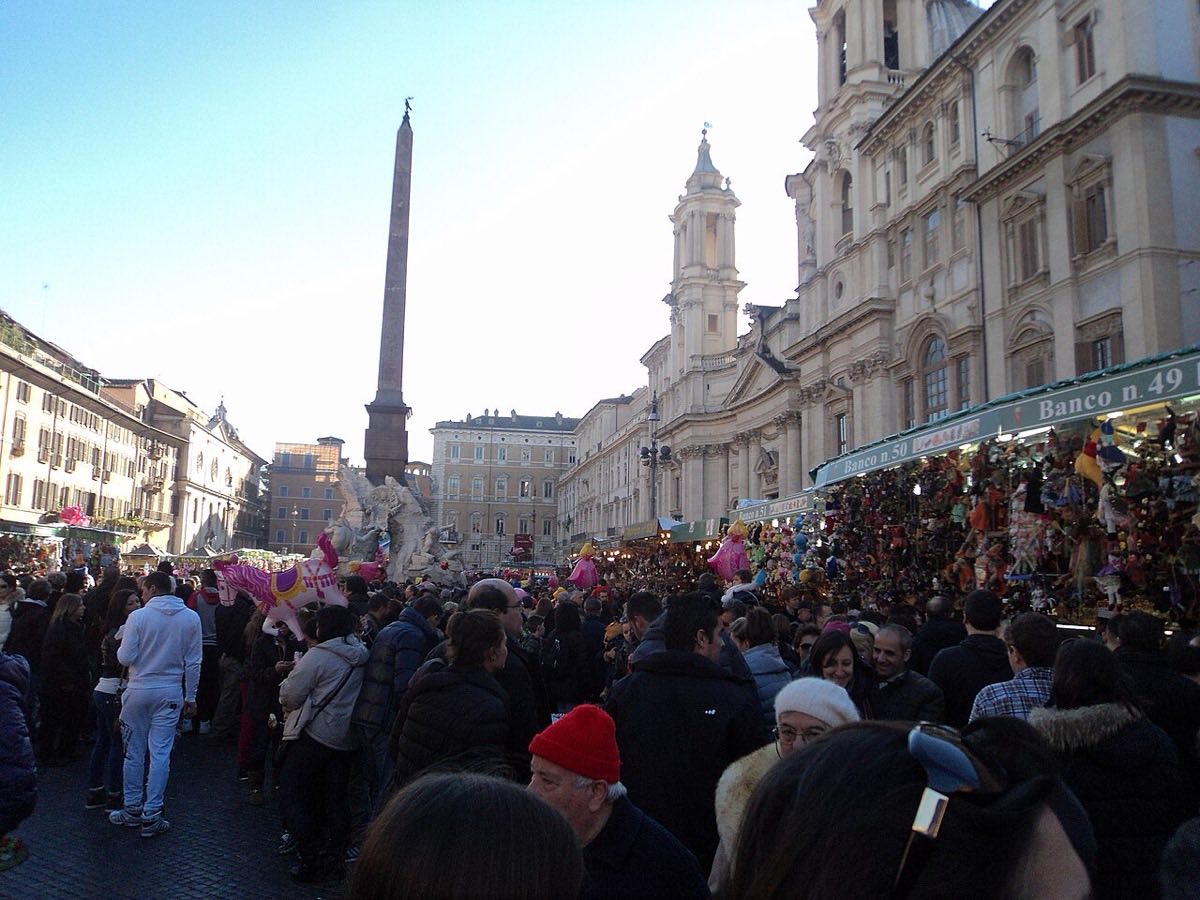
Winter is the best season for shorter queues, with two exceptions:
Some do. These are the current official hours:
| Site | Winter 2026–27 | Rest of the year |
|---|---|---|
| Colosseum | Every day 8:30–16:30, last entry 15:30 (25 October 2026 to 28 February 2027) | Opens at 8:30 and closes later from March; check colosseo.it |
| Vatican Museums | Monday to Saturday 8:00–20:00, last entry 18:00 | The same all year |
| St Peter’s Basilica | Every day 7:00–19:00, until 28 March 2027 | 7:00–20:00 in summer 2026 (1 June to 25 October) |
The Vatican Museums are also closed on Sundays, except the last one of the month, and on several religious holidays, including 11 February, 19 March and Easter Monday. For tickets and rules, read our Vatican guide and our Colosseum guide.
| Date | Holiday or event | What it means for your visit |
|---|---|---|
| 8 December 2026 (Tue) | Immaculate Conception | Start of the Christmas season; Vatican Museums closed |
| 25–26 December 2026 (Fri–Sat) | Christmas and St Stephen’s Day | Colosseum closed on 25 December; Vatican Museums closed on both days |
| 31 December 2026 (Thu) | New Year’s Eve | Free concert at the Circus Maximus in recent years |
| 1 January 2027 (Fri) | New Year’s Day | Colosseum and Vatican Museums closed |
| 6 January 2027 (Wed) | Epiphany (La Befana) | End of the Christmas season; Vatican Museums closed |
| 14 March 2027 (Sun) | Rome Marathon | Closed roads in the center in the morning |
| 28–29 March 2027 (Sun–Mon) | Easter and Easter Monday | Very busy; Vatican Museums closed on Easter Monday |
| 21 April 2027 (Wed) | Natale di Roma | Not a holiday; free events in the center |
| 25 April 2027 (Sun) | Liberation Day | Free entry to the Colosseum and state museums |
| 1 May 2027 (Sat) | Labour Day | Vatican Museums closed |
| 2 June 2027 (Wed) | Republic Day | Parade on Via dei Fori Imperiali; state museums free |
| 29 June 2027 (Tue) | Saints Peter and Paul, Rome’s patron saints | Local holiday; Vatican Museums closed |
| 15 August 2027 (Sun) | Ferragosto | Vatican Museums closed on 14 and 15 August |
| 4 October 2027 (Mon) | St Francis of Assisi | National holiday since 2026 |
| 1 November 2027 (Mon) | All Saints’ Day | Vatican Museums closed |
| If you want | Go in | Why |
|---|---|---|
| Comfortable weather for walking | Mid-April to May, mid-September to October | Average highs of 19–27°C and long days |
| Fewer crowds | November, early December, mid-January to February | The quietest weeks, but shorter days and more rain |
| Christmas lights and markets | 8 December to 6 January | Markets, nativity scenes and Christmas Masses |
| Easter at the Vatican | 21–28 March 2027 | Holy Week celebrations; book everything early |
| Long summer evenings | June | Sunset around 20:45, before the peak heat |
| Seeing Rome lit up at night | November to January | The sun sets before 17:30, so an 18:00 tour is already after dark |
Most rain falls between October and December. On a wet day:
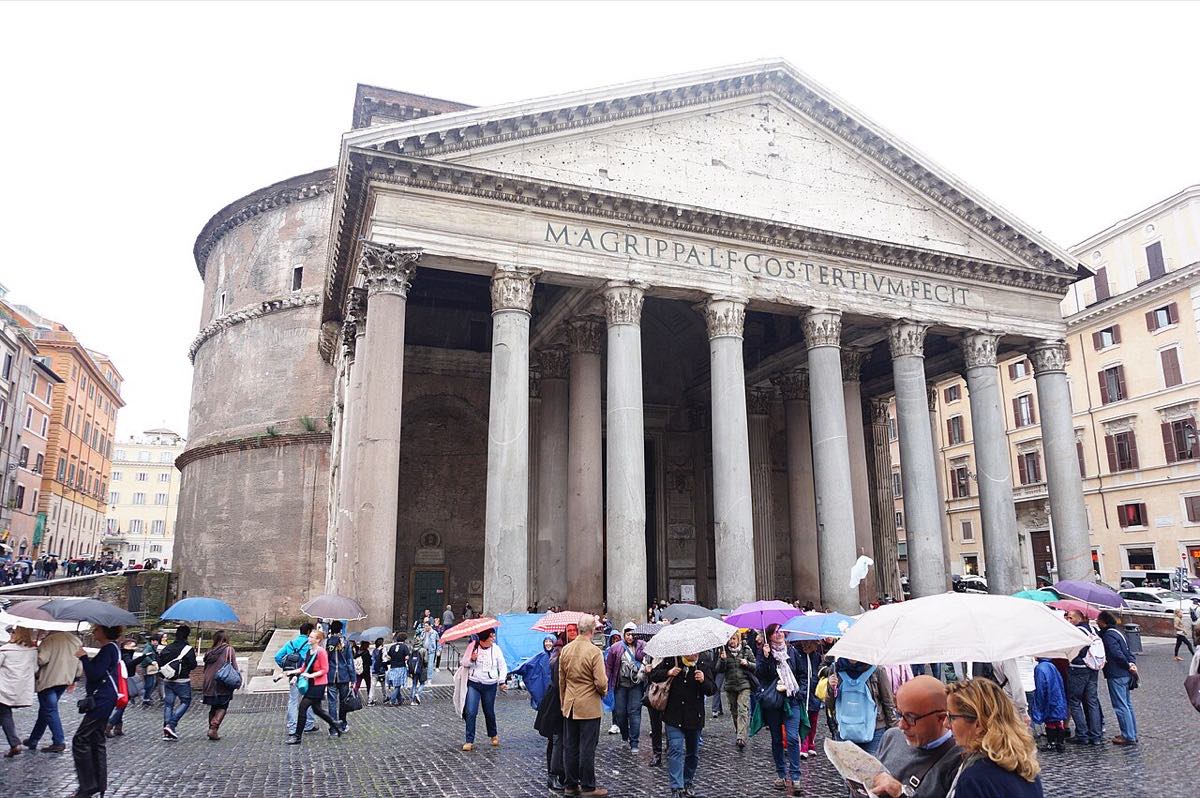
Our private golf cart tour of Rome runs all year, in sun and in rain. Your driver picks you up at your hotel in the historic center and shows you landmarks such as the Colosseum, Piazza Navona, the Pantheon and the Trevi Fountain, seen from the outside, with a Trevi Fountain ticket and a gelato or coffee stop included. Tours last 2, 3 or 5 hours and start at 9:30, 10:00, 14:30, 18:00 or 18:30. The 2-hour tour runs from November to mid-April and costs €350 for 1–3 people, then €115 per person from 4. From November to January, the 18:00 start is already after dark.
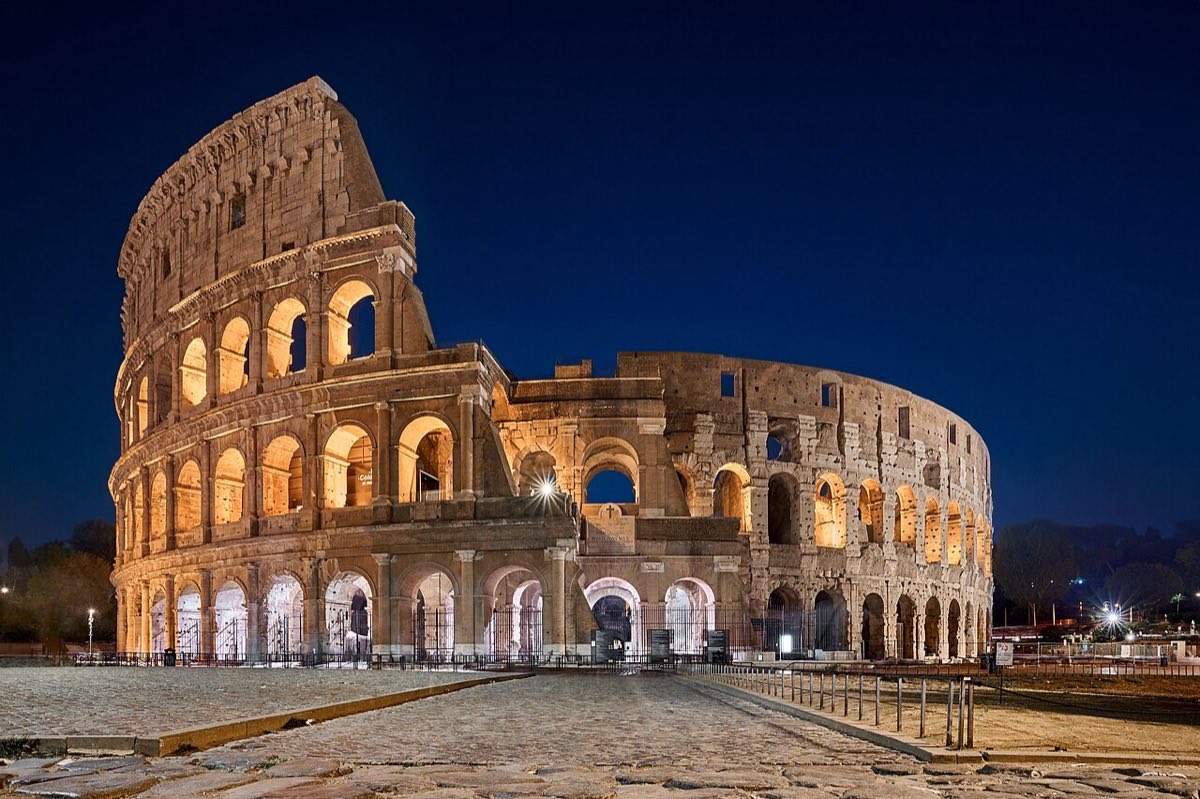
Our golf cart tour by night lasts 2 hours and starts at 20:00, 21:00 or 22:00, when there is less traffic and the monuments are lit up. At 20:00 it costs €450 for 1–3 people, then €150 per person; later starts cost a little more.
The Rome by night tour in a vintage Fiat 500 is a 2-hour ride in a restored cabrio converted to electric, with your own driver. At 20:00 it costs €590 for 1–3 people, €1,180 for 4, then €240 per person from 5; later starts cost more. In winter, dress warmly: we have blankets on board.
All these tours are private, with up to 21 guests guaranteed and larger groups on request (on the 2-hour golf cart tour, the maximum depends on the start time). See all our golf cart tours in Rome, vintage Fiat 500 tours in Rome and night tours.
 Private Golf Cart Tour of Rome2, 3 or 5 hours, hotel pickup, runs in the rain · from €350 for 1–3 peopleBook now
 Golf Cart Tour by Night2 hours, starting at 20:00, 21:00 or 22:00 · from €450 for 1–3 peopleBook now
 Rome by Night in a Vintage Fiat 5002 hours in an electric vintage cabrio · from €590 for 1–3 peopleBook now
What is the best month to visit Rome?
May and October are the best all-round months, with average highs of 23°C (74°F) in May and 22°C (72°F) in October and only 6–7 rainy days. Both are busy, so book tickets and tours in advance.
When is Rome least crowded?
November, early December and the weeks from mid-January to February are the quietest, apart from public holidays. The days are shorter and wetter, but it is easier to find tickets and time slots at short notice.
Is November a good time to visit Rome?
Yes, if you don’t mind some rain. November is one of the quietest months, with average highs of 17°C (62°F), but it is also the wettest, with about 9 rainy days. Pack a waterproof jacket and shoes with a good grip.
What is the weather like in Rome in winter?
Mild but damp. From December to February, average highs are 12–13°C (54–55°F) and lows 3–5°C (38–40°F), with 7–9 rainy days a month, and snow is very rare. In December the sun sets at around 16:40.
Is August a good time to visit Rome?
Only if you can handle the heat. Average highs are 32°C (89°F), and most days reach 30°C (86°F) or more. Sightsee early in the morning and in the evening, and remember that the Vatican Museums are closed on 14 and 15 August.
What happens in Rome on New Year’s Eve?
For the last four years, the city has held a free New Year’s Eve concert at the Circus Maximus, starting at 21:00; the 2026 programme has not been announced yet. On 1 January, the Colosseum and the Vatican Museums are closed.