
Eight Women Who Shaped Rome
Rome has always been influenced by remarkable women who played significant roles in its history, art, and culture. From ancient times to the modern era, their contributions have shaped the city’s identity. Here are eight women whose legacies remain part of Rome.
Livia (58 BC – AD 29) – Villa at Prima Porta, Vatican Museums, and National Roman Museum
Livia was not just the wife of Emperor Augustus. She played a key political role in shaping the Roman Empire. She was married to Augustus for over fifty years and was the mother of the future Emperor Tiberius. Livia influenced the early Roman Empire while embodying the ideal Roman matron. Her villa, located along the Via Flaminia, contained significant artworks. These include the famous statue of Augustus, now in the Vatican Museums, and stunning garden frescoes, now displayed at the National Roman Museum.
Saint Francesca Romana (1384-1440) – Monastery of the Oblates at Tor de’ Specchi
Francesca Romana, known as “Ceccolella,” was born in Rome in 1384. She married the noble Renzo de’ Ponziani at the age of twelve but dedicated her life to charity and good deeds. After her husband’s death, she founded a congregation in the historic Campitelli district. She established a monastery without the requirement of seclusion, allowing its members to actively assist the local community. Visitors can explore Tor de’ Specchi once a year on March 9th, the feast day of Saint Francesca Romana.
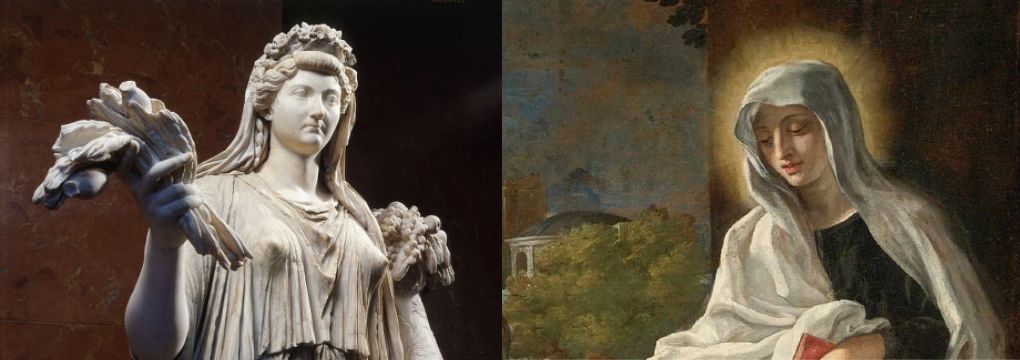
Artemisia Gentileschi (1593-1654) – Galleria Spada
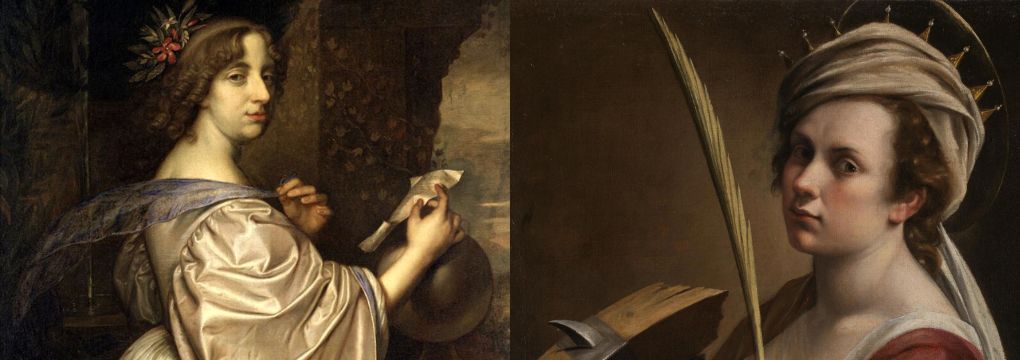
Artemisia Gentileschi was an artist, wife, mother, and a determined woman. She became one of the first female painters recognized in a male-dominated art world. Until the 1600s, men controlled the artistic sphere, making her success even more remarkable. At just 17, she painted her first major work, showing a clear influence from Caravaggio. She attended the court of Cosimo II de’ Medici and befriended Galileo Galilei. Her subjects were often biblical and religious themes. However, her true innovation was portraying strong, determined women. They showed neither fear nor submission. Two of her greatest works, Madonna and Child (1610) and Saint Cecilia (1620), are displayed at Palazzo Spada in Rome.
Christina of Sweden (1626-1689) – Palazzo Corsini, Botanical Garden, and Museum of Rome
Christina of Sweden was an intellectual, curious, and independent queen ahead of her time. After abdicating her throne and converting to Catholicism, she arrived in Rome on December 23, 1655. The city welcomed her with full honors. Her reputation for extravagance and unconventionality preceded her. She settled in Palazzo Riario-Corsini, where she gathered musicians, writers, poets, and influential clergymen. She enriched and cultivated the palace’s park, which now serves as the Botanical Garden of Rome. The Museum of Rome at Palazzo Braschi houses a painting by Filippo Gagliardi and Filippo Lauri. The artwork depicts the grand carousel held in her honor at Palazzo Barberini. The event features remarkable attention to detail, giving each character a unique presence.
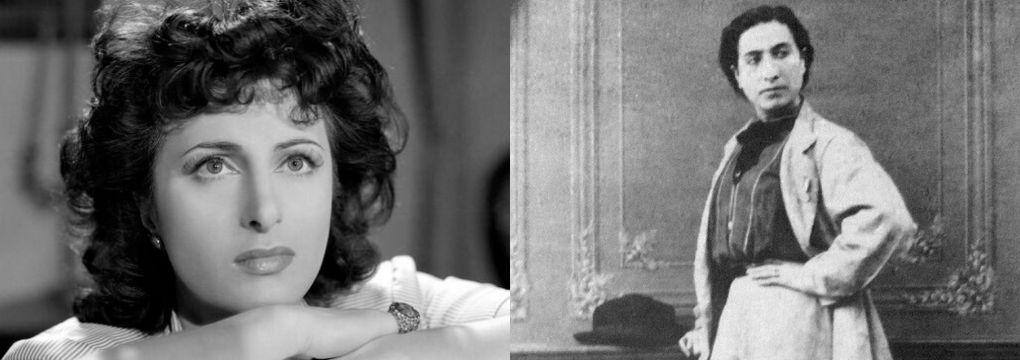
Anita Garibaldi (1821-1849) – Gianicolo Promenade
Anita Garibaldi was born in Brazil as Ana Maria De Jesus Riberio. She married Giuseppe Garibaldi, who had fled to South America after being sentenced to death in Italy. She shared his political ideals and followed him through dangers and battles. After arriving in Italy, she fought in the defense of Rome against the papal army. This secured her place among the heroes of the Italian Risorgimento. When the Roman Republic fell, she cut her long hair, dressed as a man, and rode out of the city alongside Garibaldi. Her life was brief but remarkable. Today, her remains rest on Gianicolo Hill inside a grand equestrian statue. The sculpture portrays her holding a pistol in one hand and cradling her newborn son, Menotti, in the other.
Anna Magnani (1908-1973) – Street Art at Mercato Trionfale
“Please don’t retouch my wrinkles. It took me so long to earn them.” Anna Magnani’s words reflect her pride in her natural beauty, which she carried with confidence both on and off the screen. Known as “Nannarella,” she remains one of the greatest actresses in world cinema and a lasting symbol of authentic Rome. She delivered unforgettable performances in Rome, Open City, Bellissima, Mamma Roma, and The Rose Tattoo. In 1956, she won an Academy Award for Best Actress, becoming the first non-English-speaking actress to receive the honor. Anna Magnani is commemorated in street art on the steps of the Trionfale Market in Via Andrea Doria. The artwork portrays her alongside her beloved dog and cat.
Zaha Hadid & Odile Decq – MAXXI and MACRO Museums
These two architects, different in origin, training, and temperament, revolutionized architecture through their works. Their influence helped shape the contemporary face of Rome. Odile Decq, an award-winning architect, received the Golden Lion and the title of Commandeur de l’Ordre des Arts et des Lettres. She also serves as the director of the École spéciale d’Architecture in Paris. She designed the MACRO Museum as an intriguing and dynamic structure meant to captivate and engage visitors. Zaha Hadid, known as the “Queen of the Curve,” was the first woman to receive the Pritzker Prize, often regarded as the Nobel Prize of architecture. She designed the MAXXI – National Museum of 21st Century Arts, which exemplifies her exploration of fluid and articulated spaces. Hadid described it as a world where one can “dive in and let oneself drift along ever-changing paths.”

Women’s Legacy in Rome
From empresses and warriors to artists and architects, these women played essential roles in shaping Rome’s history. Their impact remains evident in monuments, museums, and cultural landmarks. Their influence continues to inspire future generations.


Comment (0)