
Zanabazar at the Borghese Gallery: From Mongolia to Global Baroque
If you love the Borghese Gallery for its Bernini masterpieces, this is a rare chance to see something completely unexpected—yet strangely familiar. For a few weeks, Rome hosts two extraordinary sculptures by Zanabazar, a Mongolian artist who shaped a whole new visual language in Asia at the same time Bernini was doing it in Europe.
A “wow” encounter between East and West
The idea is simple and powerful: place two worlds side by side and let them speak. The Borghese Gallery, together with the Asian Art Museum of Turin, creates a bridge between European Baroque and an Asian artistic vision that feels just as bold, refined, and emotionally alive.
And the best part? These works are being shown in Italy and in Europe for the first time.
Who was Zanabazar (and why he matters)
Zanabazar (1635–1723) wasn’t “only” an artist. He was also a major spiritual leader in Mongolia: recognized as Öndör Gegeen (“His Holiness the Enlightened One”) and the first Khutuktu Jetsundamba, the highest religious authority of the Gelug school of Tibetan Buddhism in Mongolia.
But he was also a sculptor of exceptional talent—often described as the greatest Mongolian sculptor of the early modern period. His art helped Buddhism spread widely in Mongolia, because it spoke directly to people’s eyes and emotions: natural forms, calm harmony, a beauty that feels “warm” and human.
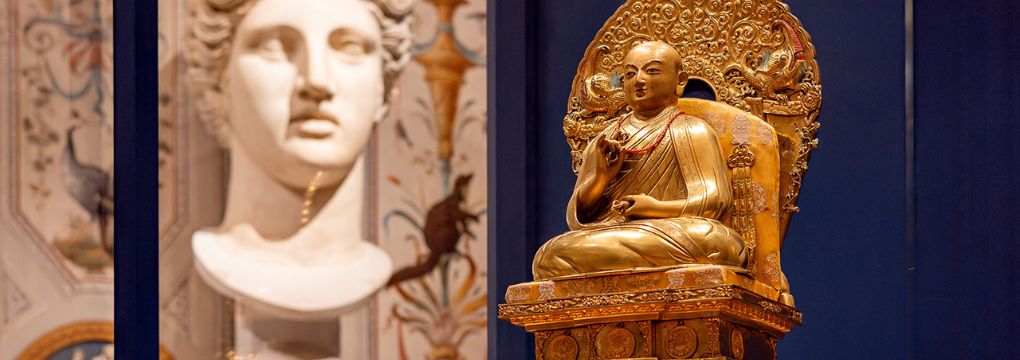
What you’ll see: two masterpieces, one unforgettable contrast
The exhibition is small in number, but huge in impact. The two works on display are:
- A Green Tara (Tara is a beloved female deity linked to protection and spiritual liberation).
- A bronze self-portrait of Zanabazar enthroned—a rare, personal presence that makes the artist feel suddenly close.
Both come from the Chinggis Khaan National Museum in Ulaanbaatar.
Why the Borghese Gallery is the perfect place for this
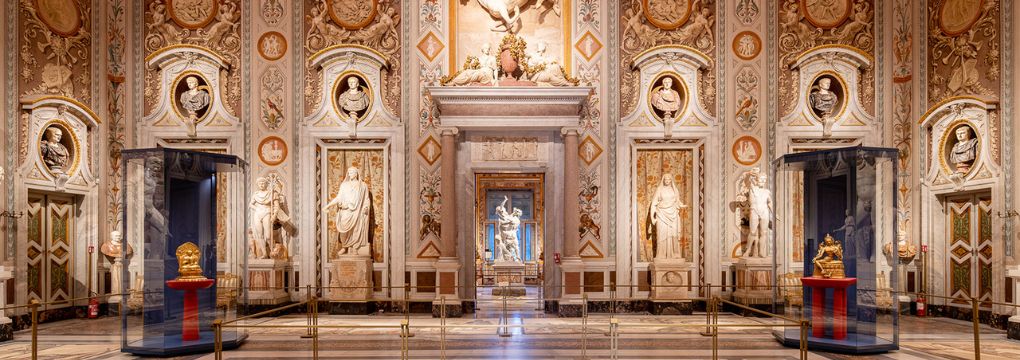
The Borghese isn’t just “another museum in Rome.” It’s also one of the homes of Bernini’s genius—thanks to the collecting vision of Cardinal Scipione Borghese. So placing Zanabazar here isn’t random: it’s a direct invitation to compare two “game-changers” of the 1600s.
Different religions. Different geography. Different artistic traditions.
But the same ambition: to invent a new language of beauty and leave a mark that lasts for centuries.
The idea behind it all: “Global Baroque”
This exhibition grows out of a bigger cultural question: what if Baroque wasn’t only European?
The project connects to the 2025 exhibition “Global Baroque. The World in Rome at the Time of Bernini” (Scuderie del Quirinale), curated by Francesca Cappelletti and Francesco Freddolini.
That earlier show highlighted 17th-century Rome as a city shaped by exchanges, travel, diplomacy, and encounters—almost like an early version of globalization.
Now the Borghese takes that same spirit and turns it into something very concrete: one room, two masterpieces, one conversation across continents.


Comment (0)