Roman food is simple cooking built on a few ingredients: the four classic pastas (carbonara, cacio e pepe, amatriciana and gricia), artichokes, supplì, pizza al taglio, saltimbocca, oxtail stew and the cream-filled maritozzo. Eat pasta in a trattoria, grab street food at a bakery, and shop at the Testaccio market.
We have shown visitors around Rome since 2012 and we run food tours and cooking classes. This guide is what we tell our own guests: the dishes worth ordering, where Romans eat them, how to order coffee and gelato, and how to eat gluten free.
Roman cooking, cucina romana, comes from home kitchens and working-class taverns. Most dishes use three to five ingredients, so their quality is everything. Four things shape it:
| Dish | What it is | When to eat it | Where to find it |
|---|---|---|---|
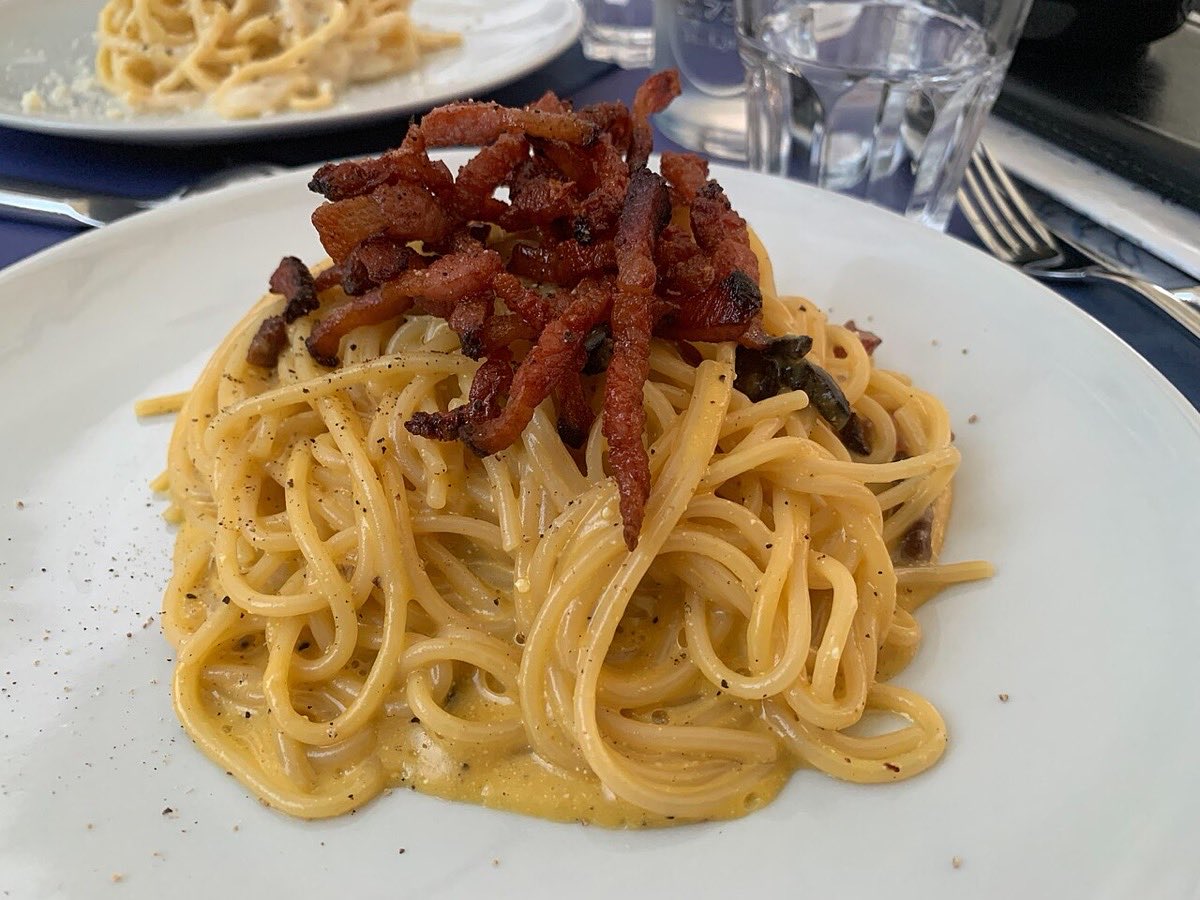
| 1. Carbonara | Pasta with egg yolk, guanciale, Pecorino Romano and pepper, no cream | All year | Trattoria |
| 2. Cacio e pepe | Pasta with Pecorino Romano and black pepper | All year | Trattoria |
| 3. Amatriciana | Guanciale, tomato and Pecorino | All year | Trattoria |
| 4. Gricia | Guanciale, Pecorino and pepper, no tomato | All year | Trattoria |
| 5. Supplì | Fried rice croquette with tomato sauce and mozzarella | Snack, or before pizza | Pizzeria, pizza al taglio shop |
| 6. Pizza al taglio | Rectangular pizza sold by weight | Lunch or a snack | Pizza al taglio shop, bakery |
| 7. Roman pizza | Round pizza with a thin, crispy base | Dinner | Pizzeria |
| 8. Carciofi alla romana | Artichokes braised with mint and garlic | Late winter, spring | Trattoria |
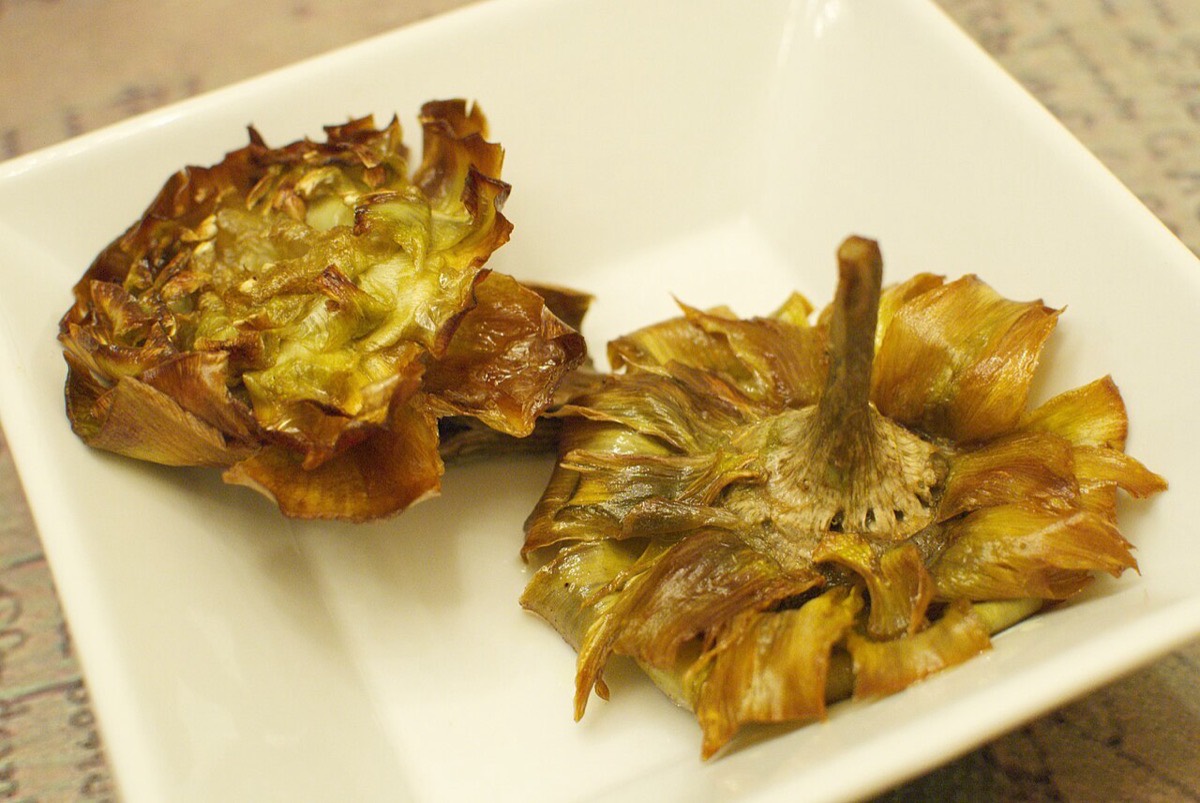
| 9. Carciofi alla giudia | Whole fried artichokes, Roman Jewish style | Late winter, spring | Jewish Ghetto |
| 10. Puntarelle | Chicory shoots with anchovy dressing | Winter | Trattoria |
| 11. Saltimbocca | Veal with prosciutto and sage | All year | Trattoria |
| 12. Coda alla vaccinara | Oxtail stewed in tomato sauce | All year | Trattoria, Testaccio |
| 13. Abbacchio | Young lamb, grilled or roasted | Spring, Easter | Trattoria |
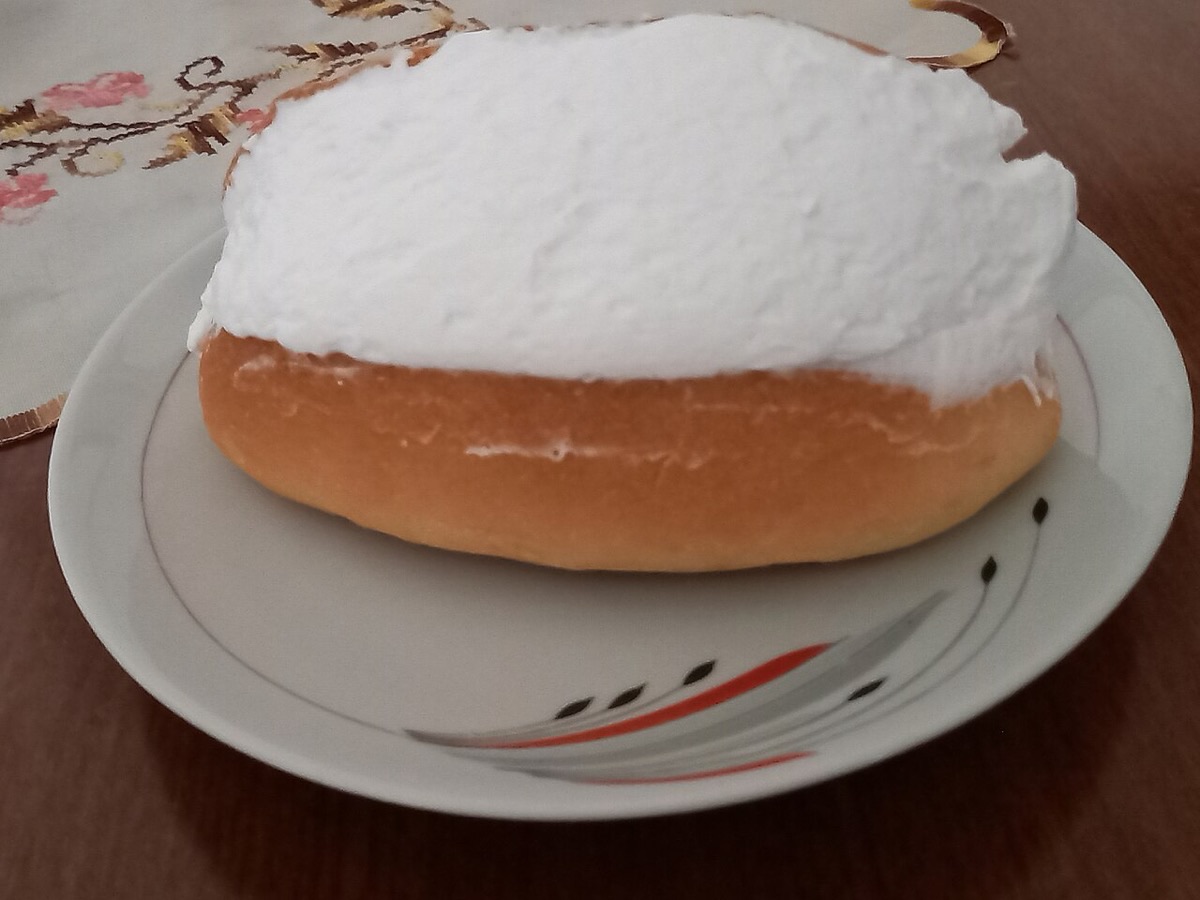
| 14. Maritozzo | Sweet bun filled with whipped cream | Breakfast | Bar, pastry shop |
| 15. Crostata di ricotta e visciole | Ricotta and sour cherry tart | Dessert | Jewish Ghetto bakeries |
Almost every trattoria in Rome cooks all four. Try at least two.
To make fresh pasta yourself, join our pasta making class, with a meal and wine for adults at the end.
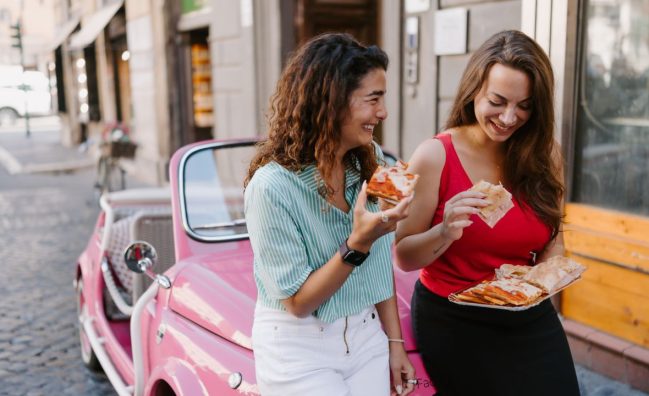
Romans snack standing up, at a bakery counter or a pizza al taglio shop.
To learn the thin Roman base, book our pizza making class, where you stretch and bake your own pizza.
Artichokes are the vegetable of Rome. Carciofi alla romana are stuffed with mint and garlic and braised in olive oil until soft. Carciofi alla giudia, from the Roman Jewish tradition, are fried whole, pressed open like a flower and fried again until crisp. Look for both in late winter and spring, and for the fried version in the Jewish Quarter.
In winter, order puntarelle: crunchy chicory shoots cut into strips and dressed with anchovies, garlic, vinegar and olive oil.
For the main course:
The maritozzo is Rome’s breakfast treat: a soft, sweet bun split open and filled with whipped cream. Romans eat it at the bar with a cappuccino, and many pastry shops now also sell savory versions. The name comes from marito, husband: according to tradition, young men gave one to their fiancée, sometimes with a ring hidden inside. Read the whole story in our article on the maritozzo.
Also try the crostata di ricotta e visciole, a tart of sweetened ricotta and sour cherry jam, a symbol of the Jewish Ghetto’s bakeries. Our ricotta and sour cherry tart recipe shows you how to bake it at home.
Coffee in Rome is quick and usually drunk standing at the counter.
For coffee with history, see our guide to the historical cafés of Rome. For free water, use the nasoni, the public drinking fountains.
Gelato comes in a cone (cono) or a cup (coppetta), usually with two or three flavors. Seasonal flavors, natural colors (pistachio is a dull green-brown, not bright green) and covered metal tubs are generally good signs.
Choose the place for the dish you want:
For neighborhoods, Testaccio is the home of the “fifth quarter”, Trastevere is full of trattorias, and the Jewish Quarter is the place for Roman Jewish dishes. Markets show what Romans actually buy:
| Market | Where | When | Good for |
|---|---|---|---|
| Mercato di Testaccio | Covered market, entrances on Via Beniamino Franklin, Via Alessandro Volta, Via Aldo Manuzio and Via Lorenzo Ghiberti | Monday to Saturday, 7:00–15:30 | Street food, fresh produce, cheese |
| Campo de’ Fiori | Open-air market in the historic center | Every morning, Monday to Saturday | Fruit, vegetables, flowers |
| San Cosimato | Piazza di San Cosimato, Trastevere | Every morning except Sunday | Seasonal produce such as artichokes and puntarelle, meat, fish, cheese |
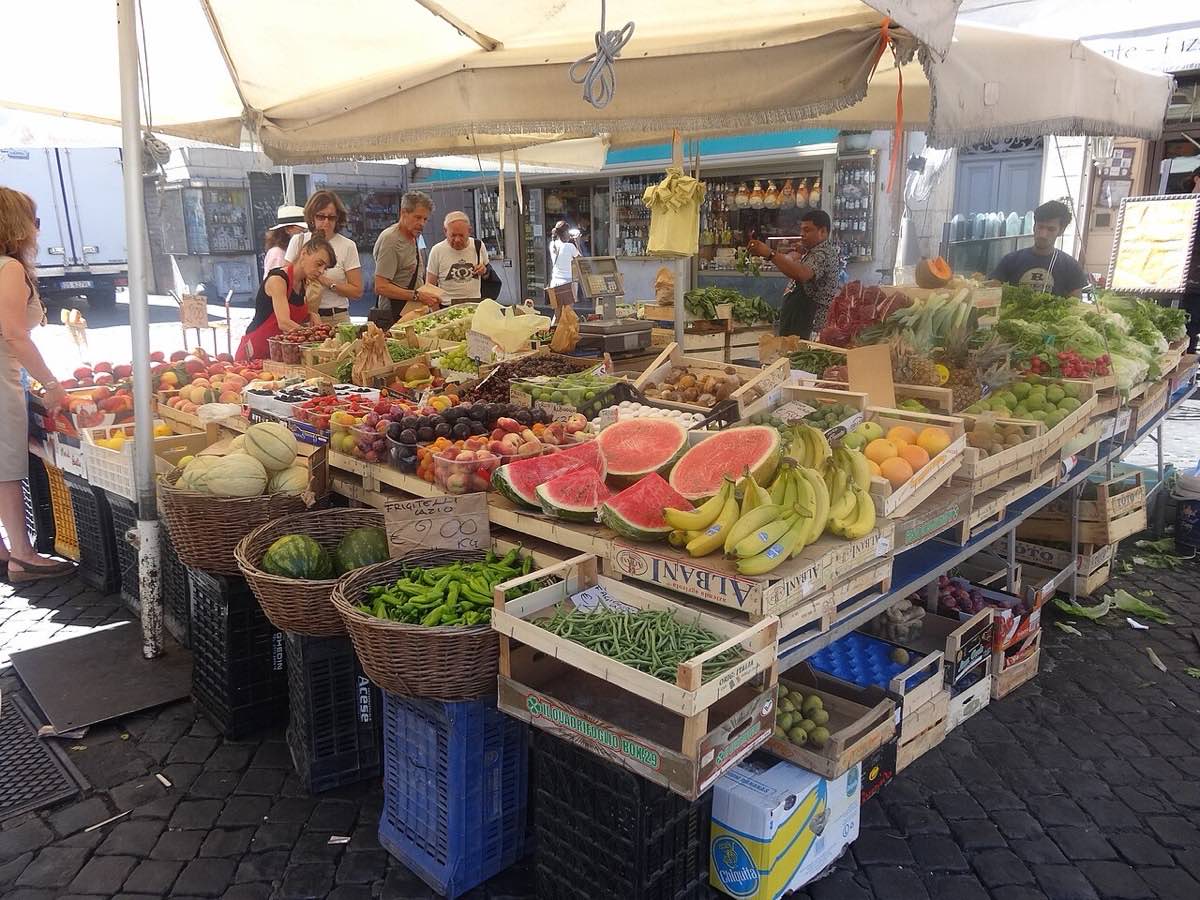
Official websites give exact hours only for Testaccio, so go to the street markets in the morning. For more, read our guide to the markets of Rome.
Yes, with some planning. The Italian Coeliac Association (AIC) runs Alimentazione Fuori Casa (AFC, “eating out”), a network of restaurants, pizzerias, bars, gelaterias and hotels that follow its gluten-free rules. According to AIC:
Elsewhere, AIC suggests explaining that you can eat rice, corn, potatoes, vegetables, fruit, eggs, cheese, milk, meat and fish, as long as nothing is prepared with forbidden flours, breadcrumbs, batter or thickened sauces. Pasta, pizza, supplì and maritozzi contain wheat unless the menu says senza glutine.
Our cooking classes are not suitable for celiacs or a gluten-free diet: they use wheat flour, and cross-contamination cannot be avoided. On our food tours we adapt the tastings where possible but cannot rule out cross-contamination, so tell us your needs when you book.
| Option | Duration | Price | Good for |
|---|---|---|---|
| On your own | As long as you like | Only what you eat | Budget travelers who know what to order |
| Shared food tour, Trastevere & Ghetto (ours) | 2.5 hours on foot | €150 per person | Tasting many specialties with a guide |
| Shared pasta or pizza class (ours) | 3 hours | €79 per person (pasta €89 from April to November) | Cooking yourself, families |
| Shared market tour & cooking class (ours) | 4.5 hours | €190 per person | Shopping at a market, then a full meal |
| Private Fiat 500 or golf cart food tasting (ours) | 3 hours | from €650 (Fiat 500) or €510 (golf cart) for 1–2 people | Landmarks and tastings without long walks |
If you are happy exploring alone, a morning at the Testaccio market and a trattoria lunch cost much less than any tour. A tour or class is worth it when you want someone to explain what you eat, or a recipe to cook again at home.
Our Trastevere and Jewish Ghetto food tour is a 2.5-hour shared walk, in English, starting every day at 10:00 and 17:00 in Piazza Trilussa, in front of the poet’s statue. You taste local specialties through Trastevere, Campo de’ Fiori and the Ghetto, and finish with fresh pasta, wine and dessert, for €150 per person.
To cook, choose the pasta making class or the pizza making class: 3 hours with English-speaking chefs at 11:00, 15:00 and 18:30, ending with your meal and wine for adults. The pizza class costs €79 per person, and the pasta class €79, or €89 from April to November. For the other times, we send the meeting point when you book. The market tour and cooking class starts at 9:30, Monday to Saturday, at Largo di Torre Argentina 1, with shopping at Campo de’ Fiori and a five-course meal, for €190 per person. Classes and food tours are non-refundable once confirmed.
Prefer to ride? On the private Fiat 500 tour with food tasting, your driver picks you up in the historic center at 14:30 or 18:00. You taste a slice of pizza or a porchetta sandwich at a traditional bakery, fresh mozzarella and gelato, and see the Colosseum, the Pantheon and the Trevi Fountain from the outside. It costs from €650 for 1–2 people, children from age 3. The golf cart tour with food tasting costs from €510 for 1–2 people. Both take up to 21 guests guaranteed, larger groups on request. If it rains, the golf carts have rain covers, and the Fiat 500 tour moves to a golf cart, or to another date if none is free. Our drivers are not licensed guides, but they gladly share food tips. See all our golf cart tours in Rome and vintage Fiat 500 tours in Rome.
See all our food tasting tours and cooking classes, and plan the rest of your stay with our guides to the Colosseum, the Pantheon and the Trevi Fountain.
 Trastevere & Ghetto Food Tour2.5-hour shared food walk with tastings, pasta and wine · €150 per personBook now
 Pasta Making Class3-hour shared class, with the meal you make and wine · from €79 per personBook now
 Fiat 500 Tour + Food Tasting3-hour private ride with three tastings · from €650 for 1–2 peopleBook now
What food is Rome famous for?
Rome is famous for four pastas: carbonara, cacio e pepe, amatriciana and gricia. Other classics are artichokes, either braised or fried Jewish style, supplì, pizza al taglio, saltimbocca, oxtail stew and the maritozzo, a sweet bun filled with whipped cream.
What are the four Roman pastas?
Carbonara (egg yolk, guanciale, Pecorino Romano and pepper), cacio e pepe (Pecorino and black pepper), amatriciana (guanciale, tomato and Pecorino) and gricia (guanciale, Pecorino and pepper, without tomato). The Roman carbonara has no cream.
What is the difference between Roman and Neapolitan pizza?
Roman pizza is rolled very thin and comes out crispy, with almost no raised edge. Neapolitan pizza is softer, with a thick, puffy edge. In Rome you also find pizza al taglio, baked in rectangular trays and sold by weight.
Can you eat gluten free in Rome?
Yes. The Italian Coeliac Association (AIC) lists trained restaurants, pizzerias, bars and gelaterias in its AFC programme, and foreign visitors can buy the 15-day AIC Mobile Welcome app in English. Only places listed on the AIC website or app are part of the programme, whatever the window sticker says.
What is a maritozzo and when do you eat it?
A maritozzo is a soft, sweet bun split open and filled with whipped cream. Romans usually eat it for breakfast at the bar with a cappuccino, but bars and pastry shops sell it all day.
Is a food tour or a cooking class in Rome worth it?
It depends on what you want. If you know what to order, markets and trattorias cost less. A food tour helps you taste many specialties with a local in a few hours, and a cooking class teaches you a recipe you can make again at home.