
The Stadium of Domitian is the ruin of an ancient Roman athletics stadium, about 4.5 m below Piazza Navona, with its entrance at Via di Tor Sanguigna 3. On 1 November 2026 the archaeological area is closed for restoration works, and no reopening date has been announced. Some of its remains can still be seen from the street.
Cover photo: Hugo DK, CC BY-SA 4.0, via Wikimedia Commons
Piazza Navona is long, narrow and rounded at one end for a reason: it sits on top of the stadium that Emperor Domitian built for athletic games in the 1st century AD. Part of that stadium survives under the square’s northern end, and since 2014 it had been open to visitors. We are a local tour operator in Rome, and Piazza Navona is on many of our golf cart and Fiat 500 routes. This guide explains whether you can visit the stadium now, what it was, what you see inside when it is open, tickets and hours, where the entrance is, and what to see nearby while it is closed.
Is the Stadium of Domitian open?
No. On 1 November 2026 the Stadium of Domitian is closed for restoration works. This is what we found when we checked:
- Turismo Roma, the City of Rome’s official tourism website, lists the Stadium of Domitian Archaeological Area as closed for restoration works. The page was updated at the end of October 2026.
- The site’s own website showed a closure notice for restoration works from spring 2026: the notice was not there in early March and was there in mid-April, according to archived copies. On 1 November 2026 the website did not load at all.
- The official booking page still describes the tickets, but it has no dates on sale between November 2026 and June 2027.
We have found no reopening date. If you plan to visit, check the Turismo Roma page before you go, or contact the site: Turismo Roma lists the phone number +39 06 6880 5311 and the email [email protected]. Several ticket websites still describe the visit, so make sure a date can really be booked before you pay. While the site is closed, you can still see part of the stadium from the street (see below).
What was the Stadium of Domitian?
Domitian, emperor from 81 to 96 AD, built the stadium in the Campus Martius, the flat area inside the bend of the Tiber. It opened in 86 AD for the Certamen Capitolinum, games in honor of Jupiter Optimus Maximus that imitated the Olympic Games, according to Turismo Roma. Domitian is also the emperor who finished the work on the Colosseum begun by his father Vespasian.
It was a stadium for athletics, not a circus for chariot races. The Sovrintendenza Capitolina, the City of Rome’s office for its ancient monuments, notes that it was smaller than a circus and had no central barrier or obelisk. The building was a very long rectangle, curved at one end and straight, slightly slanted, at the other. The outside had two levels of arches, and there was an entrance on each side.
| Stadium of Domitian | At a glance |
|---|---|
| Opened | 86 AD, under Emperor Domitian |
| Purpose | Athletic games (the Certamen Capitolinum) |
| Size | About 275 m long and 106 m wide (the Sovrintendenza gives 265 m) |
| Spectators | About 30,000 (the Colosseum held 50,000–60,000) |
| Materials | Brick covered with molded, colored stucco; travertine façade and pillars |
| Today | About 4.5 m below the street, under Piazza Navona |
Turismo Roma describes it as the first and only masonry stadium in ancient Rome. It held about half as many people as the Colosseum: read our guide to the Colosseum for the bigger arena.

What games were held in the Stadium of Domitian?
The program, Turismo Roma explains, included running, wrestling, boxing, pankration (a fight in which everything was allowed except biting and scratching) and the pentathlon: discus, javelin, long jump, a running race and wrestling. Music and poetry contests took place in the Odeon, a smaller theater built nearby, and gifts were handed out to the poorest Romans during the games.
Domitian loved these Greek-style games, but the Roman public did not. Many found them unmanly and preferred the most violent events, boxing and pankration. The athletes were mostly professionals from Greece and the eastern provinces. Unlike gladiators, who had the lowest social status, a winner could receive Roman citizenship, tax privileges or exemption from military service. According to the Roman historian Suetonius, Domitian presided over the games in a purple toga cut in the Greek style, wearing a golden crown with images of Jupiter, Juno and Minerva.
The games were called agones, and the square that later grew on the arena took its name from them: in agone slowly became “Navona”.
What do you see inside the Stadium of Domitian?
When the site is open, you walk about 4.5 m below today’s street level, among the brick walls, arches and travertine pillars of the stadium’s curved northern end. After the remains came to light in 1936, during the demolition of houses on that curve, they were excavated and built into a new building of INA, Italy’s national insurance institute, according to the Sovrintendenza. Since June 2022 the area has also housed the Museo dello Sport, a small museum of sports memorabilia (Turismo Roma).
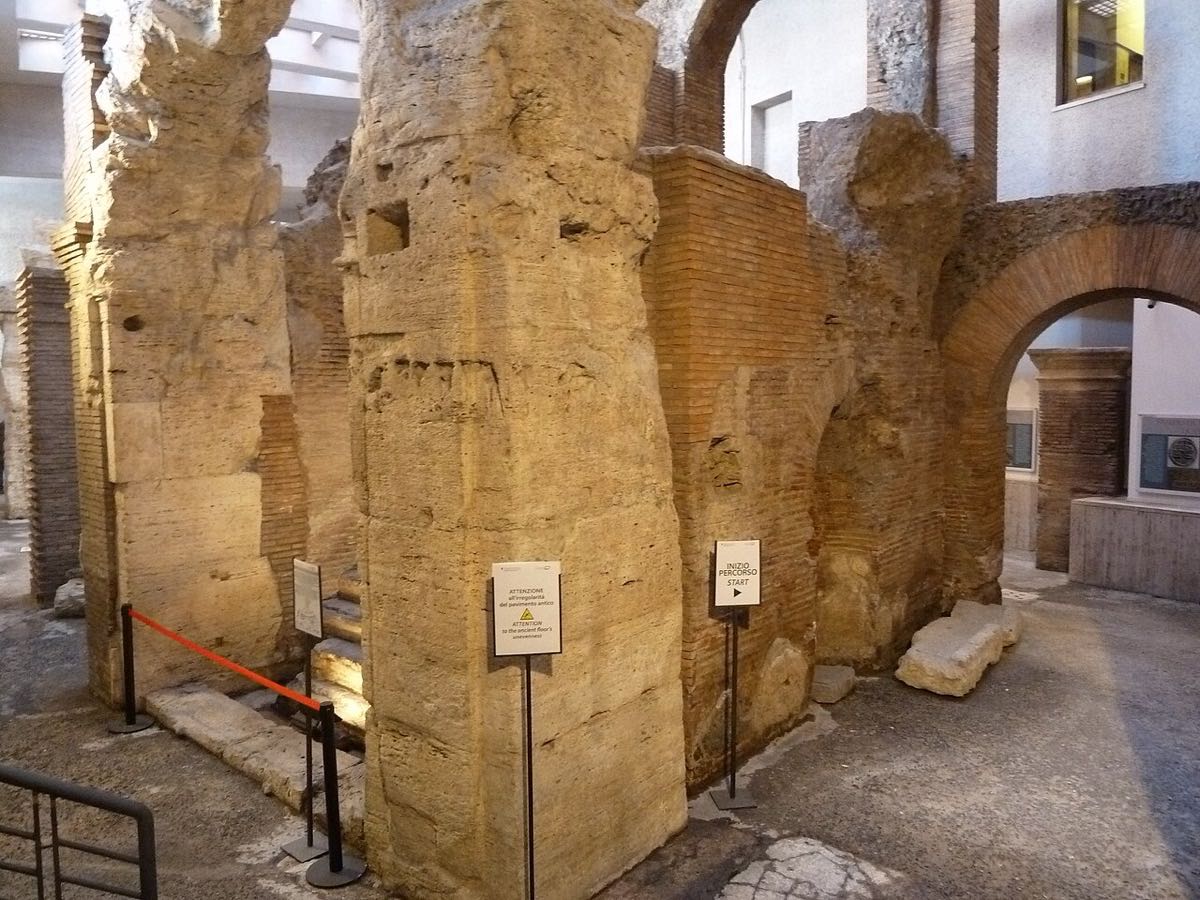
The official booking page describes two routes:
| Standard route | Exclusive route | |
|---|---|---|
| What you see | The center of the curved end of the stadium | The curved end plus the eastern side, where the stands were |
| Points of interest | 16 | 21, including Piazza Navona |
| Extra finds | – | Traces of a workshop for a rare marble, a small late antique cemetery, remains of medieval and Renaissance houses |
| Audio guide | Included, about 40 minutes | Included |
| Group and length | Not stated | Up to 10 people per visit, about 60 minutes |
| Booking | Not stated as required | Required |
On both routes, panels, photos and videos, some in 3D, tell the story of the stadium, of Piazza Navona and of sport in ancient Rome. The audio guide also has a version for children, and you can download it free to your phone with a QR code or an app. On Saturdays, Sundays and public holidays, a virtual reality station offers a 360° trip through the legends of Rome’s squares, for €4 extra per person.
These details come from the booking page, which has not been updated since March 2026. After the restoration, the visit may change.

Can you see the Stadium of Domitian from the outside?
Yes, a little. At the northern end of Piazza Navona, near the entrance on Via di Tor Sanguigna, part of the stadium’s travertine arches stands in an open pit below the pavement, and you can look down at it over the railing. It takes a minute and costs nothing, but the works may hide part of the view while the restoration lasts.
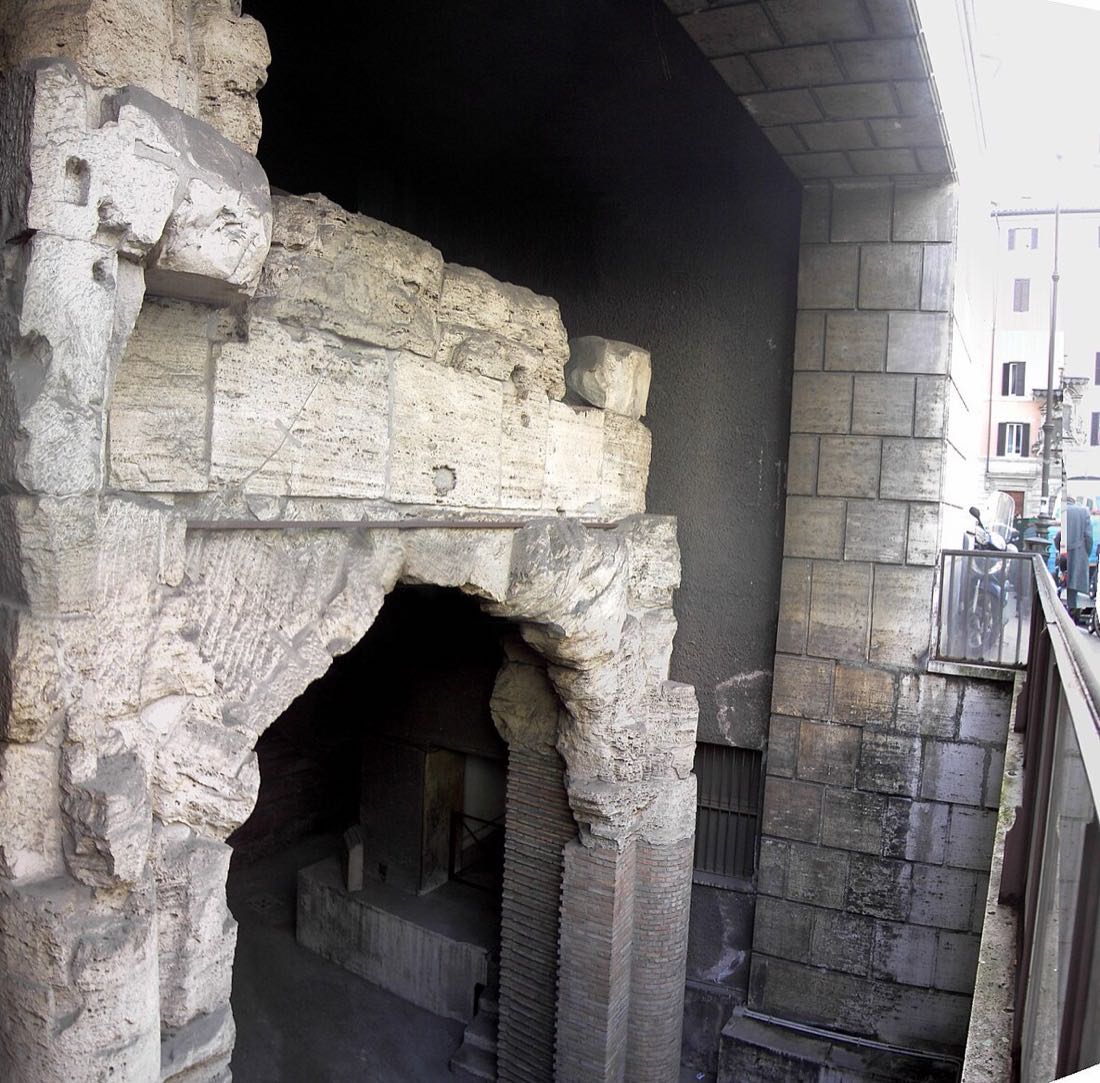
The other thing you can see from outside is the stadium’s shape. Stand in the middle of Piazza Navona: the open space is the old arena, and the buildings around it stand on top of the stands.

What are the Stadium of Domitian’s ticket prices and opening hours?
| Topic | What the official sources say (1 November 2026) |
|---|---|
| Status | Closed for restoration works, no reopening date |
| Opening hours when open | Every day, 10:00–19:00, last entry at 18:20 |
| Ticket prices | Not shown: no dates are on sale |
| Where to buy | The site’s official booking page |
| Audio guide | Included in the ticket, about 40 minutes |
| Exclusive route | Booking required, up to 10 people, about 60 minutes |
| Virtual reality | Saturdays, Sundays and holidays, €4 extra per person |
| Cancellation | Up to 48 hours before the visit |
| Contact | +39 06 6880 5311, [email protected] |
We do not publish prices from ticket resellers: they change, and they may not match the official price. When the site reopens, check the price on the official booking page.
Accessibility: we found no official information on access for wheelchair users or people with reduced mobility. The ruins lie about 4.5 m below the street, so ask the site before you book.
Where is the entrance to the Stadium of Domitian?
The entrance is at Via di Tor Sanguigna 3, at the northern, rounded end of Piazza Navona. The official booking page also lists a second entrance at Piazza Navona 45.
- From the Pantheon: about 7 minutes on foot (our estimate).
- From the Trevi Fountain: about 15 minutes on foot (our estimate).
- By bus: several routes stop on the streets around the square, but lines and stops in Rome change often, so check a journey planner before you go.
How is Piazza Navona connected to the stadium?
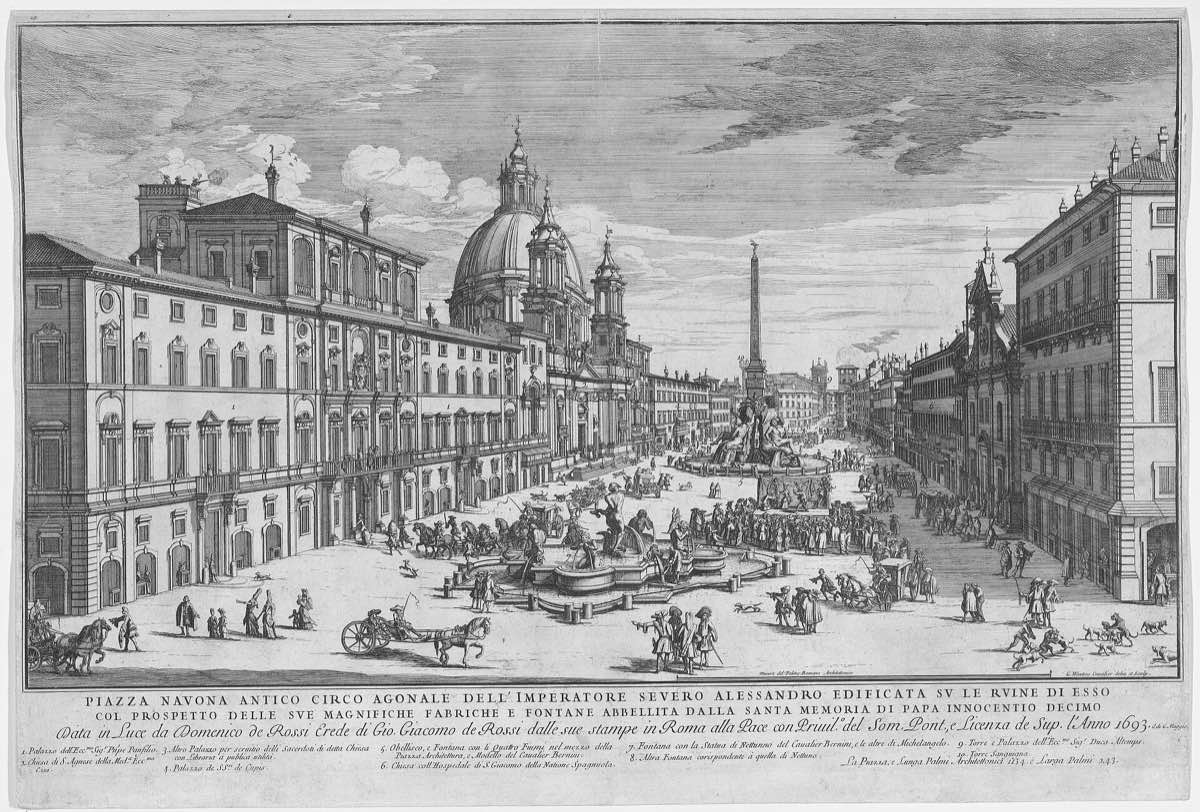
Piazza Navona sits exactly on the stadium’s arena, which is why the square is so long and narrow, with one rounded end. The fountains, the church of Sant’Agnese in Agone and the palaces around it came many centuries after the games, and the palaces still follow the outline of Domitian’s stadium. For the fountains, the churches and the square’s history, read our guide to Piazza Navona.

What can you see near the Stadium of Domitian while it is closed?
- Pasquino, a battered ancient statue at the corner of Palazzo Braschi, a few minutes’ walk from the square. It was found nearby, and the Sovrintendenza notes that it is traditionally linked to the stadium’s decoration. For centuries Romans hung anonymous satirical poems on it: read about it in our guide to Rome’s talking statues.
- Museo Napoleonico (Piazza di Ponte Umberto I 1) and Museo Barracco of ancient sculpture (Corso Vittorio Emanuele II 166/A), two small civic museums a few minutes away. Both are open Tuesday to Sunday, 10:00–18:00, according to the Museo Napoleonico and Museo Barracco websites. Tickets cost €7.50 (€6 reduced) for visitors; entry is free for residents of Rome.
- The Pantheon, about 7 minutes away: see our Pantheon guide for tickets and hours.
- More underground Rome: the catacombs on the Appian Way can be visited with their own guides; check their closing days before you go. Our guide to the Catacombs of Rome compares them, and our post on the San Sebastiano Catacombs tells their story.
See the Stadium of Domitian area with us
None of our tours goes inside the Stadium of Domitian. Two of them start at Piazza Navona, built over the stadium, and then go underground at the San Sebastiano Catacombs; others include Piazza Navona on a ride through the center. On our rides the sights are seen from the outside, and our drivers are drivers, not licensed tour guides.
- Private golf cart tour + catacombs: 4 hours, with pickup in the historic center at 9:30. The route starts at Piazza Navona: while the stadium is closed, you see some of its ancient remains from the outside. Then Piazza Venezia, the Circus Maximus and the Quo Vadis Church on the Appian Way, to the San Sebastiano Catacombs, with an optional guided visit of about 40 minutes (catacombs ticket €12 per person, added when you book). €590 for 1–3 people, then €200 per person, up to 15 travelers. It runs every day except Monday.
- Private Fiat 500 tour + catacombs: the same 4-hour route in a vintage cabrio. Our cars are restored original Fiat 500s, or Fiat 850 Spiaggina for larger groups, converted to electric; some have no seat belts, because they were built before seat belts were required. €790 for 1–3 people, €1,580 for 4, then €295 per person, up to 15 travelers.
- Private golf cart tour: the 3-hour version includes Piazza Navona, the Pantheon, the Trevi Fountain, the Spanish Steps, the Colosseum and the Circus Maximus, with a Trevi Fountain ticket and a stop for gelato or coffee. €450 for 1–3 people, then €150 per person. The 2-hour version, from November to mid-April, costs €350 for 1–3 people. Start times: 9:30, 10:00, 14:30, 18:00 or 18:30.
Good to know on these tours:
- Catacomb tours: they run when the San Sebastiano Catacombs are open, so not on Mondays, 25 December, 1 January or Easter Sunday, nor during the catacombs’ annual closure (in 2026, from 7 to 27 December). The catacombs are not suitable for people with reduced mobility: there are about 70 uneven steps and no elevators.
- Weekends: on Saturdays and Sundays from 7:00 to 19:00 (except in August), the first stretch of the Appian Way is a limited traffic zone, so on weekends our driver changes the route.
- Groups: the catacomb tours take up to 15 travelers, the limit of the underground site; the private golf cart tour takes up to 21 guests guaranteed (on the 2-hour version the maximum depends on the start time), with larger groups on request.
- Children: golf carts take children of any age, and child seats are available on private golf cart tours only. A folded stroller fits on board; just tell us when you book. Fiat 500 tours take children aged 3 and over, with no child seats.
- Weather: the golf carts have rain covers and run in the rain. In rain or wet weather, the Fiat 500 tour runs in golf carts; if none is available, we offer another date or time.
- Cancellation: the two catacomb tours are non-refundable once we confirm them. The private golf cart tour has our standard terms: full refund if you cancel at least 72 hours before, 50% if you cancel at least 48 hours before.
| Tour | Piazza Navona | Stadium of Domitian | Price |
|---|---|---|---|
| On your own | Free, open at all hours | Closed; some remains visible from the street | Free from the street |
| Private golf cart tour + catacombs, 4 hours (ours) | On the route | Seen from the outside | from €590 for 1–3 people |
| Private Fiat 500 tour + catacombs, 4 hours (ours) | On the route | Seen from the outside | from €790 for 1–3 people |
| Private golf cart tour, 3 hours (ours) | Included | Not mentioned on the route | from €450 for 1–3 people |
See all our golf cart tours in Rome and vintage Fiat 500 tours in Rome.
Explore it with us
 Golf Cart Tour + Catacombs4 hours: Piazza Navona, the Appian Way and the San Sebastiano Catacombs, with an optional guided visit · from €590 for 1–3 peopleBook now
 Fiat 500 Tour + Catacombs4 hours in a vintage electric Fiat 500, from Piazza Navona to the catacombs · from €790 for 1–3 peopleBook now
 Private Golf Cart Tour of Rome3 hours with Piazza Navona, the Pantheon and a Trevi Fountain ticket · from €450 for 1–3 peopleBook now
FAQ
Is the Stadium of Domitian open?
No. On 1 November 2026 the archaeological area is closed for restoration works, as Turismo Roma reports, and the official booking page has no dates on sale until at least June 2027. We have found no reopening date. You can still see some of the remains from the street at the northern end of Piazza Navona.
How much are tickets for the Stadium of Domitian?
While the site is closed, the official booking page shows no dates and no prices. When it reopens, buy from the official booking page: the ticket includes an audio guide of about 40 minutes, and the exclusive route has to be booked in advance.
What are the opening hours of the Stadium of Domitian?
When it is open, the archaeological area opens every day from 10:00 to 19:00, with last entry at 18:20, according to its official booking page. It is closed for restoration at the moment, so check Turismo Roma or contact the site before you go.
What was the Stadium of Domitian used for?
It was built for athletic games, not chariot races. Emperor Domitian opened it in 86 AD for the Certamen Capitolinum, games in honor of Jupiter modeled on the Olympic Games, with running, wrestling, boxing, pankration and the pentathlon. Music and poetry contests were held in a theater nearby.
How many people did the Stadium of Domitian hold?
About 30,000 spectators, according to Turismo Roma, roughly half the capacity of the Colosseum. The building was about 275 m long and 106 m wide, and Piazza Navona keeps the shape of its arena today.
Where is the entrance to the Stadium of Domitian?
At Via di Tor Sanguigna 3, at the northern end of Piazza Navona; the official booking page also lists an entrance at Piazza Navona 45. The Pantheon is about 7 minutes away on foot.

Comment (0)