
Checked on November 9, 2026 · Descriptions and seasons on Turismo Roma, the City of Rome’s official tourism site; addresses, opening hours and prices on each place’s own website; our tours on our booking pages.
The street foods to try in Rome are supplì (fried rice croquettes with mozzarella), pizza al taglio by the slice, bakery pizza bianca and pizza rossa, the trapizzino, porchetta sandwiches and Roman-Jewish fried foods such as salt cod and zucchini flowers. Look for them in Trastevere, around Campo de’ Fiori, in the Ghetto, at Testaccio Market and near Termini.
Cover photo: Jon Gudorf Photography, CC BY-SA 2.0, via Wikimedia Commons
Rome street food is mostly eaten standing up: a slice from a pizza al taglio shop, a supplì from a rotisserie, a square of pizza bianca from a bakery counter. This guide explains each classic, when Romans eat it and which parts of the center are good for it. It also names a few long-established places, with addresses checked on their own websites. We do not rank them: every Roman has a favorite, so try a few. Facile Tours is a local tour operator based at Via del Colosseo 11A, and we walk and drive through these streets every day. For Roman cooking in general, from pasta to desserts, read our guide to Roman food.
What street food should you try in Rome?
This table sums up the classics. The sections below explain each one, with the seasons given by Turismo Roma, the City of Rome’s tourism site.
| Food | What it is | When Romans eat it | Where to try it (area) |
|---|---|---|---|
| Supplì | Oval croquette of rice in meat sauce with mozzarella, breaded and fried | As a snack, or as a starter in pizzerias | Trastevere, Testaccio, near Termini |
| Pizza al taglio | Rectangular pizza baked in a tray or on a long peel, sold by the slice | Any time of day, often as a quick lunch | Every neighborhood |
| Pizza bianca and pizza rossa | Bakery flatbread with olive oil and salt (bianca) or with tomato (rossa) | As a snack; pizza bianca is the classic school-break food | Bakeries around Campo de’ Fiori |
| Trapizzino | Triangle of pizza bianca filled with a traditional Roman dish | Lunch, dinner and late evening | Testaccio, Trastevere, near Termini |
| Porchetta sandwich | Roast pork from Ariccia in bread | A sandwich with red wine or beer | Bakeries and delis; the Castelli Romani |
| Fritti | Fried salt cod, stuffed zucchini flowers, Jewish-style artichokes | Zucchini flowers in late spring and summer; artichokes January to May | The Ghetto |
| Maritozzo and cornetto | Cream-filled sweet bun; Italian croissant | Breakfast at the bar | Coffee bars and pastry shops |
| Gelato | Italian ice cream | Any time, on a walk | Everywhere in the center |
| Grattachecca | Ice grated from a block, with syrup and fresh fruit | Summer | Historic street kiosks |
What is a supplì?
The supplì is the classic of Roman rotisseries (rosticcerie). Turismo Roma describes it as an oval croquette of rice and stringy mozzarella, breaded and fried. In the Roman recipe the rice is cooked in meat sauce, so it is completely red, and the mix includes egg. The shape is long and cylindrical, which is how you tell it from the Sicilian arancino, which is round or conical. Its full name is supplì al telefono: when you break it in half, the melted mozzarella stretches between the two pieces like a telephone cord. The name probably comes from the French word surprise.
Romans buy supplì as a snack when hunger strikes, and in pizzerias they often order one as a starter before the pizza. Some shops also make supplì with the sauces of Roman pasta: Supplì Roma, for example, fries amatriciana, carbonara and cacio e pepe versions (our post on carbonara and cacio e pepe explains those two dishes).
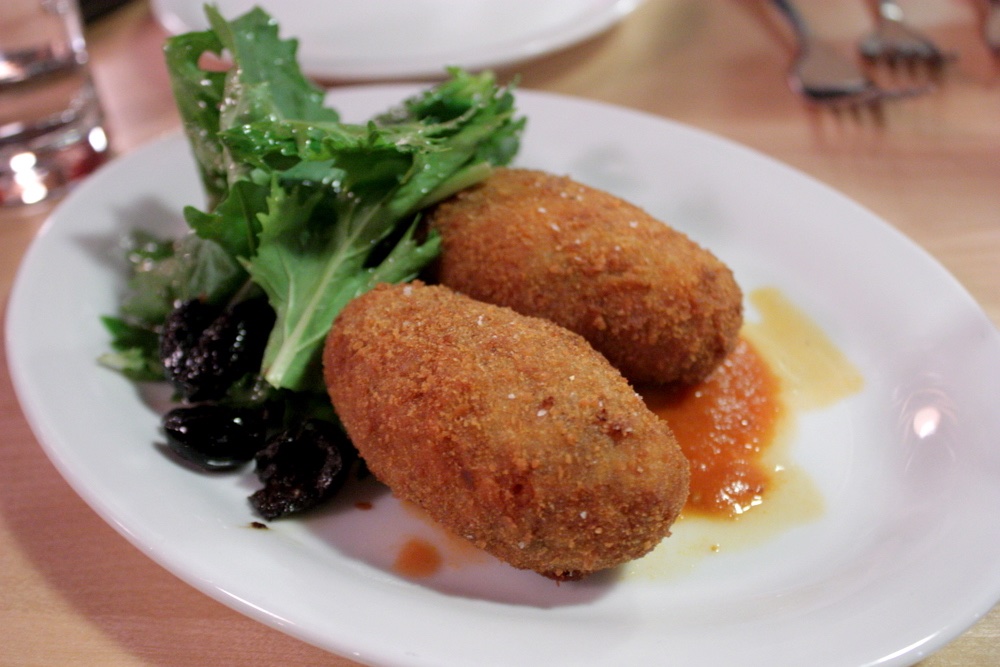
Where: rotisseries, pizza al taglio shops and pizzerias all over the center. In Trastevere, Supplì Roma has made them since 1979; at the Mercato Centrale near Termini, the fried food stall of Arcangelo Dandini fries its supplì to order. Addresses are in the section on areas below.
What is the difference between pizza al taglio and pizza bianca?
Pizza al taglio (“pizza by the cut”) is the rectangular pizza you see in shop windows in every corner of Rome. It comes in two styles: alla pala, a long rectangle named after the wooden peel that slides it into the oven, and in teglia, baked in a tray. In most shops you point at the pizza you want and show how big a piece you would like; it is cut, weighed and priced by weight. It is what many Romans eat for a quick lunch.
Pizza bianca and pizza rossa come from the bakery (forno), not from a pizza shop. Pizza rossa is topped with pieces of tomato and olive oil. Pizza bianca is golden, soft and closer to a focaccia than to the pizza most visitors imagine: Turismo Roma calls it “the oldest street food in the capital”, originally seasoned only with oil and salt. Romans eat it like a sandwich, and the classic filling is mortadella, called mortazza in Roman dialect; another is prosciutto with figs. It is sold wrapped in brown paper, and it is best eaten hot, straight from the oven. Turismo Roma also calls it the school-break food of every Italian student.
Where: pizza al taglio shops are everywhere. For bakery pizza, the streets around Campo de’ Fiori have two long-established bakeries, the Forno Campo de’ Fiori in the square itself and the Antico Forno Roscioli in Via dei Chiavari.
What is a trapizzino?
The trapizzino is a recent addition to Roman street food: a triangle of pizza bianca, crisp outside and soft inside, filled with a traditional Roman dish. Its website tells the story. In 2005, Stefano Callegari opened a pizza al taglio shop called 00100 in Testaccio, named after Rome’s postal code and after the “00” flour used for pizza. His idea was a takeaway scarpetta, the Italian habit of wiping up the last of the sauce with bread: a pizza pocket that could hold the sauce. In 2013, the trapizzino became a brand of its own.
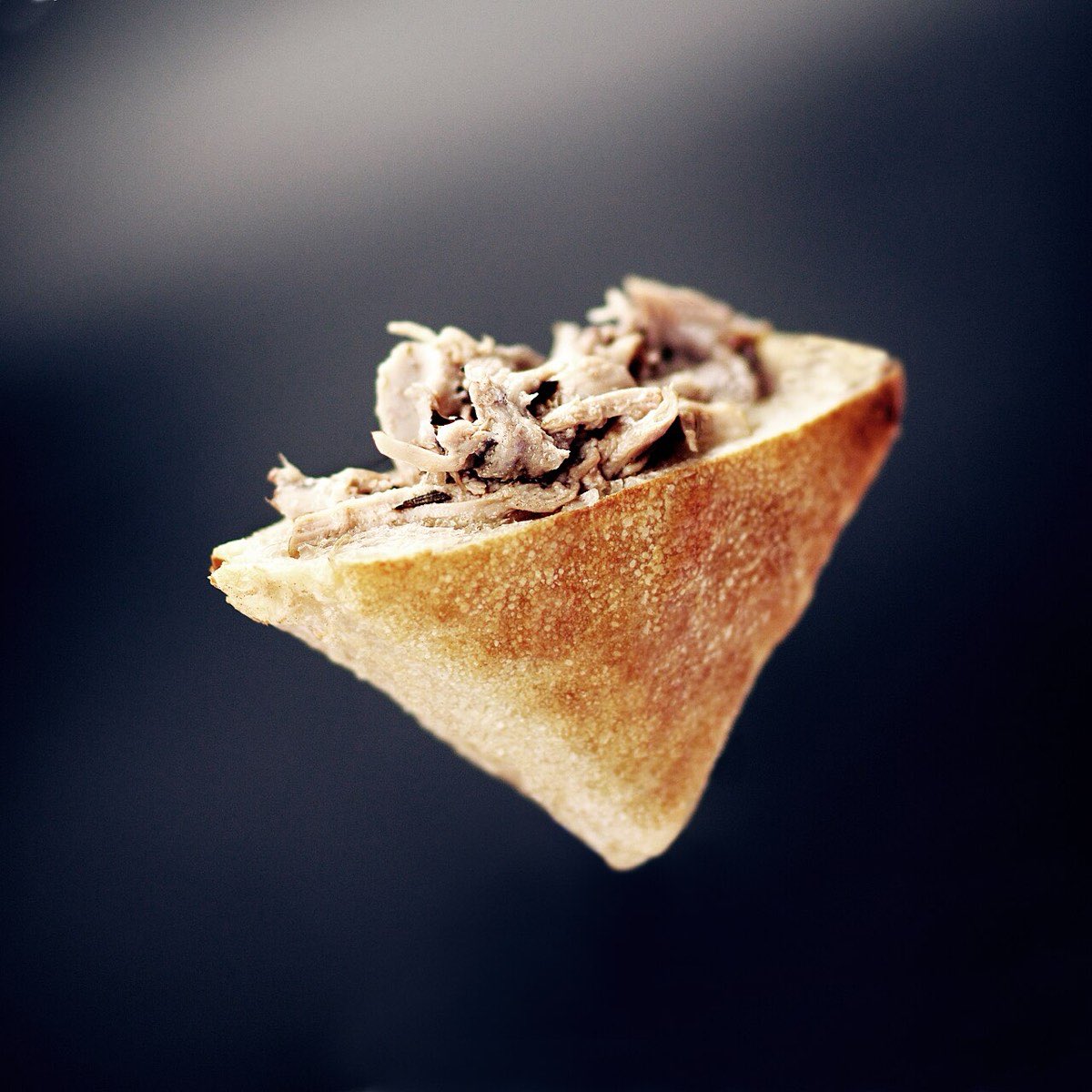
The fixed fillings on its menu include meatballs in tomato sauce (polpetta al sugo), chicken stewed hunter-style (pollo alla cacciatora), eggplant parmigiana and tongue in green sauce (lingua in salsa verde), and three seasonal fillings change through the year. On its website, a trapizzino costs €5 at the Trastevere shop and €5.50 in Testaccio (prices checked on November 9, 2026). The shops open at 12:00 and stay open until midnight or later, so Romans eat it for lunch, for dinner or late in the evening.
Where: Trapizzino’s own shops in Testaccio and in Trastevere, and its stall at the Mercato Centrale near Termini. Other shops in Rome make their own versions.
Where can you get a porchetta sandwich?
Porchetta is a whole pig, boned, seasoned with herbs and slowly roasted, then sliced and served cold or warm in bread. Turismo Roma recommends porchetta “strictly from Ariccia”, a town in the Castelli Romani hills south of Rome, served between two slices of Lariano bread or in a ciriola, a small Roman bread roll. It goes well with a local red wine or a beer. You find porchetta sandwiches at bakeries, delis and market stalls in Rome too, and if you have time, Turismo Roma suggests a trip to the Castelli Romani, home of the fraschette, the simple taverns of the area.
We do not name a porchetta shop in Rome here, because we could not check one on its own website. On our private Fiat 500 tour with food tasting, the bakery stop serves Roman specialties “such as a slice of pizza or a porchetta sandwich” (see below).
Which fried foods should you try, and when are they in season?
Fried food (fritti) has a special place in Rome, and several classic fried dishes come from Roman-Jewish cooking:
- Filetti di baccalà: fillets of salt cod dipped in batter and fried until crisp. Turismo Roma lists them among the traditional Roman-Jewish fried dishes.
- Fiori di zucca: zucchini flowers filled with mozzarella and anchovies, then battered and fried. You also find them as a pizza topping. The flowers come with the Roman zucchini, which Turismo Roma describes as “typical of the late spring and summer season, but available in food markets until November”.
- Carciofi alla giudia: Jewish-style artichokes, plunged head first into hot olive oil until they open like a flower. Turismo Roma calls them “an icon of the Jewish-Roman cuisine born in Rome’s ancient ghetto”. They are made with the Romanesco artichoke, the first Italian vegetable to receive the EU’s Protected Geographical Indication, which is in local markets “between January and May (although the best season is between March and April)”.
In late November you are between seasons: the zucchini are at the end of theirs, and the Romanesco artichoke has not started. For both, plan a spring or early summer visit. Rotisseries also sell fried or baked calzone, which in Rome is usually filled with mozzarella and cooked ham.
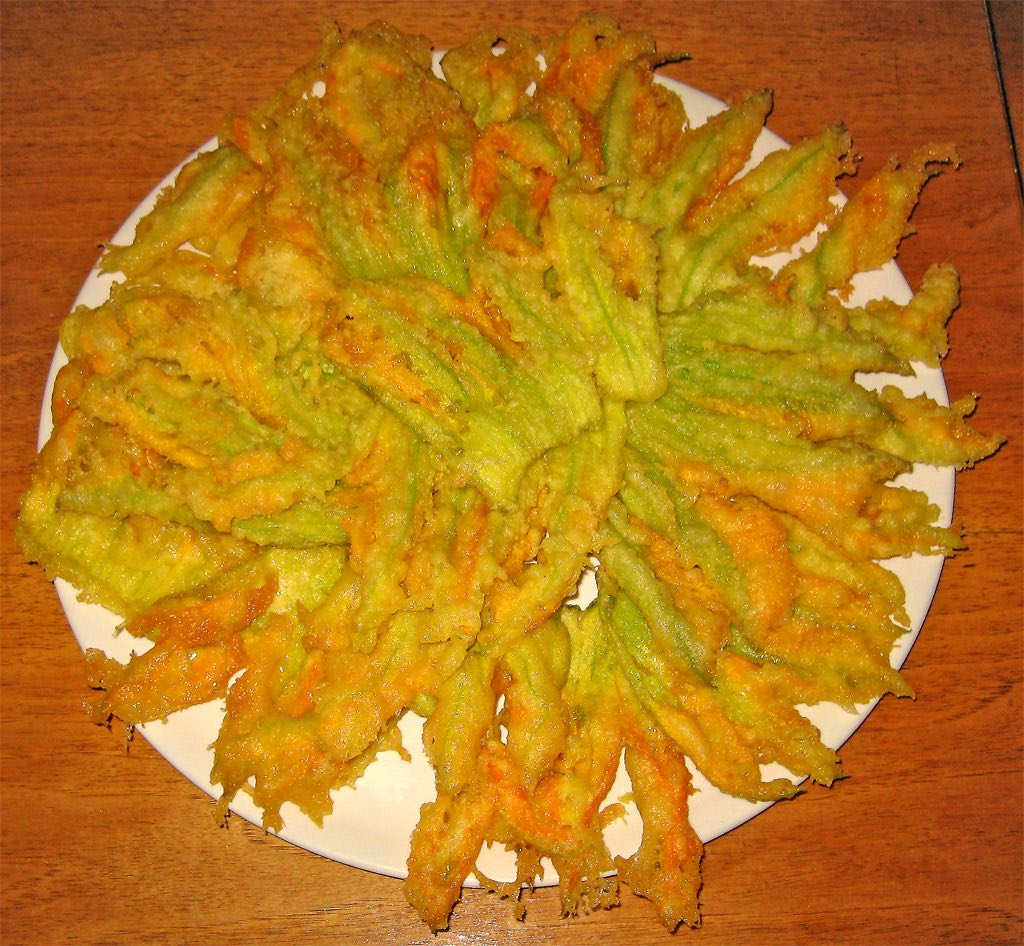
Where: the Ghetto, around Via del Portico d’Ottavia. Here fritti are usually a starter in sit-down restaurants rather than a snack from a stall, so ask whether a place sells them to take away. Read about the area’s history and its other dishes in our guide to the Jewish Quarter.
What do Romans eat for breakfast on the go?
Breakfast in Rome is quick and sweet, eaten standing at the counter of a coffee bar:
- Cornetto: the Italian croissant, plain or filled with cream, jam or chocolate, usually with a cappuccino or an espresso. Our guide to Roman food explains how to order coffee like a Roman.
- Maritozzo: a soft, lightly sweet yeast bun split open and filled with whipped cream; in Lent there is a version with raisins or candied fruit. Our post on the maritozzo tells its story and where to find one.
From late November, bakeries and pastry shops also fill up with holiday sweets: see our guide to Christmas food in Rome.
What about gelato and grattachecca?
Gelato is the sweet Romans eat on a walk, all year round: our guide to the best gelato in Rome explains how to spot good gelato and lists gelaterie in the center.
The grattachecca is Rome’s summer treat: ice grated from a block with a special tool, topped with syrup or fruit juice and pieces of fresh fruit. It is sold by historic kiosks on the street, which, according to Turismo Roma, are almost always open only in summer. If you visit Rome in late fall or winter, expect them to be closed.
Where should you go for street food in Rome?
These are well-known places and markets in five areas of the center, listed by area, not ranked. We checked each address on the place’s own website on November 9, 2026. Opening hours change, so check before you make a special trip.
- Trastevere. Supplì Roma, Via di San Francesco a Ripa 137, has made supplì since 1979: the classic with meat ragù and stringy mozzarella, plus versions such as oxtail ragù, amatriciana, carbonara and cacio e pepe, and pizza. Open Monday to Saturday, 10:00 to 22:00; closed on Sundays and holidays. Trapizzino Trilussa, Piazza Trilussa 46, is also a wine bar with wines from the Lazio region, open every day from 12:00. Piazza Trilussa is where our shared food tour starts. For the rest of the neighborhood, see our Trastevere guide.
- Campo de’ Fiori. The Forno Campo de’ Fiori, Campo de’ Fiori 22, with a second shop at Vicolo del Gallo 14, makes pizza bianca with flour, water, salt, yeast and extra virgin olive oil, and pizza rossa; its current owners have run it since 1970. Its website is several years old, so check the hours on the spot. The Antico Forno Roscioli, Via dei Chiavari 34, is a short walk away: Marco Roscioli took over an old bakery from 1824, and the family has run it since 1972. Open every day from 7:30 to 20:00. In the mornings, the square also holds its market.
- The Ghetto. Giggetto al Portico d’Ottavia, Via del Portico d’Ottavia 21/a-22, is a restaurant open since 1923. Its website presents the carciofo alla giudia as its specialty and lists fillet of salt cod among the classics of Roman-Jewish cooking. It is a sit-down place, but its website says you can order food to take away by phone or at the restaurant. Its website lists hours from Tuesday to Sunday, for lunch and dinner.
- Testaccio. The covered Mercato di Testaccio is open Monday to Saturday, 7:00 to 15:30, with entrances on Via Beniamino Franklin, Via Alessandro Volta, Via Aldo Manuzio and Via Lorenzo Ghiberti. Its long-standing stalls sit next to newer food counters, and its website presents it as a place for anyone who loves street food. Trapizzino Testaccio, Via Giovanni Branca 88, is the shop the brand calls the cradle of the trapizzino, with seats in the room next door. More about the district in our Testaccio guide.
- Around Termini. The Mercato Centrale Roma, Via Giovanni Giolitti 36, opened in October 2016 in the former railway workers’ club of Termini station, a 5-minute walk from the trains. It is a food hall, open every day from 7:30 to 23:30, with stalls that include Stefano Callegari’s trapizzino and Arcangelo Dandini’s fried food, whose supplì alla romana with chicken giblets is fried to order. If you arrive by train, our guide to Rome Termini Station covers the rest of the area.
How do you eat street food like a Roman?
- Order at the counter. In bakeries and pizza al taglio shops, point at what you want; for pizza, show with your hands how wide a slice you would like. In busy places you may pay at the cash register (cassa) first.
- Eat it hot. Supplì and pizza bianca are best eaten hot, straight out of the fryer or the oven, which is why many Romans eat them standing outside the shop.
- Break the supplì in half. You will see the mozzarella “telephone cord” that gives it its name.
- Check the hours. Testaccio Market closes at 15:30 and, like Supplì Roma, is closed on Sundays.
- Gluten free: supplì, pizza, trapizzini and maritozzi all contain wheat unless the shop says otherwise. Our guide to Roman food, linked above, has a section on eating gluten free in Rome.
Can you taste Rome’s street food on a tour with us?
On your own, you pay only for what you eat, and the areas above are easy to walk. A tour adds a guide or a driver, the route and the stories behind the food. Our tours do not promise every food on this page: each booking page names its tastings, and here is exactly what each one says. If you are looking for a Rome street food tour, Facile Tours runs these four food tours:
- Shared food tour of Trastevere & Ghetto: 2.5 hours on foot through Trastevere, Campo de’ Fiori and the Jewish Ghetto, every day at 10:00 and 17:00 from Piazza Trilussa, in front of the poet’s statue. The page lists tastings of local specialties along the way, without naming them, then a wine and fresh pasta tasting at one of our locations in the center, and dessert. It runs rain or shine, on Saturdays too, with the same route, but not on December 25 and January 1. Up to 9 people per booking, in English, €150 per person; children pay the same price.
- Private food tour of Trastevere & Ghetto: the same route and tastings (local specialties, fresh pasta, wine and dessert), only for your group, at a start time you choose when booking, confirmed based on availability. We send you the meeting point after booking. In English or Italian, for 1 to 10 people: €420 for 1 person, then €210 per person.
- Private golf cart tour with food tasting: 3 hours, starting at 14:30 or 18:00 with pickup at your hotel, Airbnb or restaurant in the historic center. The page names three tastings: a slice of Roman-style pizza at a traditional bakery with a glass of wine or water, fresh mozzarella with a soft drink or water, and a classic Italian gelato; vegetarian and vegan options on request. A sample route passes Piazza Venezia, the Roman Forum, the Colosseum, the Circus Maximus, the Mouth of Truth, Piazza Navona, the Pantheon, the Trevi Fountain and the Spanish Steps. €510 for 1–2 people, then €180 per person, up to 21 guests guaranteed, with larger groups on request.
- Private Fiat 500 tour with food tasting: 3 hours, starting at 14:30 or 18:00 with pickup in the historic center. The page names three tastings, adapted to your preferences: Roman specialties at a traditional bakery, “such as a slice of pizza or a porchetta sandwich”, with a glass of wine or water; fresh mozzarella with a soft drink or water; and a classic Italian gelato. A typical route passes the Colosseum, the Orange Garden, Piazza Navona, the Pantheon and the Trevi Fountain. €650 for 1–2 people, €680 for 3, €1,300 for 4, then €270 per person, up to 21 guests guaranteed, with larger groups on request.
Good to know on these tours:
- Sights and drivers: on the golf cart and Fiat 500 tours you see the sights from the outside, and our drivers are drivers, not licensed tour guides. On the food walking tours, a guide leads you on foot.
- Food and drink: tell us about allergies, intolerances or dietary needs when you book. On the walking tours we adapt where possible, but we cannot guarantee there is no cross-contamination. Wine is served only to adults.
- Children: golf carts take children of any age, and child seats are available on private golf cart tours only. A folded stroller fits on board; just tell us when you book. The Fiat 500 tour takes children aged 3 and over, with no child seats: our cars are restored original Fiat 500s converted to electric, and some have no seat belts, because they were built before seat belts were required.
- Wheelchairs: on a private golf cart tour, wheelchair users move onto a seat; the folded wheelchair travels on board. Contact us before booking if the traveler cannot move from the wheelchair to a seat.
- Weather: the food walking tours run rain or shine. The golf carts have rain covers and run in the rain. In rain or wet weather, the Fiat 500 tour runs in golf carts; if none is available, we offer another date or time.
- Cancellation: the two food walking tours are non-refundable once we confirm the booking. On the golf cart and Fiat 500 tasting tours, you get a full refund if you cancel at least 72 hours before, and 50% if you cancel at least 48 hours before.
If you would rather shop with a chef, our market tour and cooking class starts at 9:30, Monday to Saturday: you choose ingredients at the Campo de’ Fiori market and in local shops, then cook and eat a five-course meal with homemade pasta. The meeting point depends on the venue of your class and is sent with your booking confirmation. It lasts 4.5 hours and costs €190 per person. To make pizza yourself with a local chef, our pizza making class runs at 11:00 and 15:00 for up to 20 people and lasts about 2.5 to 3 hours. You eat the pizza you make, with a glass of wine or a soft drink. It costs €79 per person from November to February and €89 from March to October, and children pay the same as adults. Our cooking classes are not suitable for celiacs or a gluten-free diet. If you plan a cooking class on December 25 or January 1, check the calendar when you book: not every class runs on those days. Not sure which to pick? Read food tour or cooking class, and for Rome’s other markets, see our guide to the markets of Rome.
Whichever you choose, Facile Tours will be glad to show you the city: see all our food tours in Rome, golf cart tours in Rome and vintage Fiat 500 tours in Rome.
Explore it with us
 Shared Food Tour of Trastevere & Ghetto2.5 hours on foot: local specialties, fresh pasta, wine and dessert · €150 per personBook now
 Golf Cart Tour with Food Tasting3 hours, private: Roman-style pizza, fresh mozzarella and gelato · from €510 for 1–2 peopleBook now
 Fiat 500 Tour with Food Tasting3 hours, private, in a vintage electric Fiat 500: bakery specialties, mozzarella and gelato · from €650 for 1–2 peopleBook now
FAQ
What is typical Rome street food?
Supplì (fried rice croquettes with mozzarella), pizza al taglio, bakery pizza bianca and pizza rossa, the trapizzino, porchetta sandwiches and Roman-Jewish fried foods such as salt cod fillets, zucchini flowers and Jewish-style artichokes. For breakfast, Romans have a cornetto or a maritozzo; in summer, a grattachecca of grated ice and fruit.
What is the difference between a supplì and an arancino?
The Roman supplì is long and cylindrical, made with rice cooked in meat sauce, egg and a heart of mozzarella that stretches when you break it. The Sicilian arancino is round or conical. Both are breaded and fried.
How much does street food cost in Rome?
Prices change from shop to shop and are rarely published online. At Trapizzino’s own shops, a trapizzino costs €5 in Trastevere and €5.50 in Testaccio, according to its website in November 2026. Pizza al taglio is usually priced by weight, so you pay for the size of slice you ask for.
Which areas of Rome are good for street food?
Trastevere for supplì and trapizzini, Campo de’ Fiori for bakery pizza bianca and pizza rossa, the Ghetto for Roman-Jewish fried foods, Testaccio Market (Monday to Saturday, 7:00 to 15:30) and the Mercato Centrale at Termini station (every day, 7:30 to 23:30).
When are fried artichokes and zucchini flowers in season in Rome?
According to Turismo Roma, the Romanesco artichoke used for carciofi alla giudia is in markets from January to May, at its best in March and April. Roman zucchini, and their flowers, are typical of late spring and summer, though zucchini stay in markets until November.
Is there a Rome street food tour?
Our shared food tour of Trastevere & Ghetto is a 2.5-hour food walk through Trastevere, Campo de’ Fiori and the Jewish Ghetto, every day at 10:00 and 17:00 from Piazza Trilussa, for €150 per person. Its page lists local specialties along the way, then fresh pasta, wine and dessert, rather than a fixed list of street foods.

Comment (0)