
Trastevere is the old district across the Tiber from Rome’s historic center, known for its narrow cobbled streets, ivy-covered houses and trattorias. Its main sights are the Basilica of Santa Maria in Trastevere with its golden mosaics, Santa Cecilia, Villa Farnesina with Raphael’s frescoes and the Botanical Garden, with the Janiculum viewpoint just above.
Many visitors come to Trastevere for dinner and leave without seeing its churches, its Renaissance villa or its quiet back streets. We are a local tour operator and have shown visitors around Rome since 2012. This guide covers what to see, with hours and tickets checked on the official websites, the quieter corners, what to eat and how to choose a restaurant, the best time to go and how to get there.
What is Trastevere and where is it?
Trastevere is Rione XIII, one of the historic districts of central Rome. Its name comes from the Latin trans Tiberim, “beyond the Tiber”: it lies on the west bank of the river, opposite the historic center, between the water and the Janiculum Hill. According to Turismo Roma, it is the largest of Rome’s historic districts, and its coat of arms is a golden lion’s head on a red background.
For centuries this was a working-class district of river traders, craftsmen and taverns, with a strong local identity. Today it is one of the liveliest parts of the city in the evening, while in the morning many of its streets are still quiet.
A good way in is across Ponte Garibaldi. On the Trastevere side, in Piazza Belli, stands the monument to Giuseppe Gioachino Belli, the 19th-century poet who wrote sonnets in Roman dialect. The people of Rome paid for it through a public subscription, and it was unveiled in May 1913, 50 years after his death. The poet wears a top hat and leans on a copy of the parapet of Ponte Fabricio, the ancient bridge to Tiber Island.
What are the main things to see in Trastevere?
| Place | What it is | Hours (checked November 1, 2026) | Entry |
|---|---|---|---|
| Santa Maria in Trastevere | Basilica with 12th- and 13th-century mosaics | Not published online: ask the parish | Place of worship: ask the parish |
| Santa Cecilia in Trastevere | Basilica, Roman excavations, Cavallini fresco | Mon–Sat 10:00–12:30 and from 16:30; Sundays and holidays 11:30–12:30 and 16:30–18:00; fresco mornings only | Not published: check the monastery’s website |
| Villa Farnesina | Renaissance villa with frescoes by Raphael and his school | Mon–Sat 9:00–14:00 (last entry 13:15); second Sunday of the month 9:00–17:00 | €12; free under 10 |
| Botanical Garden (Orto Botanico) | 12-hectare garden of Sapienza University | Daily 9:30–18:30 (last entry 17:30) | €5; €4 reduced |
| Museo di Roma in Trastevere | Museum of Roman daily life and traditions | Tue–Sun 10:00–20:00 (last entry 19:00) | €13 with current exhibitions, €9.50 without |
| San Francesco a Ripa | Church with Bernini’s Blessed Ludovica Albertoni | Not published online: ask the church | Place of worship: ask the church |
| Bramante’s Tempietto | Renaissance shrine on the slope of the Janiculum | Tue–Sun 10:00–18:00 (last entry 17:30) | Free |
| Porta Portese market | Rome’s largest flea market | Sundays | Free to browse |
Plan the churches for the morning or the late afternoon, and avoid service times. Villa Farnesina is open only in the morning: its Italian page says Monday to Saturday, while the English page says Tuesday to Saturday, so check before you go on a Monday. The Museo di Roma in Trastevere and the Tempietto are closed on Mondays.
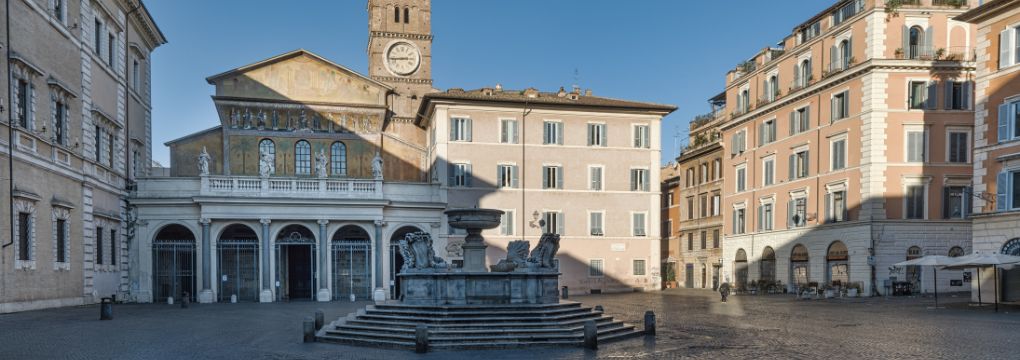
What should you see in the Basilica of Santa Maria in Trastevere?
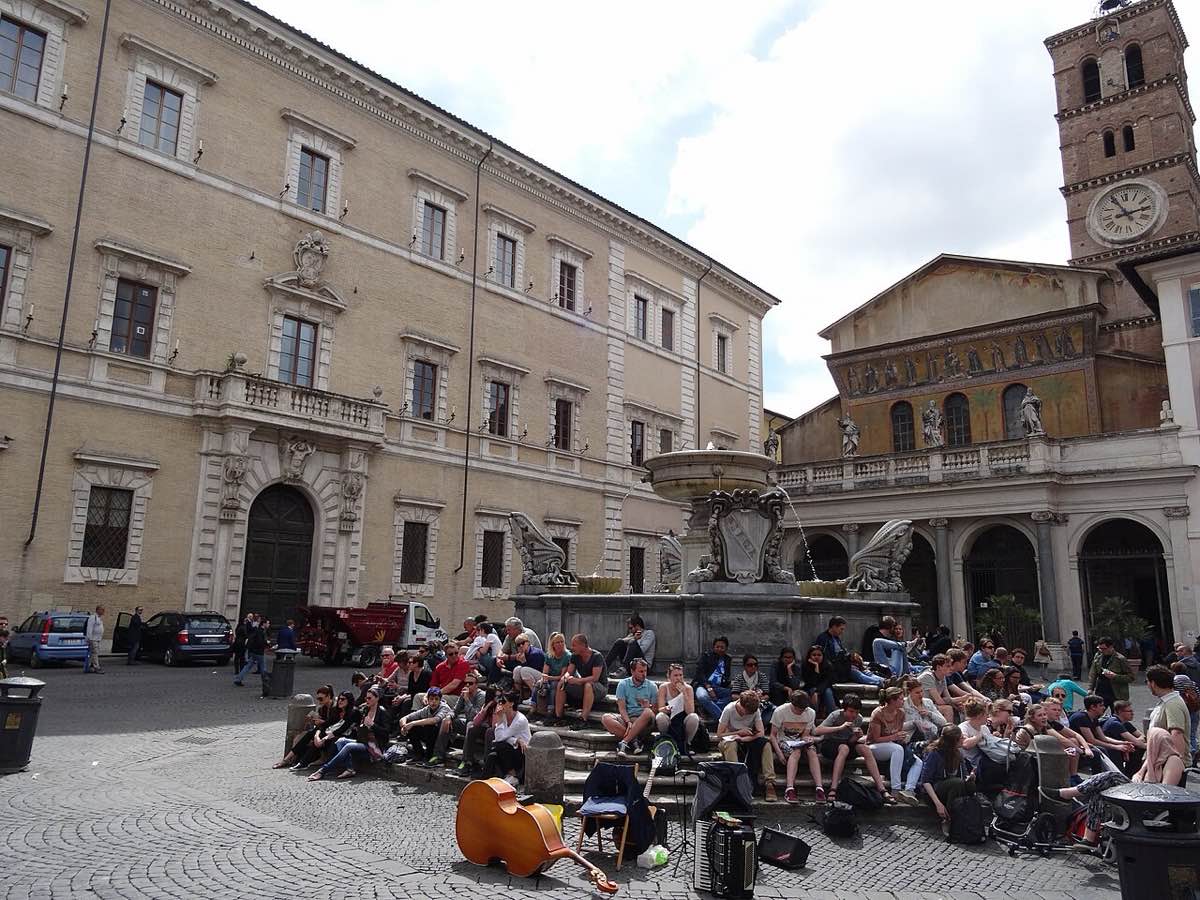
The basilica faces the district’s main square, Piazza di Santa Maria in Trastevere, whose fountain steps are a meeting point at any time of day. According to Turismo Roma, it was probably the first official place of Christian worship in Rome. Legend says that Pope Callixtus I founded it in the 3rd century and that Pope Julius I completed it in 340. Most of what you see today dates from the 12th century, when Pope Innocent II rebuilt it.
What to look for:
- The facade: medieval mosaics with the Virgin and Child between ten women carrying lamps, above a portico that Carlo Fontana remodeled in 1702. The portico walls are covered with fragments of ancient inscriptions.
- The apse: golden mosaics made around 1140, with Christ and Mary enthroned among saints. On the far left, Pope Innocent II holds a model of the church. Below are Pietro Cavallini’s mosaic scenes from the life of the Virgin, from 1291.
- The nave: 22 ancient granite columns, probably taken from the Baths of Caracalla, and a gilded coffered ceiling designed by Domenichino in 1617, with the Assumption in the center.
- “Fons Olei”: near the altar, an inscription marks the spot where, according to legend, a spring of oil flowed from the ground.
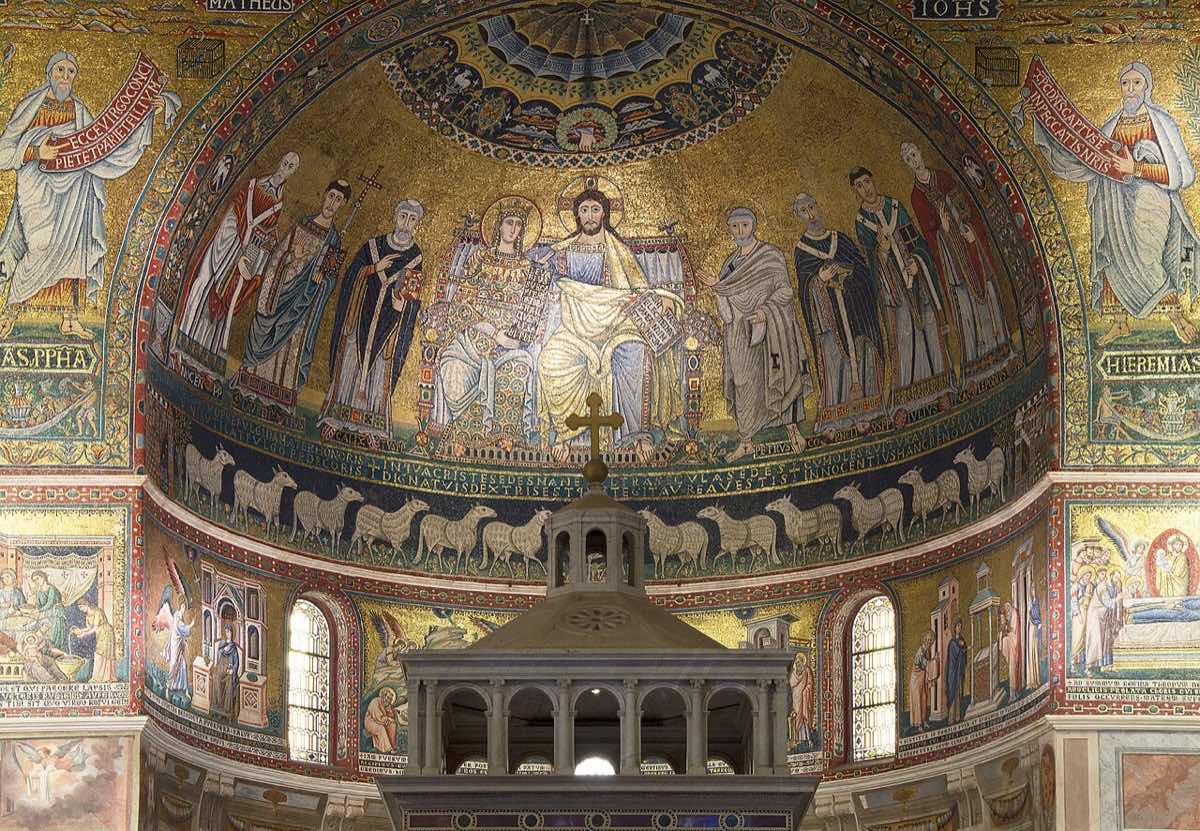
The basilica does not publish its opening hours online, and Turismo Roma refers visitors to the parish. It is an active church: dress with shoulders and knees covered, and keep quiet during Mass.
Which other churches and palaces in Trastevere are worth a visit?
Basilica of Santa Cecilia. On the quieter eastern side of the district, the church stands over the house of Saint Cecilia, the patron saint of musicians, who according to tradition was martyred around 230 AD. Under the altar, Stefano Maderno’s marble statue (1600) shows her body as it was found when her tomb was opened in 1599. Above it rises a Gothic canopy by Arnolfo di Cambio (1293). Below the church you can visit the excavations of Roman houses and the crypt. In the nuns’ choir is Pietro Cavallini’s Last Judgment, painted at the end of the 13th century. According to the Benedictine nuns’ website, the church and the excavations are open Monday to Saturday 10:00–12:30 and in the afternoon from 16:30, and the fresco can be seen only in the morning.
Villa Farnesina. On Via della Lungara, this villa was built between 1505 and 1520 for the banker Agostino Chigi, to a design by Baldassarre Peruzzi. Cardinal Alessandro Farnese bought it in 1590, which gave it its name. On the ground floor, Raphael and his school painted the Loggia of Cupid and Psyche and the fresco of the nymph Galatea. Upstairs, Peruzzi’s Hall of Perspectives (1519) opens painted colonnades onto views of Rome; look for the graffiti that German soldiers scratched on it during the Sack of Rome in 1527–1528. The official website lists the opening hours, and the full ticket costs €12. Photography without flash is allowed.
Botanical Garden. At the foot of the Janiculum, with its main entrance at Largo Cristina di Svezia 23A, the garden of Sapienza University covers 12 hectares of the park of Villa Corsini, once the home of Queen Christina of Sweden. It has a bamboo collection that Turismo Roma calls one of the richest in Europe, glasshouses and a Japanese garden with cherry trees that flower in spring. According to the garden’s website, it is open every day from 9:30 to 18:30, with last entry at 17:30; tickets cost €5, or €4 reduced, and the ticket office accepts cards only.
Museo di Roma in Trastevere. In the former convent of Sant’Egidio, on the square of the same name, this city museum shows everyday life in Rome in the 18th and 19th centuries: watercolors from Ettore Roesler Franz’s Roma sparita series, life-size scenes of Roman life and objects that belonged to the poet Trilussa. It also hosts photography exhibitions. See the museum’s website for hours.
San Francesco a Ripa. The first Franciscan church in Rome stands where Saint Francis stayed during his visits to the city. Its best-known work is the Ecstasy of Blessed Ludovica Albertoni (1675), the last work of Gian Lorenzo Bernini. The painter Giorgio de Chirico is buried here. Turismo Roma lists only Mass times, so visit outside services.
Where are the best views in and around Trastevere?
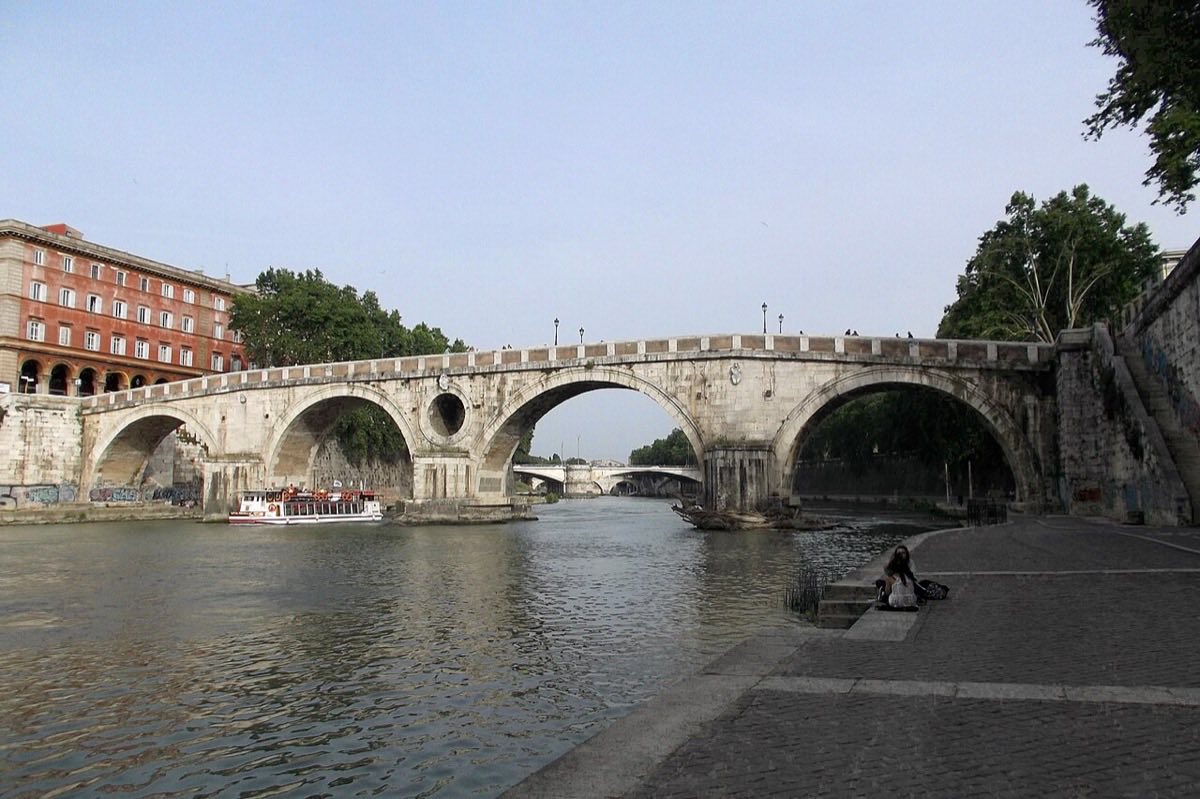
Ponte Sisto. This footbridge links Trastevere with the Campo de’ Fiori side and was built for the Jubilee of 1475. From it you see St Peter’s dome along the river, and at sunset it is one of the most romantic spots in Rome (see our romantic things to do in Rome). The round opening in the middle, which Romans call the Occhialone, is an old flood gauge: an old saying goes that when the water passes through it, half of Rome is under water. On the Trastevere side the bridge ends in Piazza Trilussa, a meeting point in the evening.
The Janiculum Hill. Above Trastevere, the terrace in Piazzale Giuseppe Garibaldi is free and always open, and looks across the domes of the historic center. Every day at 12:00 a cannon fires one blank shot below the terrace. Walk up Via Garibaldi, a steep but short climb, past the Fontanone, the great fountain of the Acqua Paola, and San Pietro in Montorio, where Bramante’s Tempietto marks the spot where, according to tradition, Saint Peter was crucified. Bramante probably built it between 1502 and 1509, and it is open Tuesday to Sunday, 10:00–18:00, for free. Our guide to the Janiculum Hill has more on the view and the noon cannon. If you continue toward the Vatican, the Jasmine Walk near Roma San Pietro station offers another unusual view of St Peter’s dome.
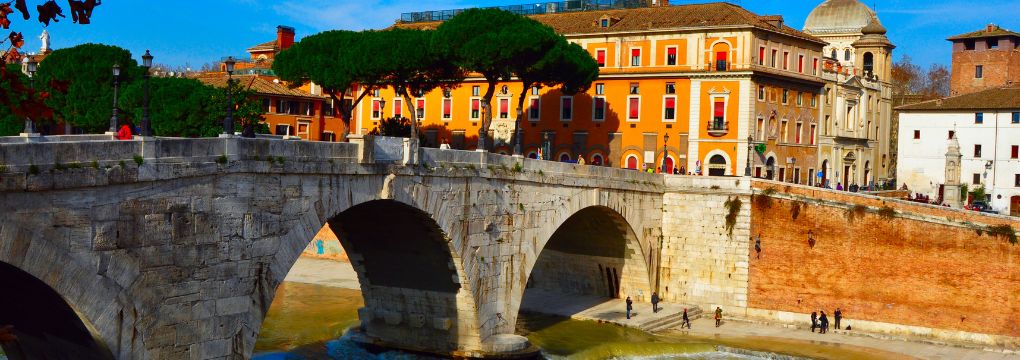
Tiber Island. From Piazza in Piscinula, Ponte Cestio crosses to Tiber Island, and Ponte Fabricio continues to the Jewish Ghetto. Ponte Fabricio dates from 62 BC and, according to Turismo Roma, it is the oldest Roman bridge still in use. It is the easiest way to combine Trastevere with the Jewish Quarter.
When is the Porta Portese market?
Porta Portese is held every Sunday. According to Turismo Roma, it is the largest and most famous market in Rome and a Sunday ritual for Romans. It began around 1945 and spreads over the streets between Piazza Ippolito Nievo, Via Ettore Rolli and Via Portuense, near the 17th-century gate that gives it its name. You find antiques and vintage items, books, records, clothes and every kind of bric-a-brac.
Turismo Roma does not publish opening hours. Go early in the morning, when the choice is widest, keep your wallet and phone in a front pocket in the crowds, and expect to bargain. For a market on other days, the produce market in Piazza di San Cosimato is open every morning except Sunday. Our post on the markets of Rome covers other markets around the city.
Where are the quieter, off-the-beaten-path corners of Trastevere?
Turismo Roma’s own advice, in its Unusual Trastevere itinerary, is to come during the day, better on a weekday, when the alleys are quiet and the district shows its old character. These corners are all real and easy to find:
- Piazza in Piscinula: a small medieval square near Tiber Island. Its church, San Benedetto in Piscinula, has the smallest bell tower in Rome, with the city’s oldest bell, dated 1069, and a 12th-century inlaid marble floor. The church opens mainly for Mass.
- Via dei Vascellari and Via dei Salumi: quiet streets that lead from the river toward Santa Cecilia.
- Around San Francesco a Ripa: by day, the realm of old workshops and small antique dealers.
- Piazza di San Cosimato: the neighborhood’s food market in the morning; in summer, open-air film screenings in the evening.
- Piazza di San Calisto: in the milder months, older Romans spend the afternoon here playing cards.
- Fontana della Botte, Via della Cisterna: a small 1927 fountain shaped like a wine barrel, a reminder of the district’s old taverns and wine trade.
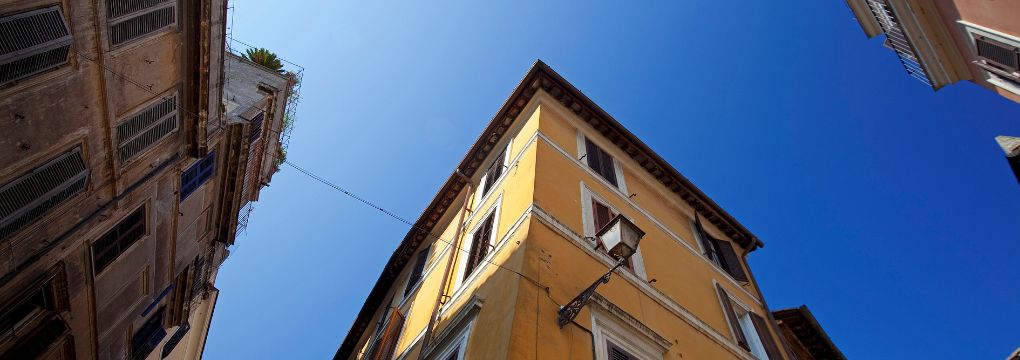
- Via della Scala: a street of low colored houses. The Antica Spezieria di Santa Maria della Scala, a 17th-century friars’ pharmacy, opens only for booked visits.
- Villa Sciarra: a public park in the Monteverde district, just above Trastevere, with 18th-century statues and fountains restored in 2025. According to the Sovrintendenza Capitolina, it is open from 7:00 until sunset.
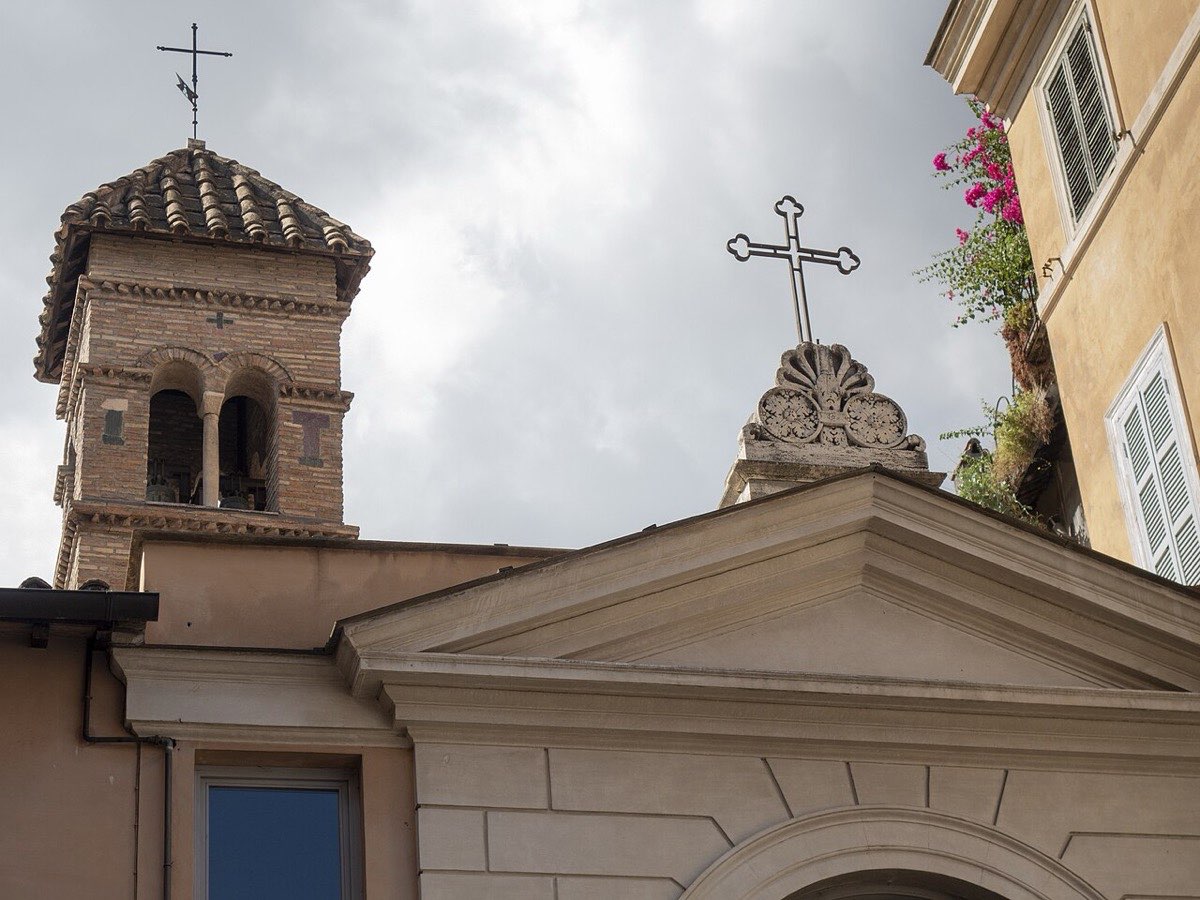
A quiet half-day walk: cross Ponte Garibaldi to the Belli monument, turn right to Piazza in Piscinula, continue along Via dei Vascellari to Santa Cecilia, then to San Francesco a Ripa. Cross Viale di Trastevere to the San Cosimato market, walk through Piazza di San Calisto to Santa Maria in Trastevere, and finish along Via della Scala toward Villa Farnesina or the Botanical Garden. In the late afternoon, climb to the Janiculum for the view.
What should you eat in Trastevere?
Trastevere is full of trattorias, pizzerias and bars, and most of them serve the classics of Roman cooking:
- The four Roman pastas: carbonara, cacio e pepe, amatriciana and gricia.
- Supplì: fried rice croquettes with tomato sauce and mozzarella, a typical starter or snack.
- Pizza: by the slice (al taglio) at lunch, and the round, thin and crispy Roman pizza at dinner.
- Seasonal vegetables: artichokes in late winter and spring, puntarelle in winter.
- Breakfast: a maritozzo, Rome’s cream bun, with a cappuccino at the bar.
- Gelato: after dinner, for the walk back.
For the full list of dishes and how to order them, see our guide to Roman food. For coffee in a historic setting elsewhere in the city, see our post on the historical cafés of Rome.
How do you choose a restaurant in Trastevere and avoid tourist traps?
“Trastevere restaurants” is one of the most searched topics about the district. We do not publish a ranking, because kitchens and owners change. Romans usually have lunch between 13:00 and 14:30 and dinner from about 20:00, and many trattorias close in the afternoon. On Friday and Saturday evenings, book ahead.
Places our team likes:
- Ercoli Trastevere, Via Giggi Zanazzo 4: the Trastevere branch of Ercoli 1928.
- Da Enzo al 29, Via dei Vascellari 29: a small trattoria, open Monday to Saturday. It does not take bookings, so expect to queue.
- Osteria La Gensola, Piazza della Gensola 15.
- Antico Arco, Piazzale Aurelio 7: on the Janiculum Hill, a short walk up from Trastevere.
Anywhere else, these signs help:
| Good signs | Be careful when |
|---|---|
| A short menu that changes with the season | Someone outside insists that you come in |
| Prices and the cover charge (coperto) written on the menu | There are no prices on the menu |
| Romans at the tables at 21:00 | Large photo menus in many languages |
| Classic Roman dishes done simply | Fish is priced by weight and nobody tells you the total |
A few streets away from the busiest squares, such as Piazza di Santa Maria and Piazza Trilussa, you usually find calmer places. If fish is priced by weight (per 100 g), ask for the price of your portion before you order. Tell the waiter about allergies before you order.
If you would rather let someone else choose, our shared food walking tour of Trastevere and the Jewish Ghetto takes you to tasting stops with a guide (details below).
When is the best time to visit Trastevere?
| When | What to do | Note |
|---|---|---|
| Weekday morning | Churches, Villa Farnesina, Santa Cecilia’s fresco, the San Cosimato market | The quietest time of day |
| Afternoon | Botanical Garden, Museo di Roma in Trastevere, quiet back streets | Some churches close in the early afternoon |
| Sunset | The Janiculum terrace or Ponte Sisto | Arrive a little early |
| Evening | Dinner and a walk | Busiest on Friday and Saturday |
| Sunday morning | Porta Portese market | Crowded: keep valuables close |
Avoid Monday if you want to see the museums: the Museo di Roma in Trastevere and the Tempietto are closed, and Villa Farnesina may be too. You need half a day for the main sights and a full day for a slow walk with lunch and the Janiculum.
How do you get to Trastevere?
- On foot: from Campo de’ Fiori across Ponte Sisto, from Largo di Torre Argentina across Ponte Garibaldi, or from the Jewish Ghetto across Tiber Island. The historic center is close, and walking is often the quickest way.
- Tram 8: it runs from Piazza Venezia across the river to Trastevere. The daytime bus and tram network runs from 5:00 to 23:30 (last departures), according to Roma Mobilità. The route sometimes changes for events or works, so check Roma Mobilità or ATAC on the day.
- Metro: there is no metro station in Trastevere.
- By car: leave it outside. Trastevere is a limited traffic zone (ZTL), closed to unauthorized vehicles Monday to Saturday 6:30–10:00, and on Friday and Saturday nights 21:30–3:00 (also Wednesday and Thursday nights from May to October, but not in August), according to Roma Mobilità.
Is Trastevere safe?
Trastevere is a lively residential district, and the usual big-city care is enough. Pickpockets work where crowds gather: on trams, at Porta Portese and in the busiest squares in the evening. Keep your bag closed and in front of you, and do not leave your phone on a café table. Late at night some streets are noisy, so if you are a light sleeper, choose a room away from the nightlife squares. Wear comfortable shoes: the cobblestones are uneven. In an emergency, call 112.
See Trastevere with us
You do not need a tour to enjoy Trastevere: it is a district made for wandering, and this guide is enough for a self-guided walk. Our tours are useful if you want a guide to explain the food, or if you want to combine Trastevere with the rest of Rome without long walks.
Our shared food walking tour of Trastevere and the Jewish Ghetto lasts 2.5 hours on foot. It starts every day at 10:00 and 17:00 in Piazza Trilussa, in front of the poet’s statue, and continues through Trastevere, Campo de’ Fiori and the Ghetto, with tastings of local specialties along the way. It ends with fresh pasta, wine for adults and dessert at one of our venues in the center. It costs €150 per person, the same price for children; the tour is in English, and the booking is non-refundable once we confirm it.
The 5-hour version of our private golf cart tour of Rome adds Trastevere, the Janiculum Hill and the Vatican area, with a view of St Peter’s, to the classic route past the Colosseum, the Pantheon and the Trevi Fountain. Your driver picks you up in the historic center at 9:30, 10:00, 14:30, 18:00 or 18:30. The Trevi Fountain ticket and a stop for gelato or coffee are included, and the other sights are seen from the outside. It costs €750 for 1–3 people, then €250 per person.
Our private golf cart tour with food tasting lasts 3 hours, at 14:30 or 18:00. Its usual route does not include Trastevere: it covers the center, from the Colosseum and the Circus Maximus to Piazza Navona, the Pantheon and the Trevi Fountain, seen from the outside. Along the way you taste a slice of Roman-style pizza with a glass of wine or water, fresh mozzarella and a classic gelato. It costs €510 for 1–2 people, then €180 per person. For couples, our 90-minute romantic Fiat 500 tour drives up to the Janiculum and the Fontanone, from €390 for two.
On these private tours:
- Pickup: at your hotel in the historic center; if you stay further out, we meet at our office, Via del Colosseo 11A.
- Drivers: they are drivers, not licensed tour guides.
- Children: any age on golf carts, with child seats; from age 3 in the Fiat 500s, which have no child seats.
- Weather: golf carts have rain covers; in wet weather the Fiat 500 tour moves to covered golf carts or to another date.
- Groups: the golf cart tours take up to 21 guests guaranteed, with larger groups on request; the romantic Fiat 500 tour takes up to 10.
- Cancellation: full refund up to 72 hours before the tour, 50% up to 48 hours before, no refund after that.
| Option | Duration | Price | Good for |
|---|---|---|---|
| Trastevere on your own | Half a day to a day | Free to walk; Botanical Garden €5, Villa Farnesina €12 | Churches, markets and back streets |
| Shared food walking tour (ours) | 2.5 hours on foot | €150 per person | Tasting Roman food with a guide |
| Private golf cart tour, 5 hours (ours) | 5 hours | from €750 for 1–3 people | Trastevere, the Janiculum and the main sights with little walking |
| Private golf cart tour with food tasting (ours) | 3 hours | from €510 for 1–2 people | Central Rome and three tastings (not Trastevere) |
| Romantic Fiat 500 tour (ours) | 90 minutes | from €390 for 1–2 people | Couples; viewpoints including the Janiculum |
See all our food tours and tastings, our cooking classes, our golf cart tours in Rome and our vintage Fiat 500 tours in Rome.
Explore it with us
 Rome Food Walking Tour: Trastevere & Ghetto2.5 hours on foot from Piazza Trilussa, with tastings, fresh pasta and wine · €150 per personBook now
 Private Golf Cart Tour, 5 HoursAdds Trastevere, the Janiculum and the Vatican area, with hotel pickup · from €750 for 1–3 peopleBook now
 Romantic Rome Tour by Fiat 50090 minutes, private, up to the Janiculum above Trastevere · from €390 for 1–2 peopleBook now
FAQ
What is Trastevere known for?
Trastevere is known for its narrow cobbled streets, ivy-covered houses and lively evenings in its trattorias and squares. It also has major sights: the Basilica of Santa Maria in Trastevere with its golden mosaics, Santa Cecilia, Villa Farnesina with Raphael’s frescoes and the Botanical Garden.
Where is Trastevere and how do you get there?
Trastevere is on the west bank of the Tiber, opposite Rome’s historic center, below the Janiculum Hill. Walk across Ponte Sisto from Campo de’ Fiori or across Tiber Island from the Jewish Ghetto, or take tram 8 from Piazza Venezia. There is no metro station in the district.
What is there to do in Trastevere?
Visit Santa Maria in Trastevere and Santa Cecilia, see Raphael’s frescoes at Villa Farnesina, walk in the Botanical Garden and climb to the Janiculum for the view. Explore quiet corners such as Piazza in Piscinula, browse Porta Portese on Sunday and stay for dinner.
Where should you eat in Trastevere?
We do not rank restaurants, but our team likes Ercoli Trastevere, Da Enzo al 29 and Osteria La Gensola, and Antico Arco on the Janiculum Hill just above. Anywhere else, look for a short seasonal menu with prices and the cover charge written on it, walk a few streets away from the busiest squares and book on Friday and Saturday evenings. Try the classic Roman pastas, supplì and Roman pizza.
When is the Porta Portese market?
Porta Portese is held every Sunday, in the streets around Piazza Ippolito Nievo and Via Portuense. The official city tourism website does not publish its hours, so go early in the morning, when the choice is widest, and keep your valuables close in the crowds.
Is Trastevere safe at night?
Yes, with the usual big-city care. The busiest squares are crowded in the evening, so keep your bag closed and your phone out of reach of pickpockets. Some streets are noisy late at night, which matters more if you are staying in the district.

Comment (0)