
A maritozzo is Rome’s classic breakfast pastry: a soft, lightly sweet yeast bun split open and filled with whipped cream. Romans eat it at the bar, usually with a cappuccino. You find maritozzi in coffee bars, pastry shops and some bakeries all over the city, and they are freshest in the morning.
Cover photo: Ensahequ, CC BY-SA 4.0, via Wikimedia Commons
The maritozzo is the city’s own pastry, with a story that runs from Lent to marriage proposals. We are a local tour operator and have shown visitors around Rome since 2012. This is what we tell our guests: what a maritozzo is, where it comes from, how Romans eat it, where to find one and when Maritozzo Day takes place.
What is a maritozzo?
A maritozzo is a round or oval bun made from a soft, enriched yeast dough, a little like a light brioche. It is cut open along the top, filled with a generous amount of whipped cream and usually dusted with powdered sugar. The bun itself is only lightly sweet, so most of the sweetness comes from the cream.
- Name at the bar: the classic is the maritozzo con la panna, the maritozzo with cream.
- Pronunciation: mah-ree-TOHT-tsoh, with the stress on “to”. The plural is maritozzi (mah-ree-TOHT-tsee).
- Allergies: the classic version contains wheat, cream and usually eggs. If you have a food allergy or coeliac disease, ask before you order.

Where does the maritozzo come from?
The maritozzo has a long history. According to Turismo Roma, the official tourism website of the City of Rome, its ancestor goes back to ancient Rome: a large loaf of flour, eggs, oil or lard and salt, sweetened with raisins and honey, that women baked as a filling meal for farm workers and shepherds.
In the Middle Ages the loaf became smaller. Made without lard, the dough turned darker, and pine nuts and candied fruit gave it more flavor. People called it the quaresimale, from Quaresima, Lent, because it was the one treat allowed during the 40 days of fasting before Easter. In 1833 the Roman poet Giuseppe Gioachino Belli, who wrote in the local dialect, mentioned the “holy maritozzo” in his sonnet La quaresima.
Why is it called maritozzo?
The name is a playful nickname built on marito, the Italian word for husband. It fits a romantic custom from the 19th century: on the first Friday of March, then a day for lovers in Rome, a young man gave his fiancée a maritozzo, often decorated with sugar hearts. According to tradition, some buns hid a gold ring or another small piece of jewelry inside.
Another story says that unmarried young women baked maritozzi for the bachelors of the neighborhood, who chose a bride by the best bun. Take these tales as Roman folklore, not as a custom you will see today.
How do Romans eat a maritozzo?
For most Romans, a maritozzo is breakfast. You walk into a bar, which in Italy means a coffee bar, pick a maritozzo from the glass case and eat it standing at the counter with a cappuccino or an espresso. In many busy bars you pay first at the cash desk, then show the receipt at the counter. Coffee and pastries at the counter usually cost less than at a table.
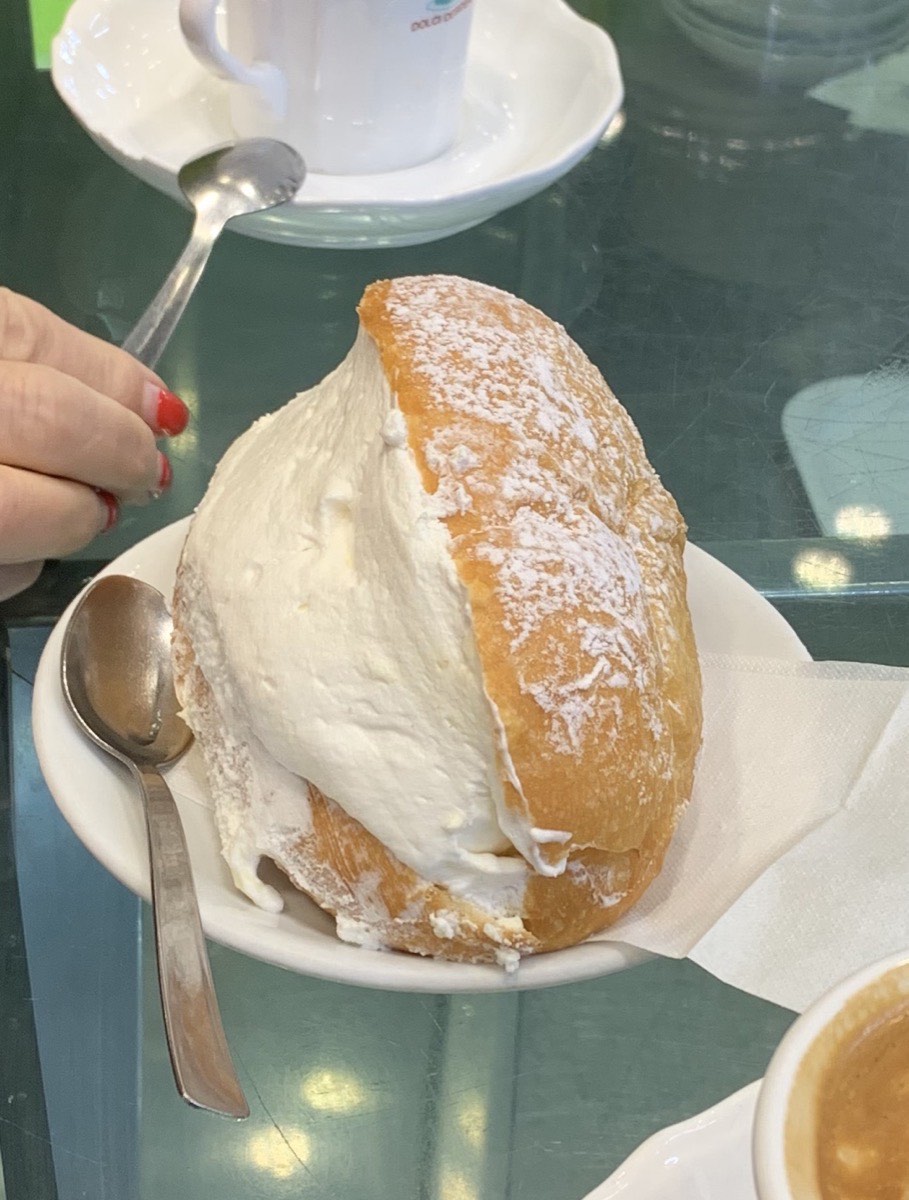
A few practical tips:
- Go in the morning. That is when bars fill their counters, and the choice is usually widest.
- Eat it on the spot. Whipped cream does not travel well, especially in summer.
- It is not only for breakfast. Bars and pastry shops sell maritozzi all day, and many Romans have one as an afternoon snack or a dessert.
What kinds of maritozzi can you find?
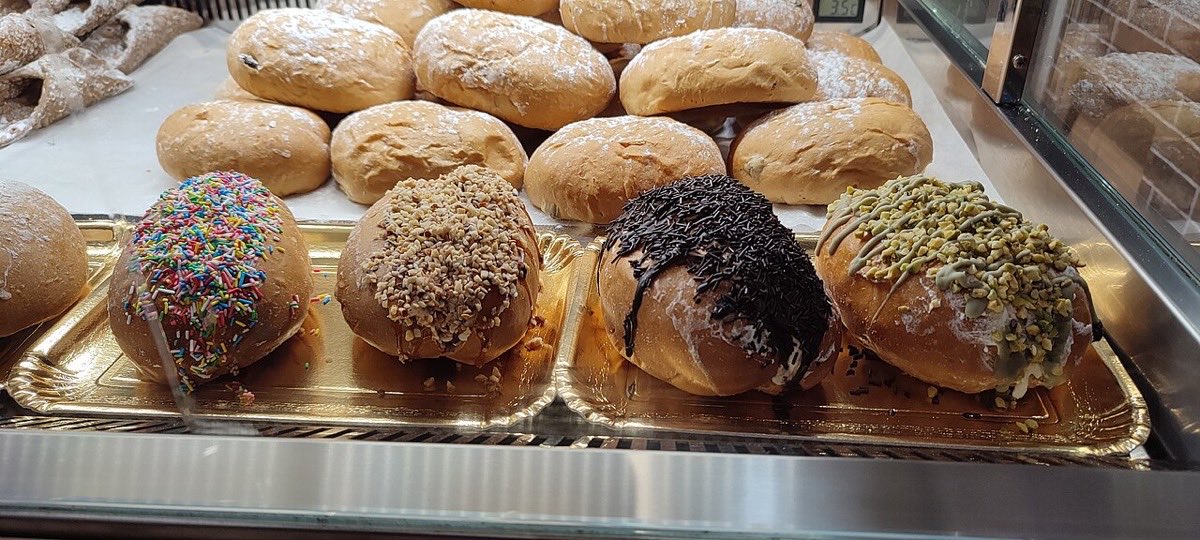
The classic maritozzo con la panna, with plain whipped cream, is the one to try first. Many pastry shops now also make their own versions:
- Sweet: fillings such as chocolate, jam or pastry cream, and toppings such as chocolate sprinkles or chopped pistachios.
- Savory: the bun is filled like a sandwich, for example with cured meats, salt cod or salmon, or even with the flavors of carbonara or amatriciana.
- Vegan and gluten-free: some shops bake versions for special diets. If you have coeliac disease, ask how the gluten-free version is prepared.
Like Roman sweets? Bake our ricotta and sour cherry tart, a classic of the Jewish Ghetto, at home.

Where can you eat a maritozzo in Rome?
You do not need a famous address: maritozzi are sold all over Rome. These are the places to look for:
| Where | What you find | When to go | Tip |
|---|---|---|---|
| Coffee bar (bar) | The classic cream maritozzo in the glass counter, with coffee | Morning | Eat at the counter, like the locals |
| Pastry shop (pasticceria) | Maritozzi usually baked on site, often in sweet and savory versions | Morning and afternoon | Look at the whole counter before you choose |
| Bakery (forno) | Some bakeries sell maritozzi next to bread and pizza by the slice | Morning | Ask for one to eat right away |
Every neighborhood has its bars and pastry shops, so a good maritozzo is often the one near your hotel. Bars on the busiest squares near the main sights tend to charge more, especially for table service. A few streets away, in residential areas such as Testaccio, Prati, Monti or Trastevere, you find neighborhood bars where Romans stop on the way to work. For coffee in a historic setting, see our post on the historical cafés of Rome.

What is Maritozzo Day?
Maritozzo Day is a celebration of the bun created by Tavole Romane, a Roman food blog, whose first edition was in 2017. By tradition it falls on the first Saturday of December: the 2022 edition, for example, took place on Saturday, December 3. Taking part are bakeries, pastry shops and bars in Rome and beyond, each with its own offer, and the event is followed through its hashtag and social media.
If it keeps its traditional date, the 2026 edition would fall on Saturday, December 5, 2026. The organizers had not announced it when we checked on November 1, 2026, so check their social media channels before you plan around it. In December, look for pangiallo too: see our guide to Christmas food in Rome.

Taste Roman food with us
If you only want a maritozzo, you do not need a tour: any good bar serves one with your morning coffee. Our tours make sense if you want to taste more of Rome’s food and see the city at the same time. A maritozzo is not one of the listed tastings on these tours, so have yours at a bar in the morning. For the other dishes to try in Rome, see our guide to Roman food.
Our shared food walking tour of Trastevere and the Jewish Ghetto lasts 2.5 hours on foot, through Trastevere, Campo de’ Fiori and the Jewish Ghetto. It starts every day at 10:00 and 17:00 in Piazza Trilussa, with tastings of local specialties along the way, then fresh pasta, wine for adults and dessert at the final stop. It costs €150 per person, the tour is in English, and the booking is non-refundable once we confirm it.
On our private golf cart tour with food tasting or our private Fiat 500 tour with food tasting, your driver picks you up in the historic center at 14:30 or 18:00 for 3 hours. You see landmarks such as the Colosseum, the Pantheon and the Trevi Fountain from the outside, and stop for three tastings: Roman specialties at a traditional bakery, such as a slice of pizza, with a glass of wine or water; fresh mozzarella; and a classic Italian gelato. Drivers are not licensed tour guides, but they gladly help with your requests. On both private tours:
- Children: any age on golf carts, with child seats; from age 3 in the Fiat 500s, which have no child seats.
- Weather: golf carts have rain covers, and in wet weather the Fiat 500 tour moves to golf carts.
- Groups: up to 21 guests guaranteed, larger groups on request.
- Cancellation: full refund up to 72 hours before the tour, 50% up to 48 hours before.
- More tours: see all our golf cart tours in Rome and vintage Fiat 500 tours in Rome.
| Option | Duration | Price | Good for |
|---|---|---|---|
| A maritozzo at a bar, on your own | 15 minutes | The price of breakfast | Starting the day like a Roman |
| Shared food walking tour (ours) | 2.5 hours on foot | €150 per person | Tasting many specialties with a guide |
| Private golf cart food tasting (ours) | 3 hours | from €510 for 1–2 people | Sights and tastings with little walking |
| Private Fiat 500 food tasting (ours) | 3 hours | from €650 for 1–2 people | Sights and tastings in a vintage car |
Prefer to cook? Our cooking classes teach you to make fresh pasta or pizza, and you can see all our food tours and tastings on one page.
Explore it with us
 Rome Food Walking Tour: Trastevere & Ghetto2.5 hours on foot with tastings, fresh pasta and wine · €150 per personBook now
 Golf Cart Tour + Food Tasting3 hours, private: pizza, mozzarella and gelato · from €510 for 1–2 peopleBook now
 Fiat 500 Tour + Food Tasting3 hours in a vintage Fiat 500, three tastings · from €650 for 1–2 peopleBook now
FAQ
What is a maritozzo?
A maritozzo is a Roman pastry: a soft, lightly sweet yeast bun split open and filled with whipped cream, usually dusted with powdered sugar. It is Rome’s classic breakfast pastry, eaten at the bar with a cappuccino.
Where does the maritozzo come from?
It comes from Rome. According to the city’s official tourism website, its ancestor was a large loaf sweetened with raisins and honey, and in the Middle Ages a smaller version, the quaresimale, was the one treat allowed during Lent. The bun filled with whipped cream is today’s classic.
What does maritozzo mean and how do you say it?
The name is a playful nickname from marito, the Italian word for husband, linked to the old custom of young men giving one to their fiancée. You say it mah-ree-TOHT-tsoh, and the plural is maritozzi.
When do Romans eat a maritozzo?
Mostly at breakfast, standing at the bar counter with a cappuccino or an espresso. Today bars and pastry shops sell maritozzi all day, and many Romans also have one as an afternoon snack or a dessert.
When is Maritozzo Day?
Maritozzo Day, created in 2017 by the Roman food blog Tavole Romane, traditionally falls on the first Saturday of December. In 2026 that would be Saturday, December 5, but the organizers had not announced the 2026 edition when we checked on November 1, 2026.
Where can you eat a maritozzo in Rome?
In coffee bars, pastry shops and some bakeries all over the city. Go in the morning, when they are freshest, and try the classic cream version first. Bars a few streets away from the busiest squares usually charge less.

Comment (0)