The easiest way to get around central Rome is on foot, with the metro, buses and trams for longer trips. A BIT ticket costs €1.50 and lasts 100 minutes, with one metro ride, and a 24-hour ticket costs €8.50. You can also tap a contactless bank card. Taxis start at €3.50. Do not drive into the ZTL.
Rome’s historic center is compact, but getting from your hotel to the Vatican, or from the Colosseum to Trastevere, takes some planning. We are a local tour operator based at Via del Colosseo 11A, and this guide puts together the official fares and rules with what we see every day on Rome’s streets.
For most visitors, it is a mix: walk inside the historic center, take the metro or a bus for longer hops, and use a taxi late at night or with luggage.
| Option | Price | Best for | Watch out for |
|---|---|---|---|
| Walking | Free | The historic center, where many sights are close together | Cobblestones, hills and summer heat |
| Metro | €1.50 (BIT ticket, one metro ride) | Termini, the Colosseum, the Spanish Steps, the Vatican area | No stations near the Pantheon, Piazza Navona or Trastevere |
| Bus and tram | €1.50 (BIT ticket, 100 minutes) | Trastevere and streets the metro misses | Traffic and crowds at busy times |
| 24, 48 or 72-hour ticket | €8.50, €15 or €22 | Several trips a day | Hours count from the first validation |
| Roma Pass | €38 (48 hours), €62.90 (72 hours) | Museums plus public transport | Not valid to or from Fiumicino airport |
| Taxi | Meter from €3.50 by day | Late evenings, luggage, small groups | Official white taxis only; traffic raises the fare |
| Golf cart or Fiat 500 tour (ours) | from €350 for 1–3 people (golf cart, 2 hours) | Many sights in a few hours, with little walking | Far more than the metro for a single sight |
Rome has three metro lines:
Trains run from 5:30 to 23:30 from Sunday to Thursday, and until 1:30 on Fridays and Saturdays.
| Station | Line | What is nearby |
|---|---|---|
| Termini | A, B | Rome’s main railway station |
| Barberini | A | The Trevi Fountain, about 10 minutes on foot |
| Spagna | A | The Spanish Steps, Villa Borghese |
| Ottaviano | A | St Peter’s Square, about 15 minutes on foot |
| Cipro | A | The Vatican Museums entrance, about 10 minutes on foot |
| San Giovanni | A, C | St John Lateran |
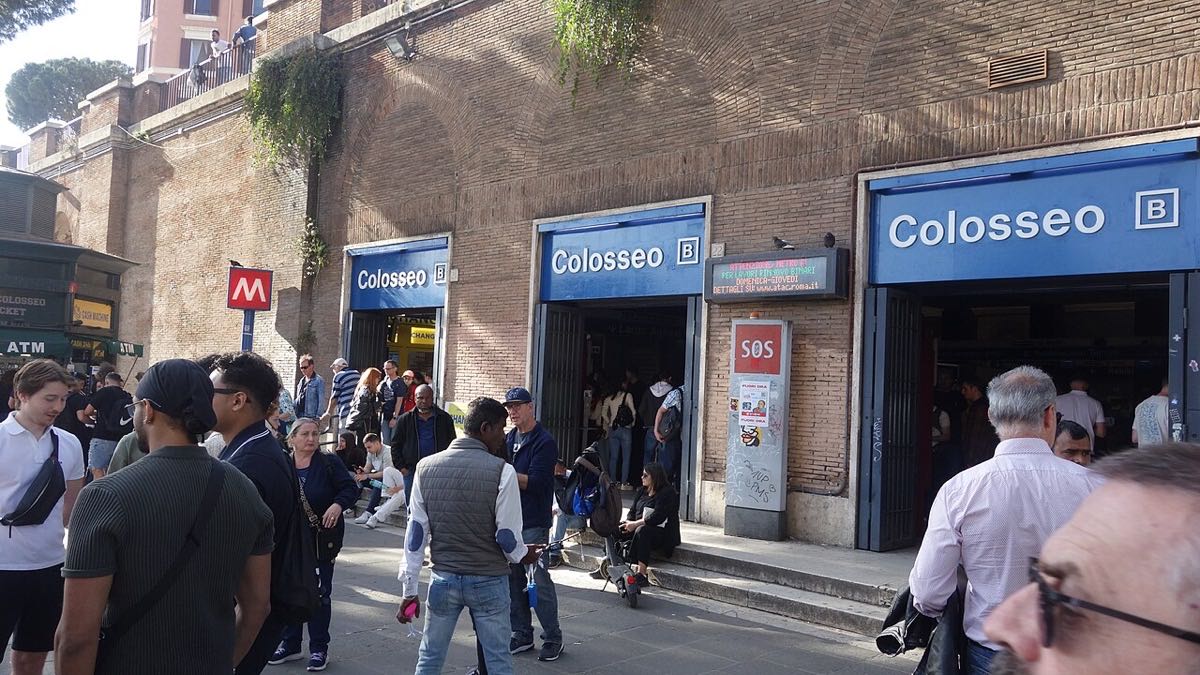
| Colosseo | B, C | The Colosseum, the Roman Forum |
| Circo Massimo | B | The Circus Maximus, the Aventine Hill |
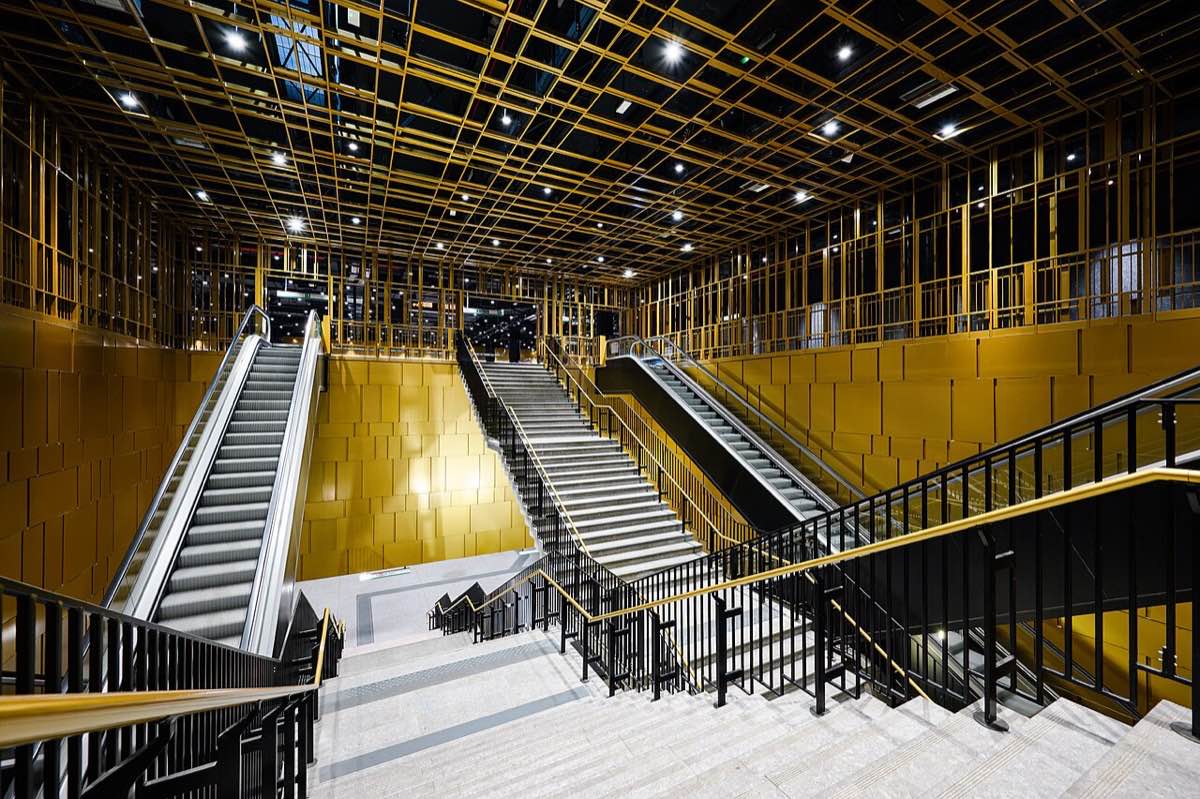
The new line C station at the Colosseum displays the baths of a Roman house found during the excavations. If you need lifts, check the notices on the Roma Mobilità website before you travel: lifts at some stations are sometimes out of service.
Buses and trams reach places the metro does not, such as Trastevere and the streets around the Pantheon. The daytime network runs from 5:00 to 23:30, with six tram lines. A useful one is tram 8, which links Piazza Venezia and Largo di Torre Argentina with Trastevere.
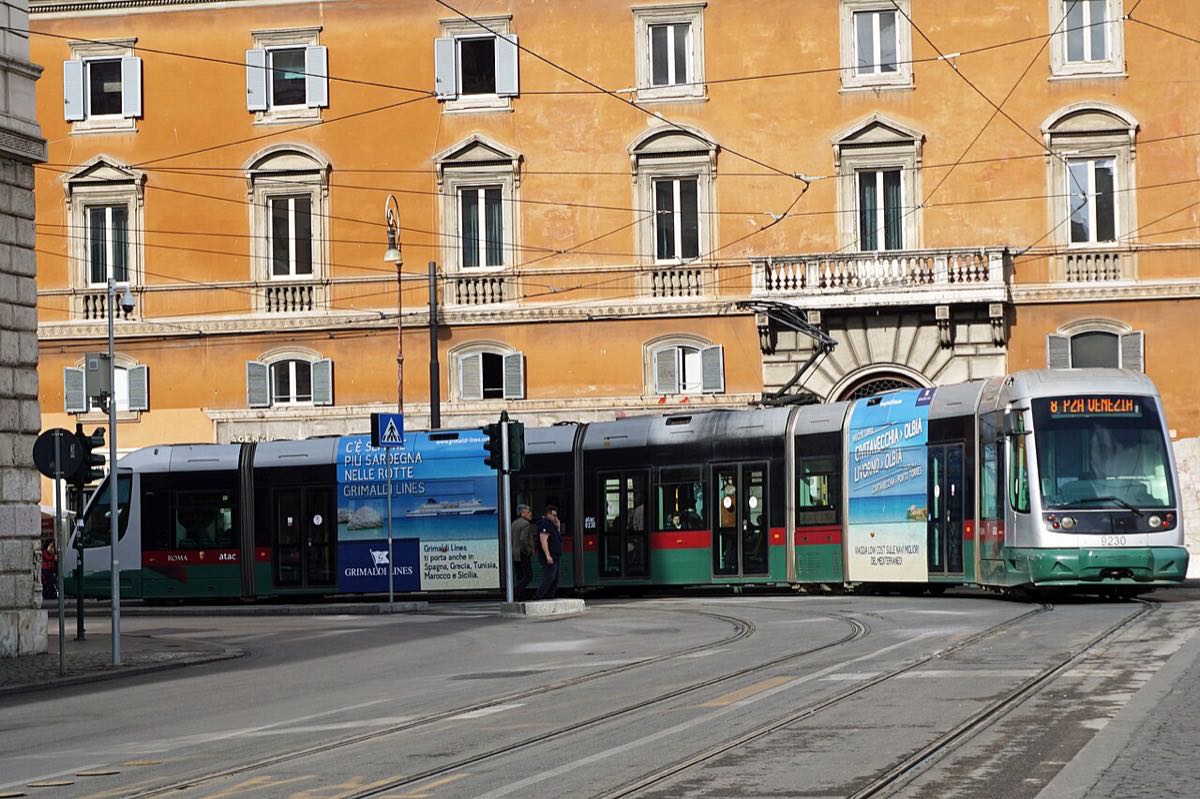
After 23:30, 32 night lines marked “N” run until 5:00, and the nMA, nMB and nMC lines follow the metro routes.
Buses, trams and the metro share the same Metrebus tickets, valid within the city of Rome.
| Ticket | Price | Valid for |
|---|---|---|
| BIT | €1.50 | 100 minutes: unlimited buses and trams, plus one metro ride |
| Roma 24H | €8.50 | 24 hours from the first validation |
| Roma 48H | €15.00 | 48 hours from the first validation |
| Roma 72H | €22.00 | 72 hours from the first validation |
| CIS (weekly) | €29.00 | Until midnight on the 7th day |
With a BIT, you can change between metro lines without leaving the turnstiles, but once you exit, your metro ride is used. Children up to 10 travel free with an adult who has a ticket. Buy paper tickets from machines in metro stations, tobacconists or newsstands, and validate them when you first use them.
Tap & go: you can skip paper tickets and tap a contactless credit, debit or prepaid card, or a phone or smartwatch with the card on it, on the reader on board or at the metro gates. Each tap starts a 100-minute ticket with the same rules as the BIT. Tap again every time you change vehicle: taps within the 100 minutes are not charged again. Hold only one card to the reader, and show the same card if an inspector checks you. Details are on the Roma Capitale tap & go page (in Italian).
The Roma Pass combines museum entries and public transport:
You activate the transport ticket in the Roma Pass app, and its QR code opens the metro gates. It covers ATAC buses, trams, the metro and the urban railways, plus buses 720 and 520 to Ciampino airport. Nothing to or from Fiumicino airport is included, not even the Leonardo Express.
For transport alone, a 48-hour ticket (€15) or a 72-hour ticket (€22) is much cheaper. The Pass pays off only if you use its free entries and discounts, so check the included sites, and their booking rules, before you buy.
Official Rome taxis are white, with “TAXI” on the roof and the Roma Capitale symbol and license number on the front doors. Check that the meter is on, and ask for a receipt. Find one at a rank, or call the city’s ChiamaTaxi service on 060609.
From the airports, there is a fixed fare to anywhere inside the Aurelian Walls: €55 from Fiumicino and €40 from Ciampino. The full tariff is on the Roma Mobilità taxi page (in Italian).
Yes, and it is often the best way to see the center. These times are our own estimates at an easy pace, without stops.
| Walk | About |
|---|---|
| Colosseum to Trevi Fountain | 1.8 km, 25 minutes |
| Trevi Fountain to Pantheon | 0.8 km, 10 minutes |
| Pantheon to Piazza Navona | 0.4 km, 5 minutes |
| Trevi Fountain to Spanish Steps | 0.7 km, 10 minutes |
| Piazza Navona to St Peter’s Square | 1.8 km, 25 minutes |
| Colosseum to Trastevere | 2.4 km, 30 minutes |
| Termini to Colosseum | 1.9 km, 25 minutes |
| Colosseum to Vatican Museums | 4.8 km, about 1 hour |
Cobblestones and hills make walking slower than these numbers suggest, and every visit adds time. On Sundays, public holidays and the last Saturday of the month, Via dei Fori Imperiali is closed to traffic, a pleasant walk from Piazza Venezia to the Colosseum.
Read our guides to the Colosseum, the Pantheon, the Trevi Fountain, Trastevere and the Aventine Keyhole.
The ZTL (Zona a Traffico Limitato, limited traffic zone) covers the historic center and some nearby districts. When a zone is active, only vehicles with a permit may enter, and electronic gates record every car. A sign at each gate shows whether it is active (“varco attivo”) or not (“varco non attivo”).
| Zone | Closed to cars without a permit |
|---|---|
| Centro Storico, daytime | Monday to Friday 6:30–18:00, Saturday 14:00–18:00 (not on public holidays) |
| Centro Storico, night | Friday and Saturday 23:00–3:00 (not in August) |
| Tridente (Spanish Steps and Piazza del Popolo) | Monday to Friday 6:30–19:00, Saturday 10:00–19:00 |
| Trastevere | Monday to Saturday 6:30–10:00; Friday and Saturday nights 21:30–3:00, also Wednesday and Thursday from May to October (not in August) |
| Testaccio, night | Friday and Saturday 23:00–3:00 (not in August) |
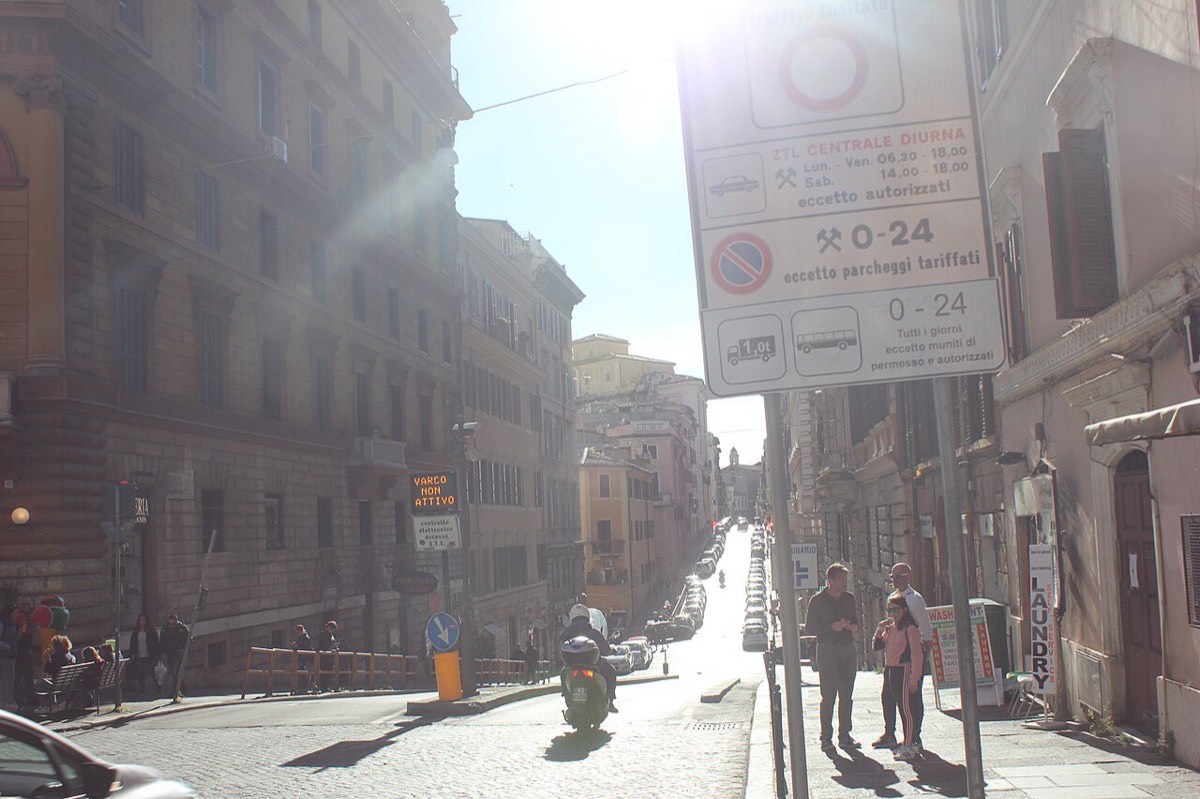
A rental car has no ZTL permit, so if you drive one through an active gate, you can be fined. Since 1 July 2026, electric cars need a permit too. Taxis and licensed hire cars with a driver may enter, and so may our private transfers. San Lorenzo also has a night ZTL. If your hotel is inside the ZTL, ask it in advance how to arrive by car. Details are on the Roma Mobilità ZTL page (in Italian).
On the street, look for the blue lines (strisce blu): €1.00 per hour outside the ZTL and €1.20 inside, or €0.20 for a 15-minute stop. Parking inside the ZTL does not let you drive in while it is active.
It is often simpler to leave the car outside the center. About 35 park-and-ride car parks at metro, railway and bus stations charge €1.50 for 12 hours or €2.50 for 16 hours.
Yes. Rome’s official sharing services include e-scooters (Bird, Dott, Lime), e-bikes (Dott, Lime), scooters (Cooltra) and car sharing (Roma Mobilità, Free2move). Only adults can sign up, with an ID. Speeds are capped at 20 km/h for e-scooters and 25 km/h for e-bikes, and 6 km/h in pedestrian areas. A helmet is compulsory on e-scooters at every age.
Public transport is the cheapest way to move around Rome: if you only want to reach one sight, the metro or a taxi costs far less than any tour. A ride with a driver makes sense when you want to see many sights in a short time, with little walking: on a short stay, in the summer heat, or with children or older relatives.
On our private golf cart tour of Rome, your driver picks you up at your hotel or Airbnb in the historic center. The 3-hour route links the Colosseum, the Circus Maximus, Piazza Venezia, Piazza Navona, the Pantheon, the Trevi Fountain and the Spanish Steps; the 2-hour tour, from November to mid-April, covers fewer stops and costs €350 for 1–3 people, then €115 per person, with the Trevi Fountain ticket and a gelato or coffee stop included. Carts run in the rain too, with covers, and we have child seats.
The Dolce Vita Fiat 500 tour lasts 3 hours in an electric vintage Fiat 500 or Fiat 850 Spiaggina, from €590 for 1–3 people. Children must be at least 3, as Fiat 500s have no child seats.
On both, you see the sights from the outside, and your driver is a driver, not a licensed guide. Up to 21 guests are guaranteed (on the 2-hour golf cart tour, the maximum depends on the start time), and larger groups are possible on request. See all our golf cart tours in Rome and vintage Fiat 500 tours in Rome.
With luggage, our private transfers to and from Fiumicino, Ciampino and Civitavecchia port start at €130 per vehicle for 1–3 people between Rome and either airport, for pickups from 7:00 to 21:59. Planning more? See our guides to visiting the Vatican, Civitavecchia to Rome and the catacombs of Rome, many of them near the Appian Way, where the first stretch is a limited traffic zone (ZTL Appia Antica) on Saturdays and Sundays from 7:00 to 19:00, all year except August.
 Private Golf Cart Tour of Rome2 hours with a driver, Trevi Fountain ticket and gelato or coffee included · from €350 for 1–3 peopleBook now
 Dolce Vita Vintage Fiat 500 Tour3 hours in an electric vintage car, pickup in the historic center · from €590 for 1–3 peopleBook now
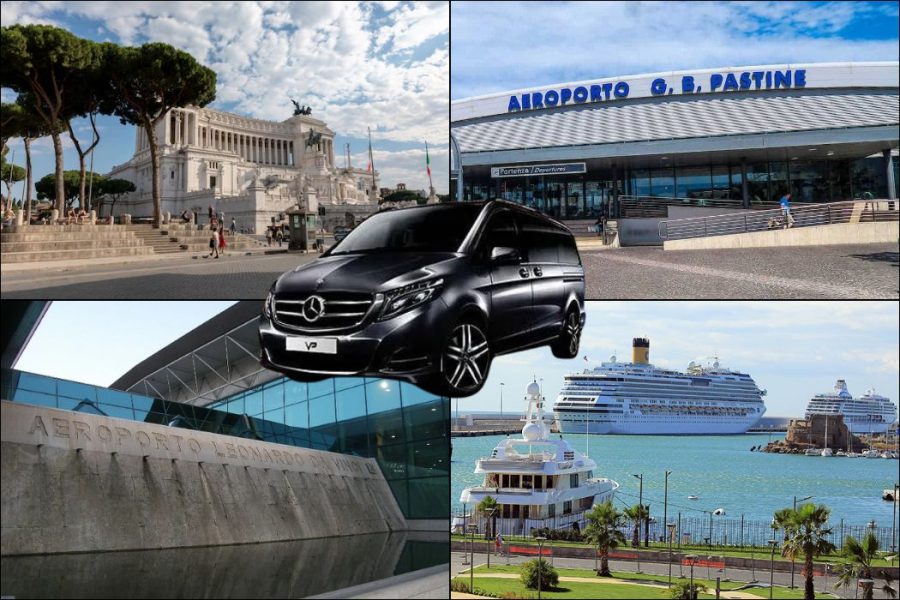 Private Transfer: Airports and PortLicensed vehicle, flight tracking, 1 hour of free waiting · from €130 per vehicle for 1–3 peopleBook now
How much is a metro ticket in Rome?
A BIT ticket costs €1.50 and is valid for 100 minutes, with unlimited buses and trams and one metro ride. A 24-hour ticket costs €8.50, a 48-hour ticket €15 and a 72-hour ticket €22. Children up to 10 travel free with an adult who has a ticket.
Can you pay with a bank card on Rome’s buses and metro?
Yes. Tap a contactless credit, debit or prepaid card, or a phone with the card on it, on the reader on board or at the metro gates. Each tap starts a 100-minute ticket with one metro ride, and taps within that time are not charged again.
Is the Roma Pass worth it for transport only?
No. The Roma Pass costs €38 for 48 hours or €62.90 for 72 hours, while a 48-hour transport ticket costs €15 and a 72-hour ticket €22. The Pass pays off only if you use its free museum entries and discounts, and it does not cover any trip to or from Fiumicino airport.
What time does the Rome metro close?
The last trains leave the end of each line at 23:30 from Sunday to Thursday and at 1:30 on Fridays and Saturdays. After 23:30, night buses marked “N” run until 5:00, and the nMA, nMB and nMC lines follow the metro routes.
Can tourists drive in Rome’s ZTL?
Not while it is active, unless the car has a permit. Electronic gates record every car that enters, and drivers without a permit can be fined. Rental cars have no permit, while taxis and licensed hire cars with a driver are allowed in.
Is Rome a walkable city?
The historic center is very walkable: the Trevi Fountain, the Pantheon and Piazza Navona are 5 to 10 minutes apart. Longer distances, such as the Colosseum to the Vatican Museums, take about an hour on foot, so most visitors combine walking with the metro, a bus or a taxi.