The Baths of Caracalla are the vast ruins of a Roman bath complex opened in 216 AD, a 10-minute walk from Circo Massimo metro station. Until January 10, 2027, entry costs €10 with a photo exhibition included (€4 for EU citizens aged 18–24, free under 18). Until February 28, hours are 9:00–16:30, closed Mondays.
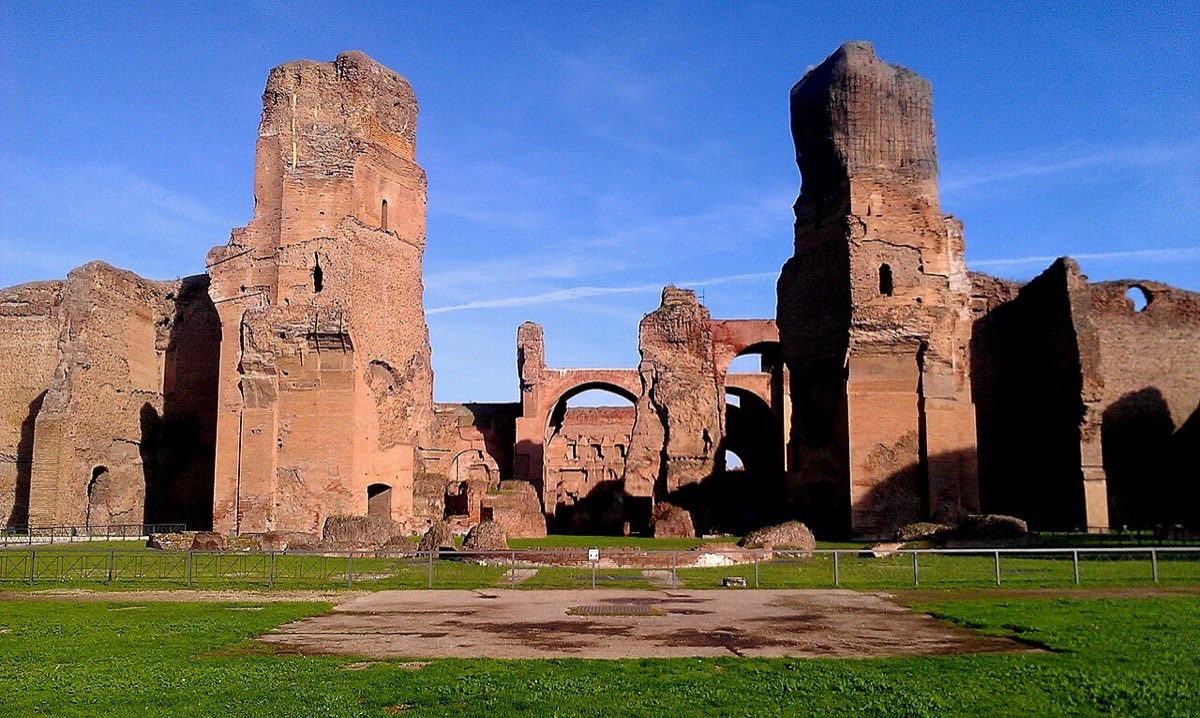
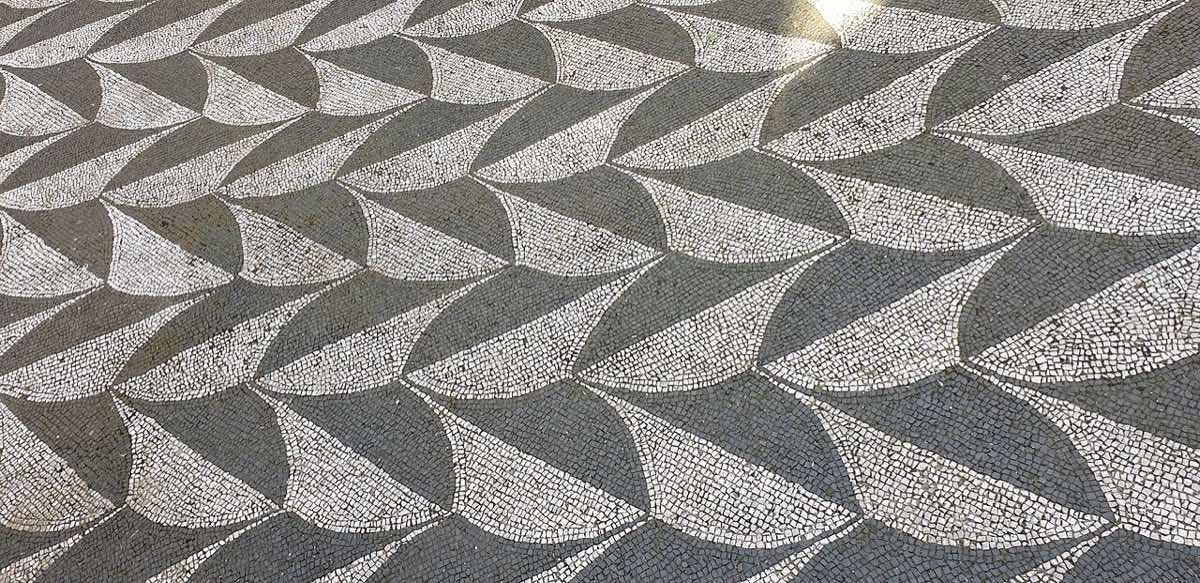
The Baths of Caracalla (Terme di Caracalla) stand in a green, quiet corner of Rome, south of the Circus Maximus. According to the official site, they are one of the best-preserved imperial buildings of antiquity, because nothing was ever built on top of them. You walk among the brick walls of the hot and cold halls, the two exercise courtyards and the black-and-white mosaics, and you get a real sense of the size of a Roman public bath. We are Facile Tours, a local tour operator in Rome, with our office at Via del Colosseo 11A, about 25 minutes on foot from the Baths. This guide covers what you can see, the current tickets and hours, how to get there, the summer opera and dance, and what to combine nearby.
| At a glance | Details |
|---|---|
| Address | Viale delle Terme di Caracalla 52 |
| Hours until February 28, 2027 | Tuesday to Sunday, 9:00–16:30, last entry 15:30 |
| Closed | Mondays |
| Tickets until January 10, 2027 | €10, with the Frank Horvat photo exhibition; €4 for EU citizens aged 18–24; free under 18 |
| Free days | The first Sunday of the month and November 4 |
| Where to buy | Musei Italiani website or app, or at the site (the machines take cards only) |
| Metro | Circo Massimo (line B), about 10 minutes on foot |
| Time needed | About 1.5 to 2 hours |
The Baths of Caracalla were a huge public bath complex in the southern part of ancient Rome. According to the Soprintendenza Speciale di Roma, the office of the Ministry of Culture that runs the site, they were built in only five years on three terraces, with a new aqueduct to supply the water. Emperor Caracalla, son of Septimius Severus, opened them in 216 AD. Work went on after his death in 217 and was finished under the last emperors of his family, Elagabalus and Severus Alexander. The baths were restored several times, above all by Constantine, and stopped working in 537 AD, when the Gothic king Vitiges cut the aqueducts during his siege of Rome.
For the Romans, the baths were much more than a place to wash: people came to bathe, exercise, walk, meet friends and read. The plan shows it. A large rectangular enclosure surrounded the bath building, with two libraries on the south side, latrines, water tanks and open space for walking and study. The central block was laid out on one axis: the caldarium (hot room), the tepidarium (warm room), the frigidarium (cold room) and the natatio, the swimming pool and the only room open to the sky. On the east and west sides were two large palaestrae, the exercise courtyards, with the changing rooms next to them and an upper floor for massages and hair removal.
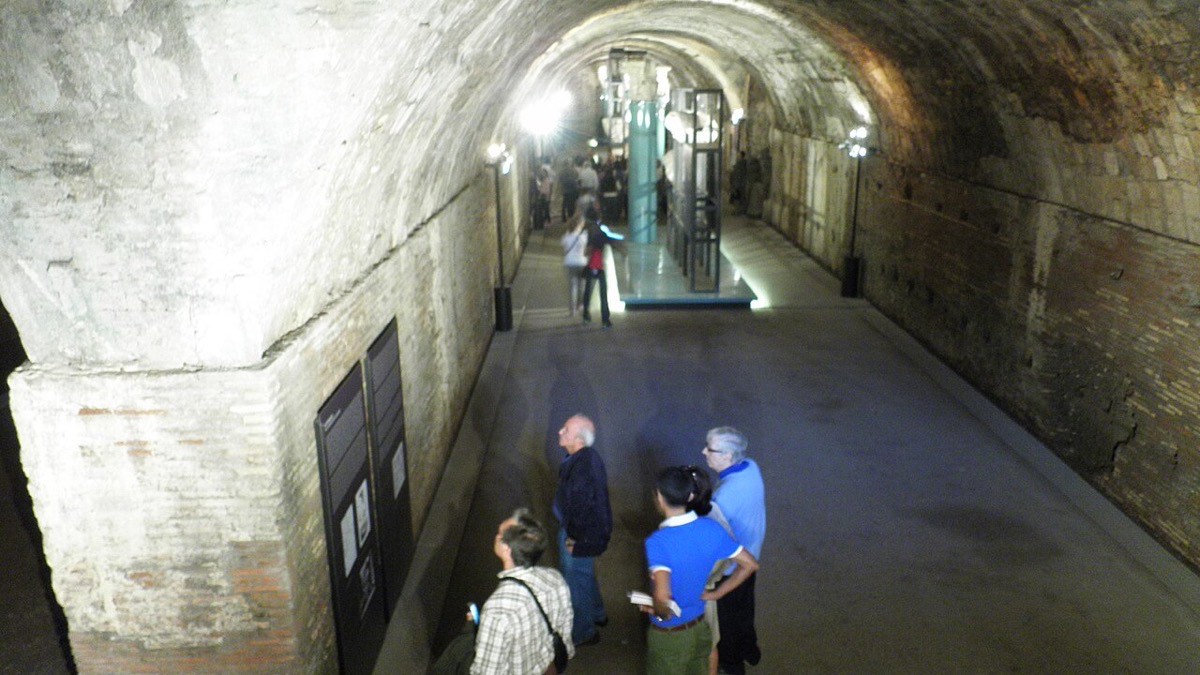
Below ground was the machine that kept everything running. The official site describes about 2 km (1.2 miles) of underground galleries, wide enough for carts, where hundreds of enslaved people and skilled workers stored firewood and kept the furnaces, boilers, water system and a mill going. Down there is also a Mithraeum, a shrine of the god Mithras and one of the largest in Rome, where you can still see the pit used for initiation rites.
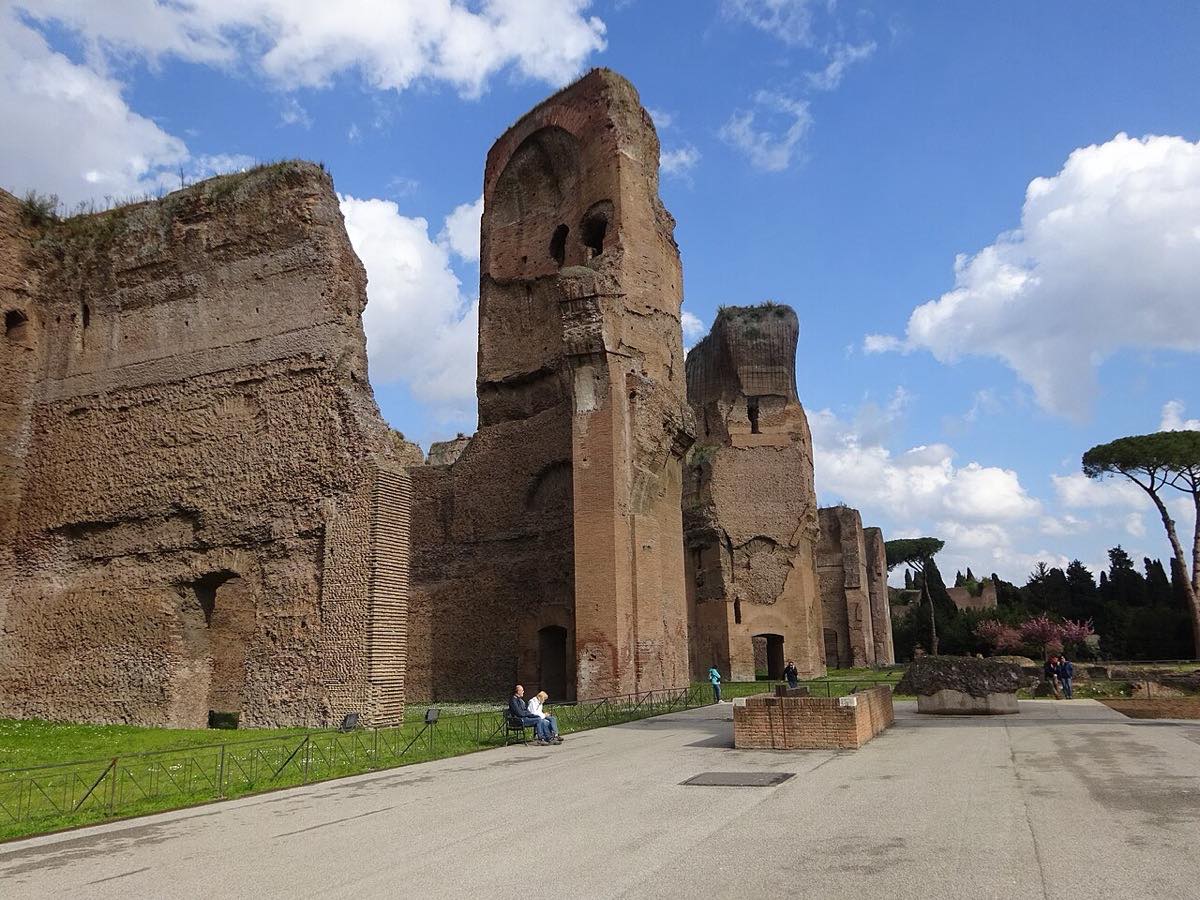
The visit is a self-guided walk around and through the central bath block. These are the main things to look for:
The underground and the Mithraeum. The galleries are about 6 m (20 ft) high and 6 m wide. Part of them is set up as an exhibition space, with the Antiquarium of carved architectural pieces and, since 2016, Michelangelo Pistoletto’s marble artwork Mela reintegrata. The official page does not say they are open on ordinary days. In 2025 and 2026, the Soprintendenza opened the underground and the Mithraeum on special evenings: the Night of Museums in May, the summer Notturno Imperiale nights (six dates from July to October 2026, 19:30–22:30) and a December evening in 2025. If you want to see them, watch the Soprintendenza’s news for the next opening.
A free app. The Soprintendenza’s free app Roma X-PAND (Apple App Store and Google Play) has an interactive map of the site, descriptions you can listen to, and augmented-reality views of the Farnese Hercules and the Farnese Bull, two giant statues from the baths that are now in the National Archaeological Museum of Naples.
Tickets are named and sold only on the official Musei Italiani website, in the Musei Italiani app, or at the site, where the automatic machines take cards only. If you buy online, you can show the ticket on your phone. The Soprintendenza says it is not responsible for tickets bought from other sellers, and that the site itself offers no guided tours or “skip-the-line” services. These were the prices on the ticket portal for a visit on November 24, 2026:
| Ticket | Price | Who |
|---|---|---|
| Full price | €10 | Includes the Frank Horvat exhibition, until January 10, 2027 |
| Reduced | €4 | EU citizens aged 18–24, with ID (and other nationalities where Italy has a reciprocity agreement) |
| Free entry | Free | Under 18; visitors with disabilities and one companion; other groups under Italian rules |
| Roma Pass | Free or €4 | Free or reduced, according to your pass |
Before the exhibition, the standard ticket cost €8, or €2 for EU citizens aged 18–25, according to the Soprintendenza’s news of January 1, 2026. After January 10, 2027, check the portal for the new price.
Free days. Entry is free on the first Sunday of every month and on November 4, and the free tickets are also on the portal. The next free Sundays are December 6, 2026, January 3, 2027 and February 7, 2027. On March 8, International Women’s Day, entry is free for women. The Baths also take part in the Night of Museums in May, the European Archaeology Days in June and the European Heritage Days in September, with a €1 evening opening on the Saturday.
The Baths are open Tuesday to Sunday and closed on Mondays. The ticket office closes at the time of last entry. These are the periods on the official page:
| Period | Hours | Last entry |
|---|---|---|
| October 25 – February 28 | 9:00–16:30 | 15:30 |
| March 1–28 | 9:00–17:30 | 16:30 |
| March 29 – August 31 | 9:00–19:15 | 18:00 |
| September 1–30 | 9:00–19:00 | 18:00 |
| October 1–24 | 9:00–18:30 | 17:30 |
The site keeps its ordinary hours on these holidays: January 1, January 6, Easter Sunday and Easter Monday, April 25, May 1, June 2, August 15, November 1, November 4, December 8 and December 26. December 25 is not on the official list, so check before planning a visit that day. When a holiday falls on a Monday, the Soprintendenza may change the closing day: in 2026, for example, the Baths opened on Monday, June 29 and closed on Tuesday, June 30 instead.
For tickets, apps and how to use buses, trams and the metro, see our guide to getting around Rome.
Plan about 1.5 to 2 hours to walk through the bath halls, the palaestrae, the frescoes and the current exhibition at an easy pace, or about an hour for a quick look. The site is large and mostly open-air, so in summer bring water and a hat and come early in the day; in winter, remember that last entry is at 15:30. Our guide to the best time to visit Rome helps you pick your season.
A few rules and tips:
For more tips on visiting with children, older travelers or limited mobility, see our guide to Rome with kids, seniors and limited mobility.
For decades, Rome’s opera house, the Teatro dell’Opera di Roma, has held its summer season at the Baths, on a large open-air stage in front of the ruins. In recent years the Caracalla Festival ran from late May or early June to early August, with opera, ballet and pop concerts. In 2025, according to the Opera’s season listings, it ran from June 3 to August 7, with Verdi’s La traviata, Bernstein’s West Side Story, Roberto Bolle and Friends and Carmina Burana, among others.
In 2026 the Opera moved its summer season to the Circus Maximus, from June 29 to July 31, because the Baths of Caracalla were undergoing restoration work, as it explained when it announced the season on March 10. Tickets cost €15 to €170 and went on sale on March 13. As of November 2, 2026, the Opera had not announced where its summer 2027 season will take place. If you plan a trip for next summer, check the Opera’s website in spring.
The Baths still host smaller events run by the Soprintendenza. In summer 2026, the Caracalla Danza festival (June 26 to July 5) staged dance on the Specchio d’acqua and a walking performance from the pool to the Mithraeum. The Notturno Imperiale evenings let visitors explore the lit ruins, the underground galleries and the Mithraeum after dark.
The Baths sit between three of Rome’s quieter and greener areas: the Circus Maximus to the north, the Aventine Hill to the west and the start of the Appian Way to the south. Walking times from the entrance:
| Place | On foot | Our guide |
|---|---|---|
| Circus Maximus (east end) | about 10 minutes | Circus Maximus |
| Porta San Sebastiano, start of the Appian Way | about 17 minutes | Porta San Sebastiano |
| Orange Garden, on the Aventine | about 19 minutes | Orange Garden |
| Aventine Keyhole | about 22 minutes | Aventine Keyhole |
| Colosseum | about 25 minutes | Colosseum |
Facile Tours does not sell tickets or tours inside the Baths: the official ticket is the only way in. Two of our private tours drive past the Baths, seen from the outside, and two more go to the nearby Appian Way.
Past the Baths, from the outside:
On these rides the drivers are not licensed guides. In rain or wet weather, the Fiat 500 tour runs in golf carts with rain covers, and if none is available we offer another date or time. Cancellation for both: full refund if you cancel at least 72 hours before, 50% at least 48 hours before.
Nearby, on the Appian Way:
If the Baths are your main interest, the official ticket gives you more than any ride, and Circo Massimo metro station is only 10 minutes away. Our tours suit you when you want to see the Baths from the outside together with other sights on the same day, without long walks. See all our golf cart tours in Rome and our vintage Fiat 500 tours in Rome. To fit the Baths into your days, see our Rome itinerary and our list of things to do in Rome. Whatever you choose, the Facile Tours team is happy to help you plan your visit.
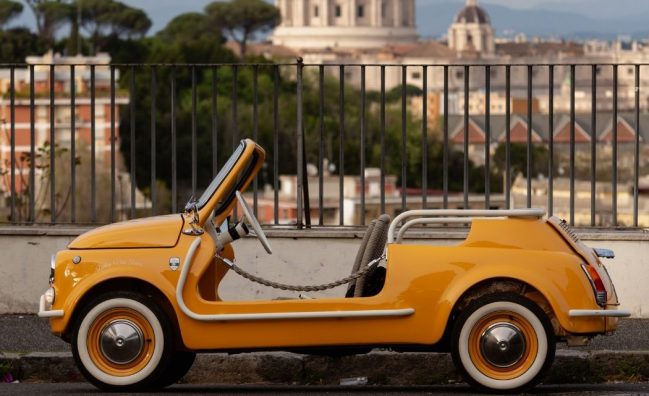 Rome: La Dolce Vita Locations Tour by Fiat 5003 hours, private, Baths of Caracalla from the outside · €590 for 1–3 peopleBook now
 Private Transfer + 1-Hour Drive Past the Sightsdoor to door, Baths of Caracalla on the way · from €220 per vehicle (1–3 people)Book now
 Appian Way, Roman Walls & Catacombs by Golf Cart3 hours, private, Museum of the Walls · €450 for 1–3 peopleBook now
How much does it cost to visit the Baths of Caracalla?
Until January 10, 2027, the ticket costs €10 and includes the Frank Horvat photo exhibition. EU citizens aged 18–24 pay €4, and under-18s enter free. Earlier in 2026, the standard ticket cost €8. Tickets are named and sold on the Musei Italiani website and app, or at the site, where the machines take cards only.
When can you visit the Baths of Caracalla for free?
On the first Sunday of every month and on November 4. The next free Sundays are December 6, 2026, January 3, 2027 and February 7, 2027. On March 8, entry is free for women. On the first Sunday of the month, the Domus di Vigna Guidi frescoes are closed to protect them from the crowds.
What are the opening hours of the Baths of Caracalla?
Tuesday to Sunday. Until February 28, 2027, the Baths open at 9:00 and close at 16:30, with last entry at 15:30. In summer (March 29 to August 31 in 2026) they stay open until 19:15, last entry 18:00. They are closed on Mondays, and December 25 is not on the official list of holiday openings.
How long do you need at the Baths of Caracalla?
About 1.5 to 2 hours for the bath halls, the palaestrae, the frescoes and the current exhibition, or about an hour for a quick look. If you want to see the exhibition, the Soprintendenza suggests arriving at least an hour before closing time.
Can you visit the underground of the Baths of Caracalla?
Only on special openings, as far as the official sources show. In 2025 and 2026, the Soprintendenza opened the underground galleries and the Mithraeum on evenings such as the Night of Museums and the summer Notturno Imperiale nights. The official page does not list them as part of the ordinary daytime visit, so check the news before you go.
Is there opera at the Baths of Caracalla in 2027?
It has not been announced yet. The Rome Opera’s summer festival was held at the Baths from early June to early August in recent years, but in 2026 it moved to the Circus Maximus while the Baths were under restoration. As of November 2, 2026, the Opera had not published its plans for summer 2027.