
Limoncello is a sweet lemon liqueur from Sorrento, Capri and the Amalfi Coast, made by steeping lemon zest in alcohol and mixing it with sugar syrup. Italians drink it ice-cold, in small glasses, after dinner. You can make it at home in a few weeks, or bottle your own in 3 hours at a class in Rome.
Cover photo: Foodista, CC BY 2.0, via Wikimedia Commons
Limoncello is not Roman: it comes from the coast south of Naples. Still, many visitors first taste it in Rome, at the end of a meal. We are a local tour operator in Rome, in business since 2012, and we run a limoncello class at an artisan distillery in the city. This guide covers where limoncello comes from, how it is made, a simple home method, how to drink it, where to buy it and how to fly home with it.
What is limoncello?
Limoncello is a lemon liqueur. Lemon zest is steeped in alcohol, which takes on the oils and the color of the peel, and is then sweetened with water and sugar. There is no lemon juice in it: all the flavor comes from the peel. The result is bright yellow, sweet and intensely lemony, with a clear alcoholic warmth.
- Name: from limone, the Italian word for lemon. You say it lee-mohn-CHEL-loh.
- Strength: it is a strong liqueur. The two protected versions from Sorrento and the Amalfi Coast must have at least 30% and 25% alcohol by volume; for any other bottle, read the label.
- Look: from cloudy to clear. According to the official production rules, fresh limoncello is opalescent and clears naturally over time.
- Crema di limoncello: a creamy version made with milk or cream.
Where does limoncello come from?
Limoncello comes from Campania, in southern Italy: the Sorrento Peninsula, the island of Capri and the Amalfi Coast. Lemons have grown here for centuries, on terraces that farmers cut into steep hillsides above the sea.
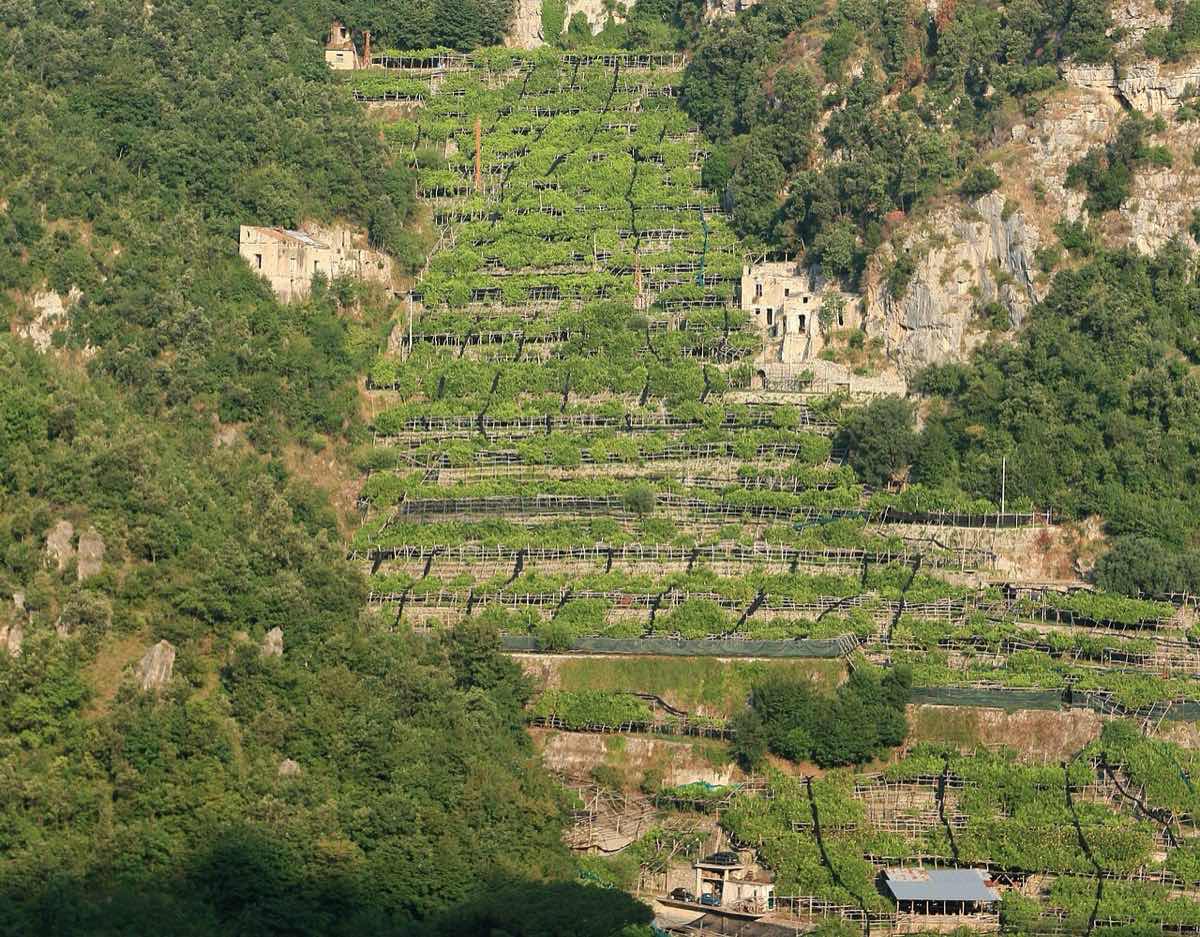
Who invented it is a friendly local rivalry. Capri and Minori, on the Amalfi Coast, both claim the recipe, and Sorrento has its own long tradition. The technical file that Italy sent to the European Union for the Amalfi Coast lemon liqueur mentions the rivalry between Minori and Capri, and does not pick a winner.
What the official files do record is the tradition behind it. For almost two centuries, families who grew lemons on the Sorrento Peninsula and the Amalfi Coast made lemon liqueur at home, with the same fruit they sold. In the 19th century, many households along the Amalfi Coast, especially in Minori, served it at the end of big lunches. For a long time it stayed a homemade drink, and it became a commercial success only in recent decades.
Want to see the lemon terraces for yourself? Our private day trip from Rome to the Amalfi Coast lasts 12 hours with your own driver, who is not a licensed guide, and stops in Sorrento, Positano, Amalfi and Ravello. It costs from €790 for 1–3 people.
What makes Sorrento and Amalfi Coast limoncello special?
Two lemons from this coast have a Protected Geographical Indication (PGI) in the European Union:
- Limone di Sorrento PGI, registered in 2000: the “Ovale di Sorrento” lemon, grown on the Sorrento Peninsula and Capri, traditionally under covers of chestnut poles and straw.
- Limone Costa d’Amalfi PGI, registered in 2001: the “Sfusato Amalfitano”, a long lemon with pointed ends, grown on the terraces of the Amalfi Coast.
Two lemon liqueurs made with these lemons are also protected in the EU as geographical indications: Liquore di limone di Sorrento and Liquore di limone della Costa d’Amalfi. Their names do not include the word “limoncello”, but they are the closest thing to an official limoncello. These are the main rules in their technical files:
| Rule | Liquore di limone di Sorrento | Liquore di limone della Costa d’Amalfi |
|---|---|---|
| Where it is made | 8 towns of the Sorrento Peninsula and Capri, such as Sorrento, Massa Lubrense, Capri and Anacapri | 13 towns of the Amalfi Coast, such as Amalfi, Positano, Ravello and Minori |
| Lemons | Peel of Limone di Sorrento PGI | Peel of Limone Costa d’Amalfi PGI |
| Lemons per liter | At least 250 g of whole lemons | At least 250 g of whole lemons |
| Alcohol | At least 30% | At least 25% |
| Sugar per liter | 200 to 350 g | 200 to 350 g |
| Steeping the peel | At least 48 hours | At least 36 hours |
| Added colorings or flavorings | Not allowed | Not allowed |
On a bottle, look for one of these two names and, in the list of ingredients, the weight of lemons per liter, which both rules require on the label. Bottles of the Sorrento liqueur made on Capri may add the word “Capri” under the name. Many good limoncellos are sold without these names: the protected name tells you where the lemons come from and how the liqueur was made.
How is limoncello made?
The method is simple, and producers of the protected versions follow the same steps as a family at home:
- Wash the lemons. The rules for the protected versions do not allow detergents.
- Peel the zest. Producers take only the yellow outer layer and leave the white pith, which tastes bitter.
- Steep the zest in alcohol. The rules call for neutral alcohol of agricultural origin, and at least 36 or 48 hours of steeping; home recipes usually take longer.
- Sweeten it with water and sugar, or with a syrup made beforehand.
- Filter and bottle. For the Amalfi Coast liqueur, the rules add that drops of lemon oil at the neck of the bottle are a sign of authenticity.
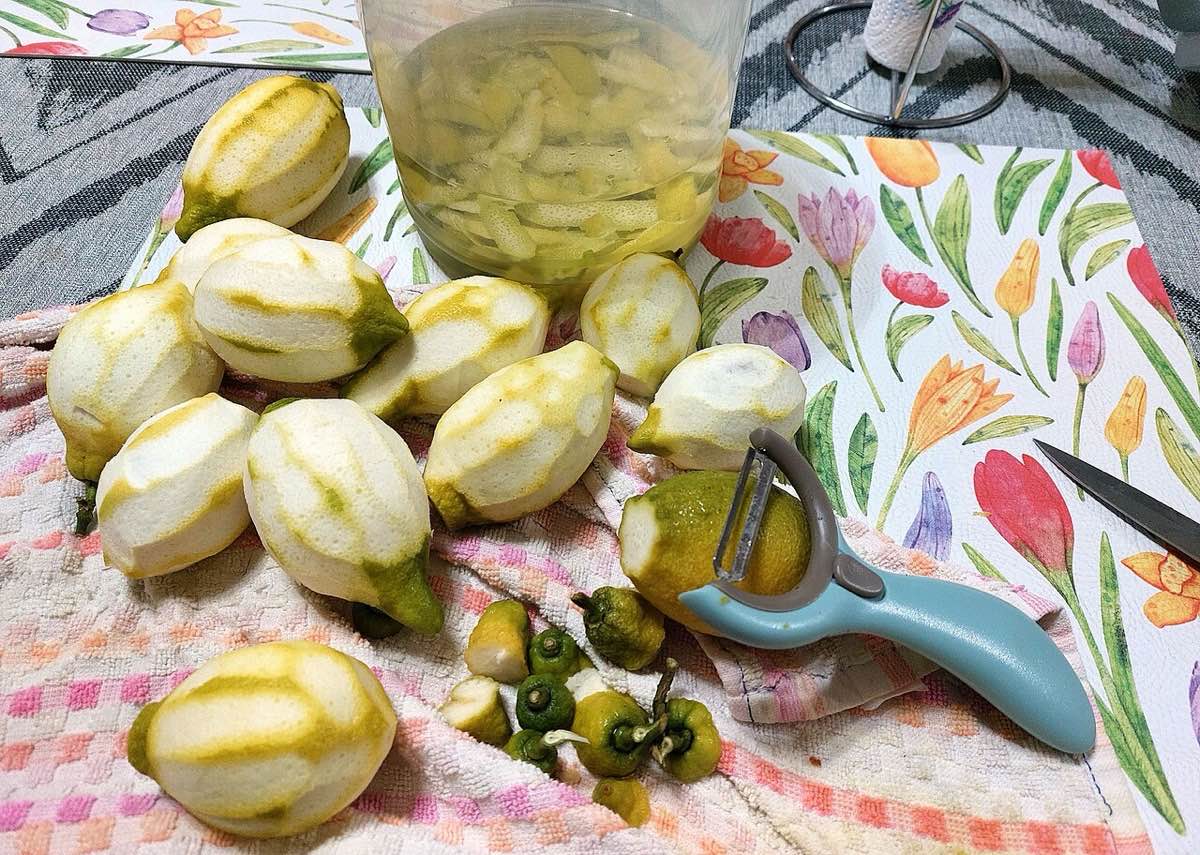
How do you make limoncello at home?
This is the general method many Italian families use, with typical quantities. It is not an official recipe: every family has its own, so adjust the sugar to your taste. In Italy people use food-grade alcohol at 95–96%, sold in supermarkets for homemade liqueurs. Where you cannot buy it, a 100-proof (50%) vodka works, with less water.
| What you need | With 95–96% food-grade alcohol | With 100-proof (50%) vodka |
|---|---|---|
| Alcohol | 1 liter | 750 ml (one bottle) |
| Untreated lemons, zest only | 8 to 10 | 6 to 8 |
| Sugar | 600 to 900 g | 200 to 300 g (1 to 1.5 cups) |
| Water for the syrup | 1 to 1.5 liters | 250 to 350 ml (1 to 1.5 cups) |
| Makes about | 2.5 to 3 liters | 1.1 to 1.3 liters |
- Choose untreated lemons, often sold as organic, because you use the peel. Wash and dry them.
- Peel only the yellow zest with a vegetable peeler, leaving the white pith on the fruit.
- Steep the zest. Put it in a clean glass jar, pour the alcohol over it and close the jar tightly. Leave it in a cool, dark place for one to four weeks, shaking it now and then. The alcohol turns yellow and the peel turns pale.
- Make the syrup. Heat the water and sugar, stirring until the sugar dissolves, then let the syrup cool completely.
- Mix and bottle. Strain the alcohol through a fine sieve or a coffee filter, stir it into the cold syrup and pour it into clean bottles.
- Let it rest for about a week, then keep it in the freezer or the fridge.
The more syrup you add, the sweeter and lighter it gets. A few safety rules:
- Use only food-grade alcohol sold for drinking. Never use denatured alcohol, rubbing alcohol or methylated spirits: they are poisonous.
- Keep high-proof alcohol away from heat. It catches fire easily, so never heat it: make the syrup on its own and let it cool before mixing.
- Label your bottles and keep them away from children.
- Drink responsibly. Limoncello is a strong liqueur, not a health drink, and never drive after drinking it.
How do you drink limoncello?
Italians serve limoncello as a digestivo, the small drink at the end of a meal. Some restaurants offer a glass with the bill. A few tips:
- Serve it ice-cold, straight from the freezer, in small glasses. Many people chill the glasses too.
- Sip it slowly. It is sweet, so it is easy to forget how strong it is.
- Mix it: a limoncello spritz combines limoncello, prosecco and soda water over ice.
- Use it in desserts: limoncello is poured over gelato and used in cakes such as the delizia al limone of the Amalfi Coast.
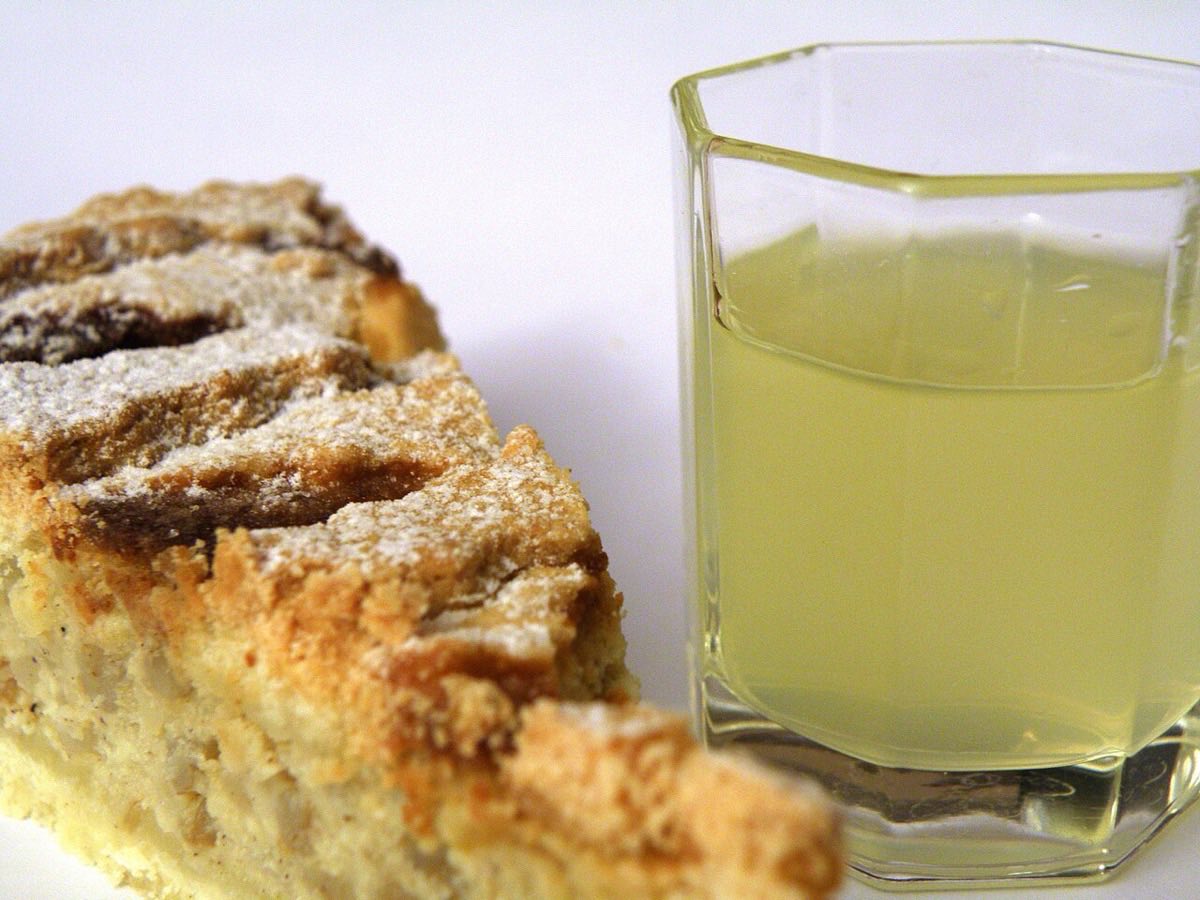
In Rome, many people end a meal with an espresso rather than a liqueur. For coffee in a historic setting, see our post on the historical cafés of Rome. For Rome’s own dishes and sweets, see our guide to Roman food and our post on the maritozzo, the city’s cream bun.
Where can you buy limoncello in Rome?
You do not need a special address: limoncello is sold all over the city.
- Wine shops (enoteche) and delis (alimentari): usually the widest choice, including bottles with the protected names of Sorrento and the Amalfi Coast.
- Supermarkets: a few brands at everyday prices.
- Souvenir shops near the main sights: small bottles and ceramic flasks, handy as gifts.
Before you buy, read the label: the alcohol content, the ingredients, which in the simplest limoncellos are only lemon peel, alcohol, sugar and water, and, if you want one, a protected name.
Should you buy a bottle, make it at home or take a class?
If you only want a bottle to take home, buying one is the quickest and cheapest option. Making it at home costs little but takes weeks. Our class makes sense if you want to make your own limoncello with an artisan, in an evening, and take your bottle home.
| Option | Time | Cost | Good for |
|---|---|---|---|
| Buy a bottle | 10 minutes | The price of the bottle | A quick gift or souvenir |
| Make it at home | 2 to 5 weeks, mostly waiting | Lemons, alcohol and sugar | Larger amounts, made to your taste |
| Our limoncello class in Rome | 3 hours, Monday to Friday evening | €135 per person for 2–10 people, €270 for one | Learning from an artisan and bottling your own |
How do you take limoncello home on a plane?
Rules for liquids depend on the airport and the destination, so check them shortly before you fly. This is what the official websites said when we checked on November 1, 2026:
- From Rome Fiumicino: according to Aeroporti di Roma, since July 26, 2025 liquids in hand baggage may be carried in containers of up to 2 liters, thanks to new scanners.
- Direct flights to the USA or Israel with airlines that check in at Terminal 1 still follow the old rule: containers of up to 100 ml, in a clear plastic bag of up to 1 liter. The same applies to some transit passengers arriving from outside the Schengen area.
- Connecting flights: the airport where you change planes may apply stricter rules, so ask your airline.
- To the United States: the TSA allows alcoholic drinks in carry-on bags only up to 3.4 oz (100 ml). In checked bags, drinks with more than 24% and up to 70% alcohol are limited to 5 liters per passenger, in unopened retail packaging.
The 100 ml bottle you make at our class fits the 100 ml limit. Pack larger bottles in your checked luggage, wrapped in clothes inside a sealed plastic bag, and check your airline’s rules. Customs allowances for alcohol depend on the country you fly to: in the United States, for example, CBP notes that the laws of the state where you first arrive also apply.
Make your own limoncello in Rome with us
Our limoncello making class in an artisan distillery runs Monday to Friday. At 17:15 you are picked up at a meeting point in Rome, which we send you after booking, and the class starts at 18:00. After a welcome toast, you peel fresh organic lemons and mix them with alcohol and sugar, learning how each ingredient affects the flavor. While the infusion rests, you enjoy a guided spritz tasting with Roman pizza. Then you bottle and label 100 ml of your own limoncello to take home.
- Price: €270 for one person, or €135 per person for 2 to 10 people.
- Duration: about 3 hours.
- Group: a shared class, up to 10 people per booking. A private class is available on request.
- Language: English or Italian.
- Age: adults aged 18 and over only, because the class includes alcohol. We recommend bringing a valid photo ID.
- Good to know: the class is not suitable for pregnant women or wheelchair users. Tell us when you book if anyone has difficulty with stairs, or food allergies.
- Not included: transport to the meeting point.
- Cancellation: the booking is non-refundable once we confirm it.
To make it a food day, start in the morning with our shared food walking tour of Trastevere and the Jewish Ghetto at 10:00 (2.5 hours, €150 per person), or one of our shared cooking classes: the pizza making class or the pasta making class at 11:00 (3 hours, from €79 per person), or the market tour and cooking class at 9:30, Monday to Saturday (4.5 hours, €190 per person). The food tour and the pizza and pasta classes are in English, and all are non-refundable once confirmed. You can also see the city first on one of our golf cart tours in Rome or vintage Fiat 500 tours in Rome, then end the day with your own bottle of limoncello.
Not sure which food experience fits you? Our comparison of a Rome food tour or cooking class helps you choose, and you can see every option on our cooking classes and food tours pages.
Explore it with us
 Limoncello Making Class in a Distillery3 hours: make and bottle your own 100 ml, adults 18+ · from €135 per person (2–10 people)Book now
 Rome Food Walking Tour: Trastevere & Ghetto2.5 hours on foot with tastings, fresh pasta, wine and dessert · €150 per personBook now
 Pizza Making Class3 hours with a pizza chef, meal included, wine for adults · €79 per personBook now
FAQ
What is limoncello made of?
Lemon zest, alcohol, sugar and water. The zest steeps in the alcohol, which is then sweetened with a sugar syrup; there is no lemon juice. The protected versions from Sorrento and the Amalfi Coast use only local PGI lemons, with no added colorings or flavorings.
How strong is limoncello?
It is a strong liqueur. The protected Liquore di limone di Sorrento must have at least 30% alcohol, and the Amalfi Coast version at least 25%. For other brands, and for homemade limoncello, the strength varies, so read the label and sip it slowly.
How long does it take to make limoncello at home?
Most home methods take two to five weeks: one to four weeks for the zest to steep in alcohol, then about a week of rest after you add the syrup. Producers of the protected versions steep the peel for at least 36 or 48 hours. At our class in Rome, you bottle your own in an evening.
How do you drink limoncello?
Ice-cold, straight from the freezer, in a small glass, usually after dinner. Sip it slowly: it is sweet but strong. You can also mix it with prosecco and soda water for a limoncello spritz, or pour it over gelato.
Is limoncello from Rome?
No. It comes from the Sorrento Peninsula, Capri and the Amalfi Coast, south of Naples. You can buy it all over Rome, and you can make your own bottle at our limoncello class in an artisan distillery in the city.
Can you take limoncello on a plane from Rome?
Yes. At Rome Fiumicino, hand baggage may carry liquids in containers of up to 2 liters, except on direct flights to the USA or Israel with airlines that check in at Terminal 1, where the 100 ml limit applies. Pack big bottles in checked luggage and check your airline’s rules, especially if you change planes.


Comment (0)