The top things to do in Rome are the Colosseum with the Roman Forum, the Vatican Museums and St Peter’s Basilica, the Pantheon, the Trevi Fountain and an evening in Trastevere. Many of the best things are free and close together: piazzas, churches, viewpoints and parks. Book the Colosseum, the Vatican Museums and Galleria Borghese in advance.
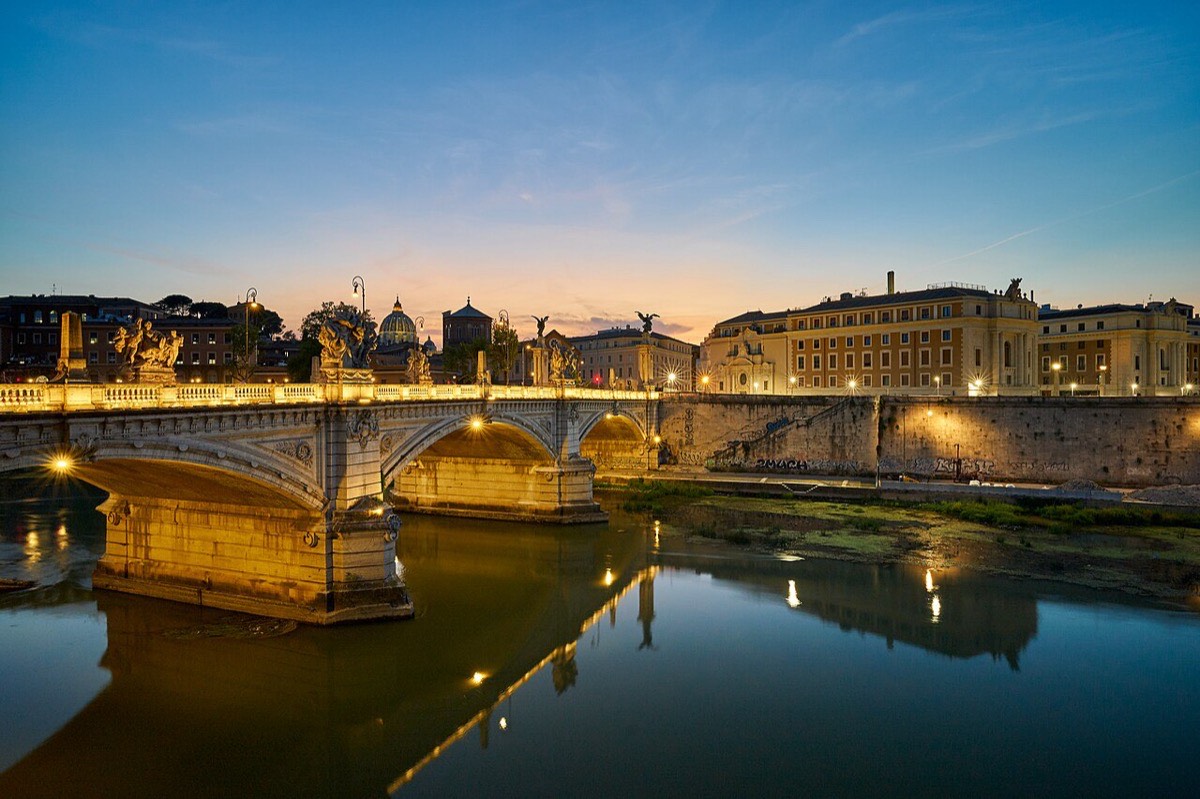
Rome has more to see than anyone can fit into one trip, so the hard part is choosing. We are a local tour operator with an office near the Colosseum, and this guide sorts the main things to do in Rome by area, so you can plan your days on foot. For each place you find how long to allow, what it costs on the official website and whether you need to book. Many of the best things are free, and where walking is enough, we say so.
If this is your first visit, start with these five. Four of them are in or near the historic center, so you can walk between them.
In one day you can see the Colosseum, the Pantheon, the Trevi Fountain and Trastevere; the Vatican needs at least a morning of its own. Our Rome itinerary turns these ideas into a day-by-day plan, and our guide to the best tours for first-time visitors compares the ways to see them.
Ancient Rome is the area around the Colosseum, the Roman Forum and the Palatine and Capitoline hills. Give it a full day if you add the museums.
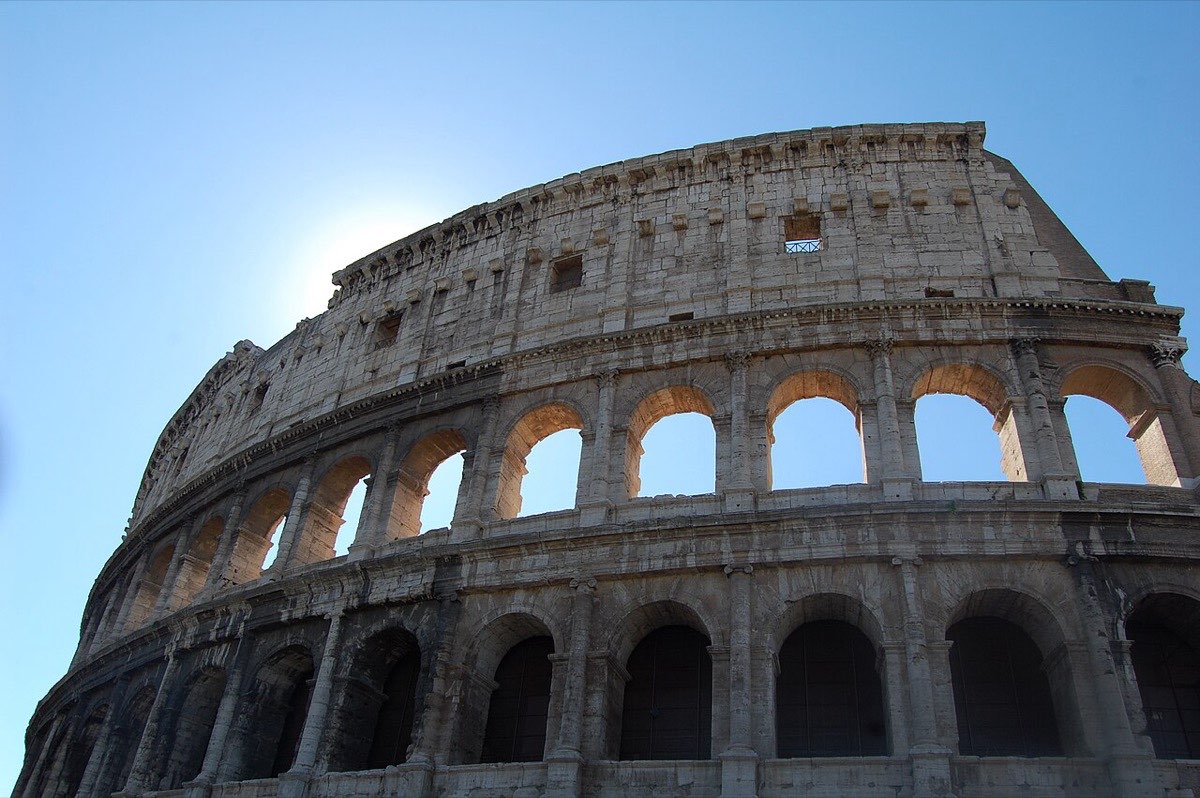
Colosseum, Roman Forum and Palatine Hill. The standard ticket costs €18, is valid for 24 hours and covers the first and second levels of the Colosseum, the Forum and the Palatine. Booking a time slot is compulsory, and tickets carry your name, so bring an ID. Sales open 30 days ahead on the official ticket site, ticketing.colosseo.it. Until 28 February 2027 the Colosseum opens from 8:30 to 16:30, with the last admission at 15:30. Visitors under 18 enter free, as at all Italian state sites. Allow about 75 minutes for the Colosseum and 1.5 to 2 hours for the Forum and the Palatine. Our Colosseum guide explains the tickets. Our private Colosseum, Forum and Palatine tour lasts 3 hours with a licensed guide and costs €455 for 1–2 people, tickets included; it is non-refundable once we confirm it.
Capitoline Museums. On the Capitoline Hill, above the Forum, they are open every day from 9:30 to 19:30, with the last admission one hour before closing. Non-residents pay €16.50 while the current exhibition is on, or €15 without exhibitions. Allow 2 hours.
Largo di Torre Argentina. Four temples from the Roman Republic lie below street level in a busy square. Is it free? Looking down from the street, yes. A walkway, open since June 2023, takes you among the temples for €7 (plus €1 if you book ahead), Tuesday to Sunday, from 9:30 to 16:00 in winter; the visit takes about 45 minutes. See our Largo di Torre Argentina guide.
Via dei Fori Imperiali, between the Colosseum and Piazza Venezia, is closed to traffic on Sundays, public holidays and the last Saturday of the month: a good walk past the Imperial Forums.
The historic center is the bend of the Tiber with the Pantheon, Piazza Navona and the Trevi Fountain. The streets are narrow and the sights are close, so walk. Allow a full day, with breaks.
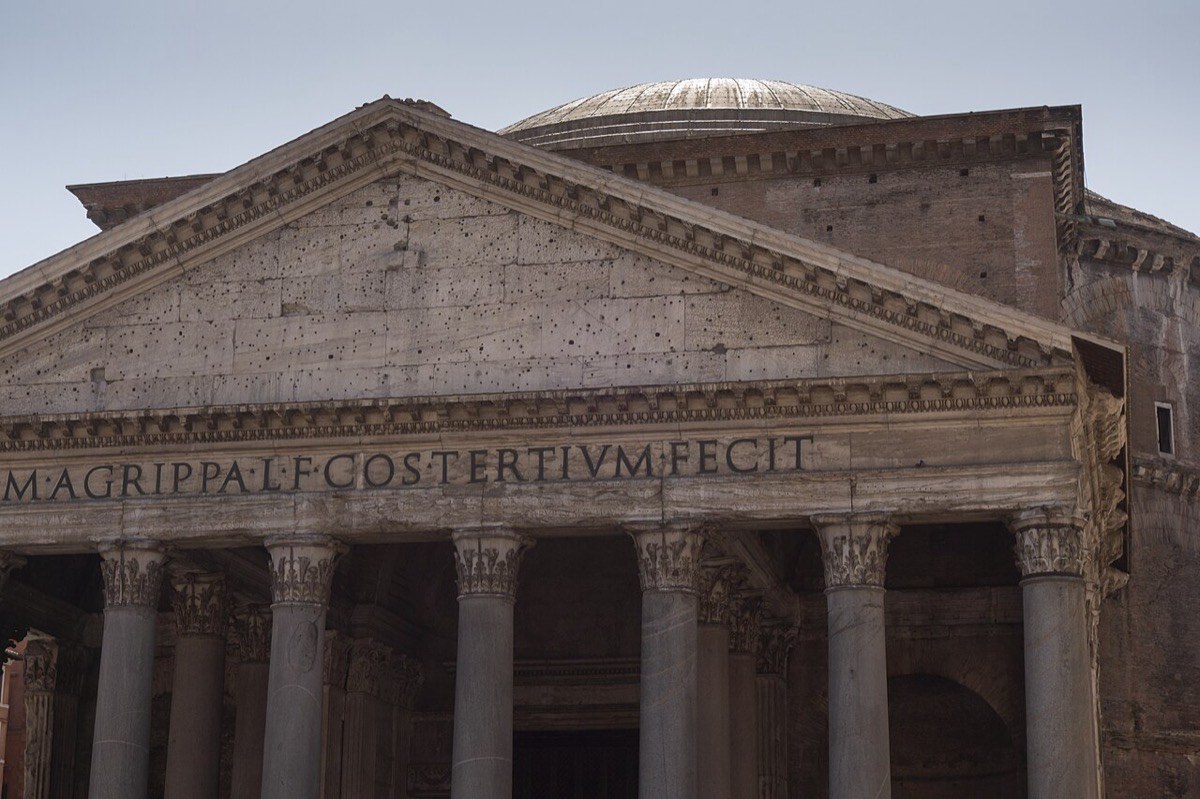
Pantheon. Agrippa built the first temple in 25 BC; the building you see today dates from the early years of Emperor Hadrian, between 118 and 125 AD. Since 1 July 2026 the ticket costs €7, €2 for ages 18 to 25, and under-18s enter free. It is open every day from 9:00 to 19:00, with the last entry at 18:30, and booking is optional. Entry is free for Mass: at 17:00 on Saturdays and the day before holidays, and at 10:30 on Sundays and holidays. More in our Pantheon guide.
Trevi Fountain. You can see it from the square for free, at any hour. To walk down to the basin you need a €2 ticket, according to the official Trevi Fountain website. The inner area is open from 9:00 to 22:00 (from 11:30 on Mondays and Fridays), with the last entry at 21:00, and children under 6 enter free. Buy online, at a Tourist Infopoint or at the entrance on Via della Stamperia, by card only. Don’t eat there or sit on the edge of the basin: fines go from €40 to €240. On some days it opens later for maintenance, so check the official website before you go. See our Trevi Fountain guide.
Piazza Navona and the Spanish Steps are free. Piazza Navona keeps the shape of the ancient stadium of Domitian, with Bernini’s Fountain of the Four Rivers in the middle (see our Piazza Navona guide). Nearby churches, such as San Luigi dei Francesi, have paintings by Caravaggio, free to see outside Mass times: our page on where to see Caravaggio lists them. Carry a bottle and fill it at the nasoni, the city’s free drinking fountains.
Vatican Museums and Sistine Chapel. Open Monday to Saturday from 8:00 to 20:00, final entry 18:00. They are closed on Sundays, except the last Sunday of the month (free, 9:00 to 14:00, final entry 12:30), and on several holidays, including 8, 25 and 26 December. The ticket costs €20, plus €5 online; it is valid only on the date you choose and cannot be refunded. Allow 3 hours. The Sistine Chapel is a silent area, and photos are not allowed.
St Peter’s Basilica. Until 28 March 2027 it is open every day from 7:00 to 19:00, and entry is free. There is a security check, and shoulders and knees should be covered. The dome is open from 7:30 to 17:00 in winter.
Our Vatican guide explains tickets and timing. Our shared Vatican Museums tour lasts 2.5 hours and costs €119 per person; our private Vatican tour lasts 3 hours and costs €485 for 1–2 people. Both have a licensed guide and include the tickets, and both are non-refundable once confirmed. See all our Vatican tours.
Trastevere, across the river from the Ghetto, is a neighborhood of cobbled lanes and trattorias. Walk to Piazza di Santa Maria in Trastevere, look at the mosaics inside the basilica, then stay for dinner. It is free and at its best in the late afternoon and evening. Our Trastevere guide suggests a route.
The Janiculum (Gianicolo), the hill above Trastevere, is always open and has a wide view over the domes of Rome. Every day at noon a cannon fires one shot below the Belvedere, a tradition kept since 1904. See our Janiculum guide and our panoramic views of Rome.
Our food walking tour leaves Piazza Trilussa every day at 10:00 and 17:00 and goes through Trastevere, Campo de’ Fiori and the Jewish Ghetto in 2.5 hours. It costs €150 per person, is in English and is non-refundable once confirmed. Our guide to Roman food lists the dishes to try.
The Aventine is a quiet, green hill above the Circus Maximus, a short walk from the Colosseum. Allow 1 to 2 hours.
Both the Orange Garden and the Keyhole are on the 3-hour route of our private golf cart tour, described below.
Yes, if you like history and green spaces. The Appian Way is the ancient Roman road south of the walls, lined with tombs, and it leads to the catacombs of Rome. On Saturdays and Sundays from 7:00 to 19:00, except in August, its first stretch, from Porta San Sebastiano to Via Appia Pignatelli, is a limited traffic zone: vehicles may enter only if they leave by the same gate, and the speed limit is 30 km/h, according to Roma Mobilità.
The road is long and buses are few. Our Appian Way golf cart tour lasts 3 hours from 10:00, with a stop at the Museum of the Walls, and costs €450 for 1–3 people, then €150 per person up to 21. The San Sebastiano visit is optional, at €12 per person. It does not run on Mondays, and on weekends our driver changes the route. It is non-refundable once confirmed.
Villa Borghese is a large park above Piazza del Popolo, always open and free, and public since 1903. Walk to the Pincio terrace for the view, or around the small lake. See our pages on Villa Borghese and Rome’s parks.
Galleria Borghese, inside the park, has sculptures by Bernini and paintings by Caravaggio. A reservation is compulsory: €16 plus a €2 booking fee; under-18s pay only the fee. It is open Tuesday to Sunday from 9:00 to 19:00, with entries every hour for 2-hour visits and a limited number of people per slot. Book as early as you can.
This small district lies on the Tiber, opposite Tiber Island. Walk along Via del Portico d’Ottavia, past the ruins of the Portico of Octavia, to the Turtle Fountain in Piazza Mattei, and try Roman Jewish food, such as fried artichokes. Walking around is free; allow 1 to 2 hours.
The Jewish Museum of Rome is in the Great Synagogue complex. The €12 ticket includes the museum with an audio guide and a guided visit of the Great Synagogue; children under 10 enter free. Until 14 January it is open Sunday to Thursday from 10:00 to 16:00 and on Friday from 9:00 to 14:00, and it is closed on Saturdays and Jewish holidays. More in our Jewish Quarter guide.
Prices are the official full prices on 1 November 2026 for visitors who don’t live in Rome. Times are what we suggest for an unhurried visit.
| Sight | Area | Time to allow | Cost | Booking and notes |
|---|---|---|---|---|
| Colosseum, Forum & Palatine | Ancient Rome | 3 hours | €18; free under 18 | Time slot compulsory, ID needed |
| Capitoline Museums | Ancient Rome | 2 hours | €16.50 with the current exhibition | Open every day |
| Largo di Torre Argentina | Ancient Rome | 45 minutes | Free from the street; walkway €7 | Walkway closed on Mondays |
| San Clemente excavations | Near the Colosseum | 1 hour | €10 | Online booking required |
| Pantheon | Historic center | 30 minutes | €7; free under 18 | Booking optional |
| Trevi Fountain | Historic center | 15–20 minutes | Free from the square; €2 at the basin | Card only at the entrance |
| Piazza Navona, Spanish Steps | Historic center | 20–30 minutes each | Free | None |
| Vatican Museums & Sistine Chapel | Vatican | 3 hours | €20, plus €5 online | Closed most Sundays |
| St Peter’s Basilica | Vatican | 1 hour | Free | Security check, covered shoulders and knees |
| Galleria Borghese | Villa Borghese | 2 hours | €16 + €2 booking fee | Reservation compulsory, closed Mondays |
| Villa Borghese park | Villa Borghese | 1–2 hours | Free | Always open |
| Orange Garden & Aventine Keyhole | Aventine | 1 hour | Free | Queue at the Keyhole |
| Janiculum viewpoint | Trastevere | 30–60 minutes | Free | Cannon shot at noon |
| San Sebastiano Catacombs | Appian Way | 45 minutes | €10 (€12 online) | Guided only, closed Mondays |
| Jewish Museum & Great Synagogue | Jewish Ghetto | 1.5 hours | €12 | Closed Saturdays |
Our list of free things to do in Rome and our guide to free small museums have more.
San Clemente. Five minutes’ walk from the Colosseum, this basilica stands on three levels: a 12th-century church, a 4th-century church with medieval frescoes below it and, at the bottom, a 1st-century temple of the god Mithras. The excavations cost €10, €5 for students under 26, and children under 16 enter free with their parents; book online. Open Monday to Saturday 9:00–12:30 and 14:00–18:00, Sundays and holidays 12:00–18:00. Our page on the hidden treasures near the Colosseum has more places nearby.
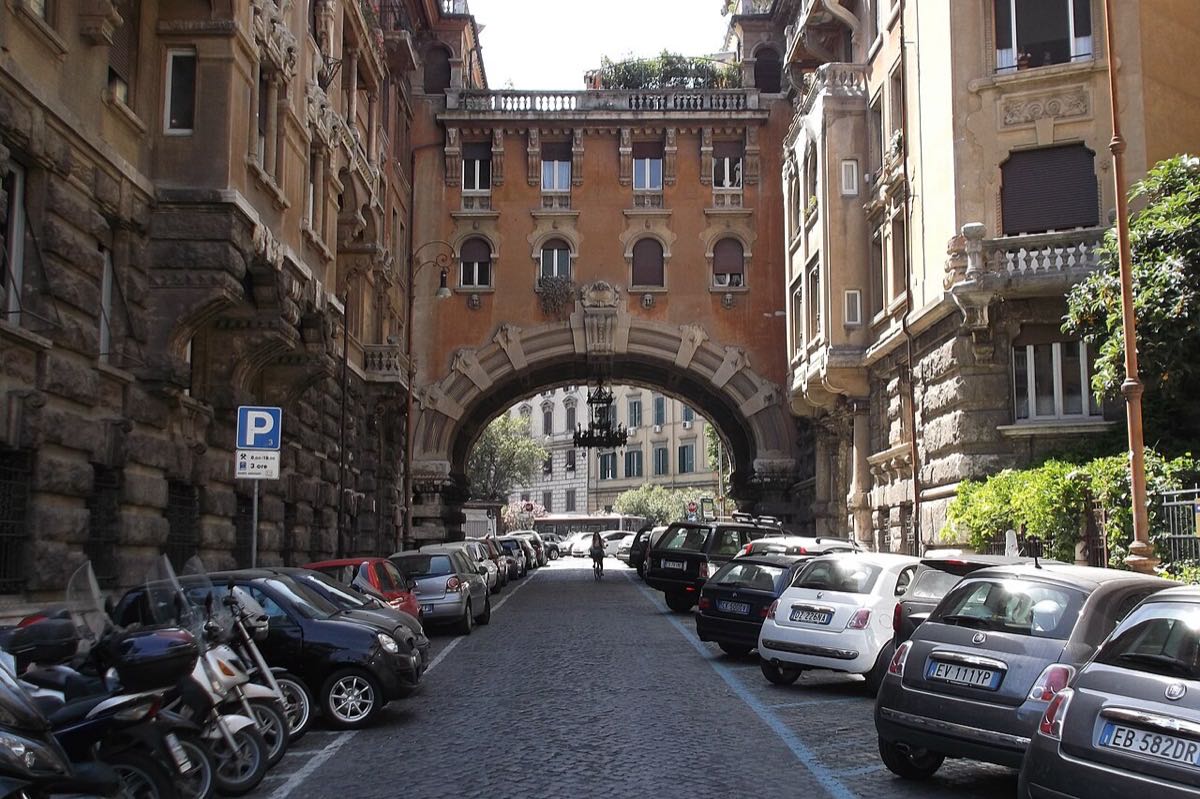
Quartiere Coppedè. Between Via Salaria and Via Nomentana, outside the historic center, architect Gino Coppedè built 26 palazzi and 17 villas between 1915 and 1927, with towers, frescoes and wrought iron. Enter under the arch of the Palazzi degli Ambasciatori, with its large lantern, and continue to the Fountain of the Frogs in Piazza Mincio. It is a free walk of about an hour.
Galleria Spada. Near Campo de’ Fiori, this small gallery has a colonnade by Borromini that looks much longer than it is. See our Galleria Spada guide.
The Turtle Fountain, the Orange Garden and the Aventine Keyhole are three more quiet corners worth a detour.
If you would rather not walk after dinner, our golf cart tour by night lasts 2 hours from 20:00, 21:00 or 22:00 and costs €450 for 1–3 people at 20:00, then €150 per person. Our Fiat 500 tour by night costs €590 for 1–3 people at 20:00. On both you see the sights from the outside. Compare them in Rome at night by golf cart or Fiat 500, or see all our night tours and our romantic things to do in Rome.
Our guide to Rome with kids, seniors and limited mobility has more.
Our guide to what to do in Rome when it rains has the hours, prices and closing days for each idea.
Before you plan, read about the best time to visit Rome and getting around Rome. In December, see Christmas in Rome.
You don’t need a tour to enjoy Rome: the center is compact and many of the best sights are free. A tour helps when time is short, when walking is hard for someone in your group, or when you want a licensed guide inside the Colosseum or the Vatican. Our guide Are golf cart tours in Rome worth it? compares them with walking.
On golf cart and Fiat 500 tours you see the sights from the outside, and our drivers are drivers, not licensed guides. These tours can be cancelled with a full refund up to 72 hours before the start, or 50% up to 48 hours before. Our Colosseum, Vatican, Appian Way and food tours are non-refundable once confirmed. Our guides speak Italian and English, and other languages can be requested. See all our golf cart tours in Rome and vintage Fiat 500 tours in Rome.
 Private Golf Cart Tour of Rome2, 3 or 5 hours, pickup in the historic center · from €350 for 1–3 peopleBook now
 Dolce Vita Tour by Vintage Fiat 5003 hours, Trevi ticket and food stop included · from €590 for 1–3 peopleBook now
 Rome Food Walking Tour2.5 hours in Trastevere and the Jewish Ghetto · €150 per personBook now
What are the top things to do in Rome?
The Colosseum with the Roman Forum and the Palatine, the Vatican Museums with the Sistine Chapel and St Peter’s Basilica, the Pantheon, the Trevi Fountain and an evening in Trastevere. Add the Orange Garden, Villa Borghese and the Jewish Ghetto if you have more time.
Which historic sites in Rome are free to visit?
St Peter’s Basilica, the Trevi Fountain seen from the square, Piazza Navona, the Spanish Steps and Largo di Torre Argentina seen from the street are always free. State sites such as the Colosseum and the Pantheon are free on the first Sunday of the month, and the Vatican Museums on the last Sunday, from 9:00 to 14:00.
Is the Orange Garden in Rome free?
Yes. The Orange Garden (Giardino degli Aranci) on the Aventine is a public park with free entry. From October to February it is open from 7:00 to 18:00, and until 21:00 from April to August. The Aventine Keyhole, also free, is a few steps away.
What should you book in advance in Rome?
The Colosseum, because a time slot is compulsory; Galleria Borghese, where a reservation is compulsory; and the Vatican Museums, especially in high season. The San Clemente excavations also need an online booking. The Pantheon and the Trevi Fountain can be booked, but it is optional.
How many days do you need in Rome?
Three days cover the main sights: ancient Rome and the historic center, the Vatican, and a day for the Aventine, Villa Borghese and the Ghetto. With one day, focus on the Colosseum, the Pantheon and the Trevi Fountain. With four or more, add the Appian Way or a day trip.
What can you do in Rome at night?
Walk through Trastevere and Campo de’ Fiori, and see the Trevi Fountain lit up: its inner area is open until 22:00, and the square is open all night. The Vatican Museums stay open until 20:00. Our golf cart and Fiat 500 night tours start from 20:00.